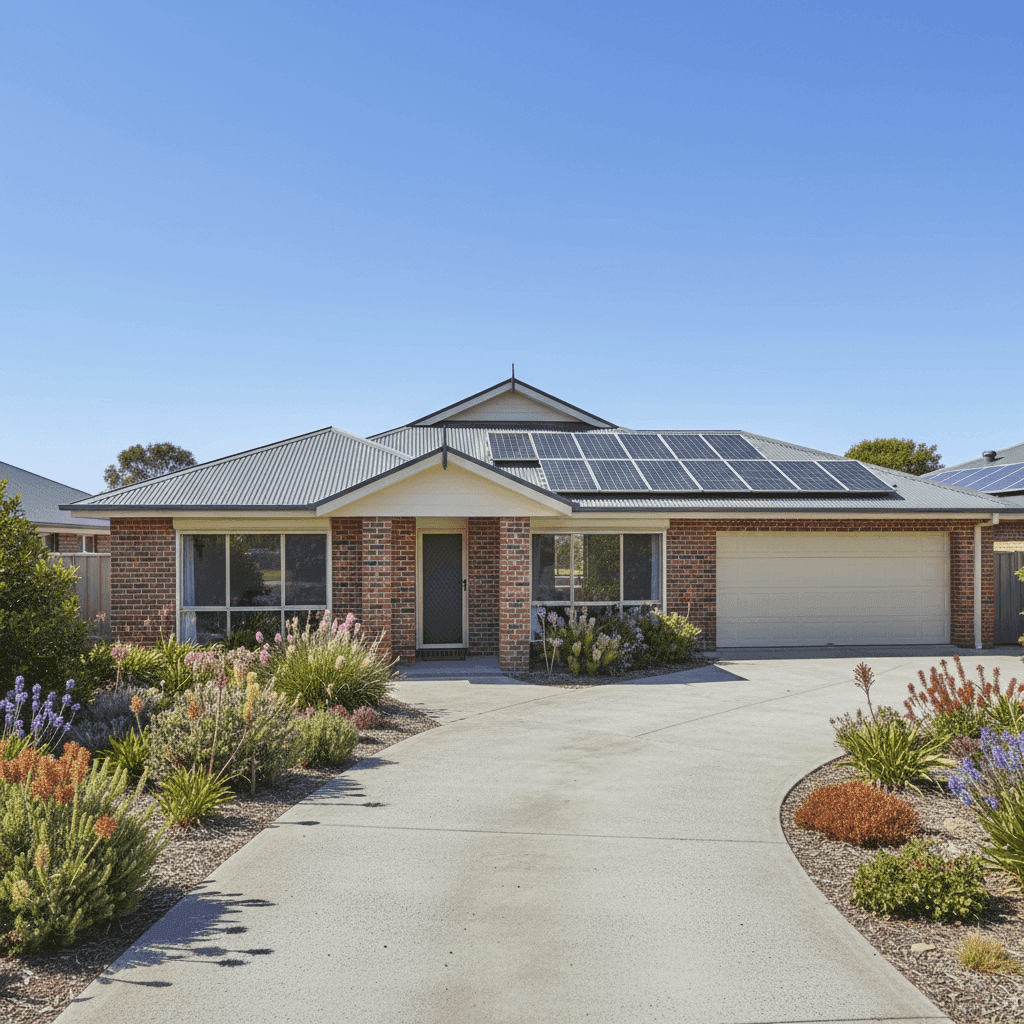
If you own a free standing home in Swan Bay, TAS 7252, you're likely no stranger to the process of shopping around for home insurance. With property values climbing across regional Tasmania and the cost of rebuilding continuing to rise, getting the right cover at the right price matters more than ever. This article breaks down a real home and contents insurance quote for a three-bedroom, two-bathroom brick veneer home in Swan Bay — and puts that number in context against local, state, and national benchmarks.
---
Is This Quote Fair?
The quoted annual premium for this property comes in at $2,638 per year (or roughly $254 per month), covering both building and contents. The building is insured for $759,000, with $50,000 in contents cover and a $1,000 excess applied to both building and contents claims.
Our price rating for this quote is FAIR — Around Average. That assessment reflects the fact that the premium sits above the Tasmanian state average but comfortably below the national average, landing it in a middle ground that's neither a standout bargain nor cause for alarm. For a home of this size (214 sqm), age (built in 1977), and specification, the pricing is broadly in line with what insurers typically charge for comparable properties in the region.
That said, "fair" doesn't mean you can't do better. It simply means this quote is a reasonable starting point — and one worth comparing before you commit.
---
How Swan Bay Compares
Understanding where your premium sits relative to broader benchmarks helps you gauge whether you're being charged appropriately for your risk profile. Here's how this quote stacks up:
| Benchmark | Annual Premium |
|---|---|
| This Quote | $2,638 |
| LGA (Launceston) Average | $2,113 |
| TAS State Average | $2,458 |
| TAS State Median | $2,272 |
| National Average | $2,965 |
| National Median | $2,716 |
A few things stand out here. The quote is $525 above the Launceston LGA average, which is a notable gap worth investigating. It's also $180 above the Tasmanian state average and $366 above the state median. However, when viewed against the national picture, this premium is actually $327 below the national average and $78 below the national median — meaning Tasmanian homeowners, broadly speaking, are paying less than their counterparts in other states.
Note that no suburb-level data is currently available for Swan Bay specifically, so comparisons are drawn from the broader Launceston LGA and Tasmanian state figures. You can explore more detailed local pricing data on the Swan Bay insurance stats page, the TAS state overview, or the national insurance stats page.
The gap between this quote and the LGA average is worth probing. It may reflect the specific characteristics of this property — particularly its age, construction type, and sum insured — rather than any systemic overpricing.
---
Property Features That Affect Your Premium
Insurance premiums aren't calculated in a vacuum. Insurers weigh up dozens of property-specific factors when pricing a policy. Here's how the key features of this Swan Bay home are likely influencing the quoted premium:
Brick veneer construction is generally viewed favourably by insurers. It offers solid weather resistance and reasonable fire protection compared to timber weatherboard homes, which are common throughout older Tasmanian housing stock. This should be working in the homeowner's favour.
Steel/Colorbond roofing is another positive signal. Colorbond is durable, low-maintenance, and performs well in a range of weather conditions. It's less susceptible to storm damage than older tile roofs and tends to attract lower premiums as a result.
Slab foundation is a standard and stable choice, generally presenting no elevated risk to insurers. Combined with tile flooring, the property's base structure is straightforward to assess and price.
Construction year: 1977 is where things get a little more nuanced. Homes built in the late 1970s may have older electrical wiring, plumbing, and structural elements that haven't been updated. Insurers often apply a loading to older properties to account for the higher likelihood of wear-related claims. This is likely a contributing factor to the premium sitting above the LGA average.
Solar panels are worth flagging. While they add value to a property and can reduce energy costs, they also increase the complexity of a claim — particularly if roof damage occurs. Some insurers include solar panel cover automatically; others treat it as an optional extra. It's important to confirm exactly what's covered under this policy.
Building sum insured of $759,000 for a 214 sqm home works out to approximately $3,547 per sqm — a figure that's on the higher end for regional Tasmania. While it's always better to be adequately insured than underinsured, it's worth reviewing this figure with a quantity surveyor or using a rebuilding cost calculator to ensure it accurately reflects current construction costs in the area.
---
Tips for Homeowners in Swan Bay
Whether you're reviewing an existing policy or shopping for the first time, here are four practical steps to help you get better value on your home insurance:
- Review your sum insured regularly. Construction costs in Tasmania have risen significantly in recent years. An outdated sum insured can leave you underinsured — but an inflated one will push your premium higher than necessary. Use a professional rebuilding cost estimate to anchor this figure accurately.
- Ask about your home's age and any discounts for upgrades. If you've replaced the electrical wiring, re-plumbed the property, or made other significant upgrades since 1977, let your insurer know. These improvements can reduce the perceived risk of your property and may be reflected in your premium.
- Confirm solar panel coverage. Check whether your policy explicitly covers your solar panels — both the panels themselves and any associated wiring or inverter equipment. If not, ask about adding this cover or find a policy that includes it as standard.
- Compare at least three quotes before renewing. The gap between the cheapest and most expensive quotes for comparable properties can be substantial. Even if your current quote is rated "fair," a quick comparison could save you hundreds of dollars annually without sacrificing cover quality.
---
Ready to Find a Better Deal?
Whether this quote is your starting point or your renewal notice just landed in the inbox, it pays to compare. At CoverClub, we make it easy to see how your premium stacks up and find competitive quotes tailored to your property. Enter your address and get started today — it only takes a few minutes and could save you more than you'd expect.