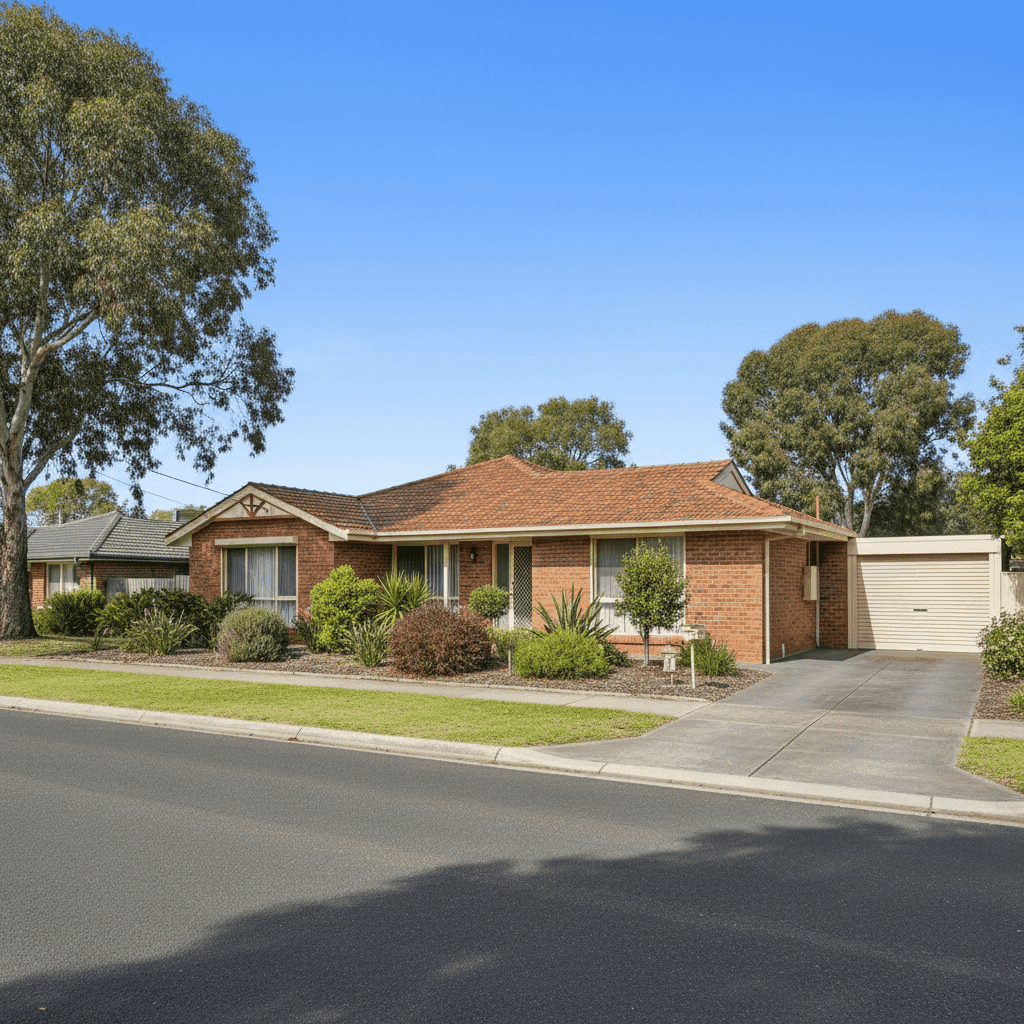
Swan Hill is a regional hub on the Murray River in north-western Victoria, and like many inland towns, it carries its own distinct set of insurance considerations — from seasonal flooding risk to the age of the local housing stock. This article breaks down a real home and contents insurance quote for a three-bedroom, free-standing home in Swan Hill (postcode 3585), compares it against suburb, state, and national benchmarks, and offers practical guidance for local homeowners looking to get the best value on their cover.
---
Is This Quote Fair?
The quote in question comes in at $1,725 per year (or $165 per month) for combined home and contents cover, with a building sum insured of $400,000 and contents valued at $40,000. Both the building and contents excess are set at $2,000.
Our price rating for this quote is FAIR — Around Average, which is a reasonable outcome for a property of this type and age. But what does "fair" actually mean in context?
Looking at the Swan Hill suburb insurance data, the suburb average premium sits at $3,052 per year, with a median of $2,456 per year. This quote lands just above the 25th percentile ($1,696/yr), meaning it is cheaper than roughly 75% of comparable quotes in the area. That's a meaningfully strong result — not the very cheapest on the market, but well below what most Swan Hill homeowners are paying.
The "fair" rating reflects that while the premium is competitive, there may still be room to find a slightly better price with the right insurer and policy configuration. It's worth shopping around, but this quote is far from overpriced.
---
How Swan Hill Compares
To put this quote in proper perspective, here's how Swan Hill stacks up against broader insurance markets:
| Benchmark | Average Premium | Median Premium |
|---|---|---|
| Swan Hill (3585) | $3,052/yr | $2,456/yr |
| Victoria (VIC) | $3,000/yr | $2,718/yr |
| Australia (National) | $5,347/yr | $2,764/yr |
| Gannawarra LGA | $3,536/yr | — |
A few things stand out here. First, Swan Hill's average premium is broadly in line with the Victorian state average of $3,000 per year — suggesting the region doesn't carry the extreme risk loading seen in some other parts of the state. Second, the national average of $5,347 per year is dramatically higher, largely driven by high-risk coastal and cyclone-prone areas in Queensland and Western Australia pulling up the mean. The national median of $2,764 is a more useful comparison point, and Swan Hill sits close to it.
The Gannawarra LGA average of $3,536 per year is notably higher than Swan Hill's own suburb average, which suggests that other parts of the LGA — potentially lower-lying or more flood-exposed areas — attract steeper premiums. Swan Hill township itself appears to benefit from relatively moderate pricing by local standards.
---
Property Features That Affect Your Premium
Several characteristics of this particular property influence where the premium lands:
Construction era (1972): Homes built in the early 1970s are well past the 50-year mark, which can be a flag for insurers. Older properties may have ageing plumbing, wiring, and roofing that increase the likelihood of a claim. That said, a well-maintained 1972 home is not automatically a liability — and many insurers price this cohort reasonably if there are no obvious red flags.
Brick veneer external walls: Brick veneer is one of the more insurer-friendly wall types in Australia. It offers good fire resistance and structural durability, which typically works in the homeowner's favour at premium time.
Tiled roof: Terracotta or concrete tile roofs are generally viewed positively by insurers — they're durable, fire-resistant, and long-lasting when maintained. This is a neutral-to-positive factor for pricing.
Slab foundation: A concrete slab is a common and well-regarded foundation type. It doesn't carry the same subsidence or pest-entry concerns as some older pier-and-beam foundations, so this is unlikely to add any loading to the premium.
130 sqm building size: At 130 square metres, this is a modest-sized home, which is consistent with the $400,000 building sum insured. Smaller homes generally cost less to rebuild, keeping the insured value — and therefore the premium — more manageable.
No pool, solar panels, or ducted climate control: The absence of these features simplifies the risk profile. Pools, solar systems, and ducted HVAC can all add complexity (and cost) to a rebuild, so their absence here is a mild positive for premium pricing.
Carpet flooring and standard fittings: Standard-quality fittings and carpet flooring keep the replacement cost of the home's interior relatively straightforward to estimate, reducing the chance of underinsurance or premium loading for high-end finishes.
---
Tips for Homeowners in Swan Hill
1. Review your flood cover carefully. Swan Hill sits near the Murray River, and the broader Gannawarra region has experienced significant flood events historically. Check whether your policy includes flood cover as standard or as an optional add-on — and if it's excluded, consider whether that's a risk you're comfortable carrying. Some insurers treat riverine flood and flash flooding differently, so read the Product Disclosure Statement closely.
2. Don't underinsure your building. A $400,000 sum insured for a 130 sqm brick veneer home is a reasonable starting point, but building costs in regional Victoria have risen sharply in recent years. Use a building cost calculator (many insurers provide one) to verify your sum insured reflects current construction costs, including demolition and debris removal. Underinsurance can leave you significantly out of pocket after a major claim.
3. Consider lifting your excess to reduce your premium. Both the building and contents excess on this quote are set at $2,000. If you have the financial buffer to absorb a higher out-of-pocket cost in the event of a claim, increasing your excess to $2,500 or $3,000 could meaningfully reduce your annual premium. This is a straightforward lever that many homeowners overlook.
4. Shop the market at renewal time. Loyalty doesn't always pay in insurance. Insurers frequently offer their best prices to new customers, so it's worth comparing quotes annually — particularly given that this quote is rated "fair" rather than "excellent." Even a $200–$300 saving per year adds up significantly over time.
---
Compare Your Options with CoverClub
Whether you're a first-time buyer in Swan Hill or a long-term homeowner reassessing your cover, comparing quotes is the single most effective way to ensure you're not overpaying. CoverClub makes it easy to see what multiple insurers will charge for your specific property — so you can make an informed decision rather than simply rolling over your existing policy.
Get a home insurance quote today and see how your premium stacks up against the Swan Hill market.