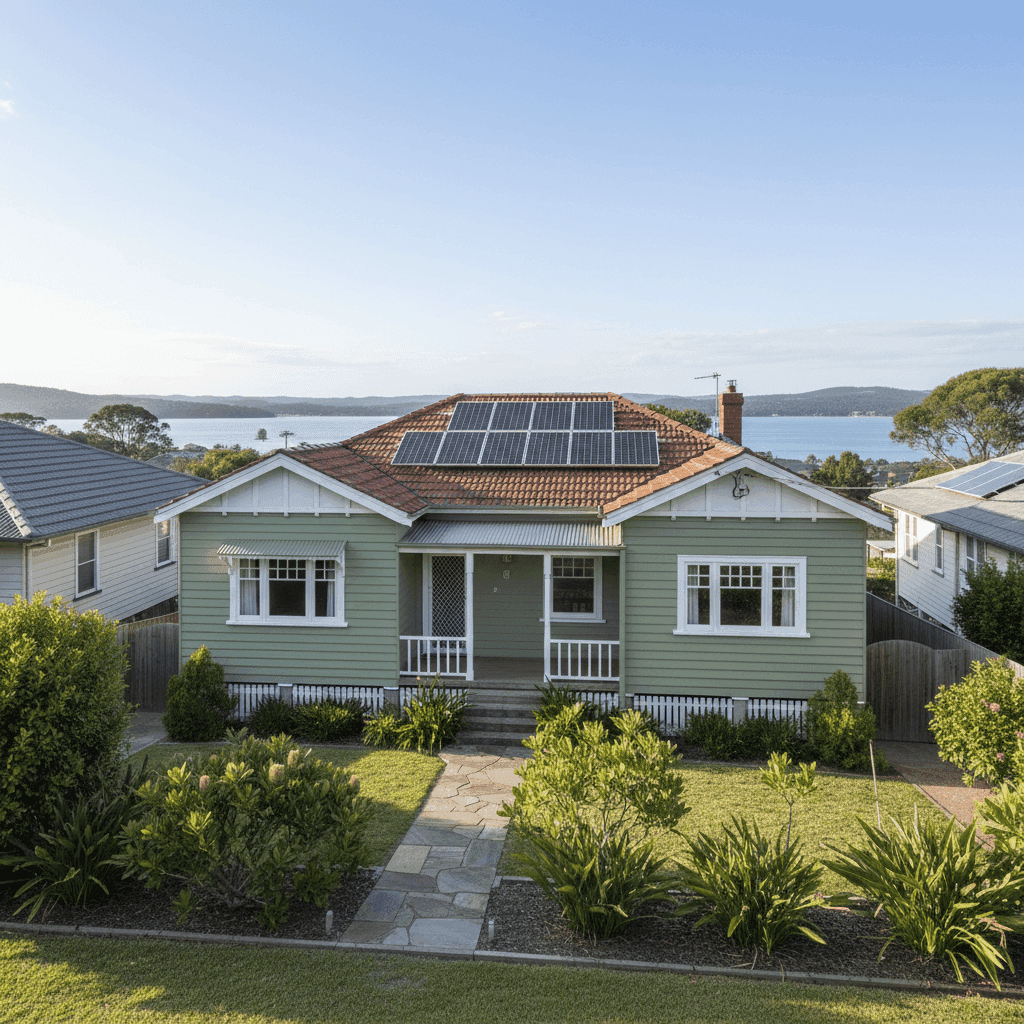
If you own a free standing home in Swansea, NSW 2281, you're living in one of the Lake Macquarie region's most sought-after coastal suburbs. Nestled between Lake Macquarie and the Tasman Sea, Swansea is a beautiful place to call home — but its coastal location, older housing stock, and local risk profile all play a role in determining what you'll pay for home insurance. This article breaks down a recent home and contents insurance quote for a 3-bedroom, 3-bathroom weatherboard property in the area, and puts that figure into context against suburb, state, and national benchmarks.
---
Is This Quote Fair?
The quote in question comes in at $5,120 per year (or $491/month) for a combined home and contents policy, covering a building sum insured of $662,000 and $75,000 in contents, each with a $1,000 excess.
Our price rating for this quote is FAIR — Around Average, and the data backs that up. At $5,120 per year, this premium sits comfortably within the middle range of what Swansea homeowners are paying. It's well below the suburb's mean average of $56,796 (which is heavily skewed by high-value outlier properties) and slightly above the suburb median of $7,403 — though it falls notably below that median, suggesting this policyholder is actually getting a reasonably competitive rate relative to many neighbours.
Compared to the NSW state average of $9,528/yr, this quote is meaningfully lower, which is a positive sign. Against the national average of $5,347/yr, it's almost identical — within just $227. For a coastal property in a regional NSW suburb with the characteristics described below, landing near the national average is a solid outcome.
---
How Swansea Compares
To understand whether this premium is genuinely competitive, it helps to look at the full picture of insurance pricing in Swansea (NSW 2281):
| Benchmark | Annual Premium |
|---|---|
| This Quote | $5,120 |
| Swansea Suburb Median | $7,403 |
| Swansea Suburb 25th Percentile | $3,216 |
| Swansea Suburb 75th Percentile | $12,267 |
| NSW State Average | $9,528 |
| NSW State Median | $3,770 |
| National Average | $5,347 |
| National Median | $2,764 |
| Lake Macquarie LGA Average | $11,064 |
A few things stand out here. First, the gap between Swansea's average ($56,796) and its median ($7,403) is enormous — a classic sign that a small number of very high-value or high-risk properties are pulling the mean upward. The median is a much more reliable yardstick for typical homeowners in the area.
Second, the Lake Macquarie LGA average of $11,064 is notably higher than both the NSW state average and this particular quote. This suggests that within the broader LGA, Swansea may attract slightly more favourable pricing than some neighbouring suburbs — potentially due to its specific flood, bushfire, and storm risk profile relative to other parts of Lake Macquarie.
At $5,120, this quote sits between the 25th percentile ($3,216) and the suburb median ($7,403), placing it in the lower-to-middle range of what Swansea homeowners pay. That's a reasonable position to be in.
---
Property Features That Affect Your Premium
Several characteristics of this property are worth understanding from an insurance pricing perspective:
Weatherboard timber walls are one of the most significant risk factors for this home. Timber-clad homes are more susceptible to fire spread and moisture damage than brick or rendered alternatives, and insurers typically price this in. Homes built in 1975 — like this one — may also carry legacy construction considerations, including older wiring, plumbing, and compliance standards that can increase the likelihood and cost of a claim.
Stump foundations are common in older Australian homes and can be a double-edged sword. On the positive side, stumps can provide some elevation from ground-level moisture and minor flooding. However, they also introduce specific risks around subsidence, pest damage (particularly termites), and structural movement over time — all factors that influence underwriting decisions.
A tiled roof is generally viewed favourably by insurers compared to corrugated iron or older materials, offering good durability and fire resistance. That said, tiles can crack under hail impact, and the 1975 construction date means the roof may be approaching or past the point where maintenance becomes a more active concern.
Solar panels add a modest layer of complexity to the insurance profile. They represent an additional asset on the roof (increasing replacement cost), and their installation can sometimes affect roofing warranties or introduce water ingress risks if not properly maintained. It's worth confirming with your insurer that solar panels are explicitly covered under your building sum insured.
Ducted climate control is another feature that can influence premiums slightly — these systems are costly to repair or replace, and their inclusion is reflected in the building sum insured. At $662,000, the building cover here appears appropriately calibrated for a 139 sqm home with these features in the current construction cost environment.
Carpet flooring is a contents-adjacent consideration — while it's technically a building fixture, it's worth ensuring your building sum insured accounts for full floor replacement in the event of a major claim.
---
Tips for Homeowners in Swansea
1. Review your building sum insured regularly. Construction costs in NSW have risen significantly in recent years. A sum insured of $662,000 for a 139 sqm weatherboard home is a reasonable starting point, but it's worth using a building cost calculator annually to ensure you're not underinsured. Underinsurance is one of the most common and costly mistakes homeowners make.
2. Ask about timber and age-related discounts or exclusions. Some insurers apply specific conditions or exclusions to homes with weatherboard cladding or stump foundations — particularly around pest damage or gradual deterioration. Read your Product Disclosure Statement (PDS) carefully and ask your insurer directly what is and isn't covered.
3. Consider a higher excess to reduce your premium. With both building and contents excesses set at $1,000, there may be room to increase these in exchange for a lower annual premium — particularly if you have a solid emergency fund. Even moving to a $2,000 excess can produce meaningful savings on a policy at this price point.
4. Compare quotes at renewal, not just at sign-up. The insurance market in NSW is competitive, and loyalty doesn't always pay. Use a comparison platform like CoverClub to benchmark your renewal quote against current market rates each year — especially given the wide spread of premiums in Swansea (from $3,216 at the 25th percentile to $12,267 at the 75th).
---
Compare Your Own Quote
Whether you're renewing an existing policy or shopping for cover on a new purchase, it pays to know where your premium sits relative to the market. CoverClub makes it easy to compare home and contents insurance quotes across multiple providers in one place. Enter your address to get started and see how your current premium stacks up against what other Swansea homeowners are paying.