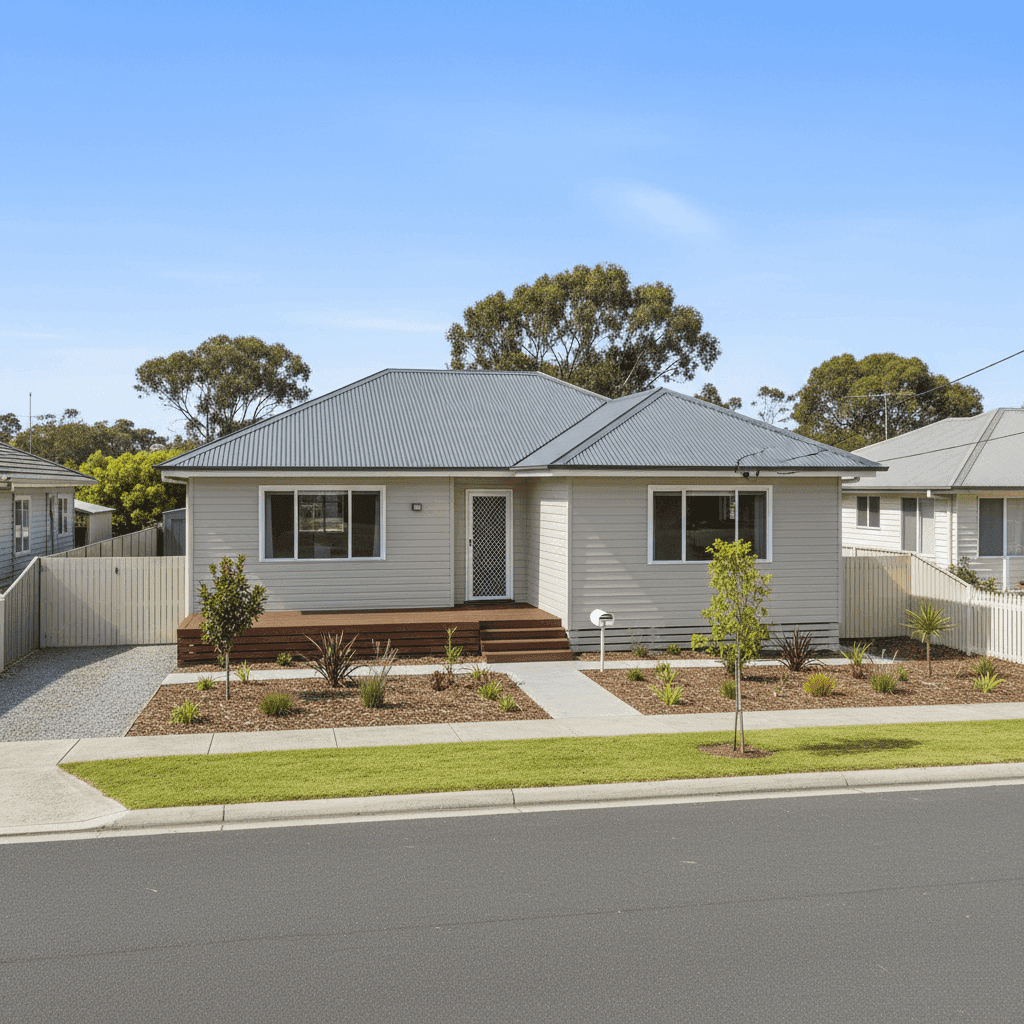
If you own a free standing home in Swansea, NSW 2281, you already know how much this lakeside suburb has to offer — relaxed coastal living, easy access to Lake Macquarie, and a tight-knit community feel. But with that lifestyle comes the responsibility of protecting your property with the right home insurance. This article breaks down a real building insurance quote for a 2-bedroom home in Swansea, comparing it against local, state, and national benchmarks so you can understand exactly what you're paying — and whether it's a fair deal.
---
Is This Quote Fair?
The quote in question comes in at $2,881 per year (or $269/month) for building-only cover, with a sum insured of $350,000 and a building excess of $5,000. Our analysis rates this quote as CHEAP — below average — which is genuinely good news for the homeowner.
To put that in perspective: the national median for building insurance sits at $2,764/yr, meaning this quote is only marginally above the national midpoint. More tellingly, the NSW state median is $3,770/yr, so this homeowner is paying around $889 less per year than the typical NSW policyholder. That's a meaningful saving, and it suggests the insurer has assessed this particular property as a relatively low-risk proposition.
The $5,000 building excess is on the higher side and is worth noting — a higher excess typically reduces your premium, so part of what makes this quote "cheap" is the trade-off of paying more out-of-pocket if you ever need to make a claim. Homeowners should weigh that carefully against the annual saving.
---
How Swansea Compares
The pricing data for Swansea paints an interesting picture. Based on a sample of 20 quotes in the 2281 postcode, here's how the numbers stack up:
| Benchmark | Annual Premium |
|---|---|
| This Quote | $2,881 |
| Suburb 25th Percentile | $3,216 |
| Suburb Median | $7,403 |
| Suburb 75th Percentile | $12,267 |
| Suburb Average | $56,796 |
| LGA (Lake Macquarie) Average | $11,064 |
| NSW State Median | $3,770 |
| NSW State Average | $9,528 |
| National Median | $2,764 |
| National Average | $5,347 |
A few things stand out immediately. First, the suburb average of $56,796 is extraordinarily high — dramatically above both the median and the national average. This is almost certainly being dragged upward by a small number of very high-value properties or high-risk quotes in the sample, which is why the median of $7,403 is a far more useful comparison point. This quote sits well below even the suburb's 25th percentile, meaning it's cheaper than at least 75% of quotes collected in Swansea.
The Lake Macquarie LGA average of $11,064 further reinforces how competitive this quote is. Whether that's due to the specific insurer, the property's characteristics, or the higher excess, this homeowner appears to be getting solid value.
You can explore more local pricing data on the Swansea suburb stats page, compare it against NSW state-wide figures, or check out national home insurance benchmarks to see the bigger picture.
---
Property Features That Affect Your Premium
Several characteristics of this property have a direct bearing on what insurers charge. Understanding them helps you anticipate how your own quote might be assessed.
Vinyl Cladding Exterior
Vinyl cladding is generally viewed as a moderate-risk material by insurers. It's not as fire-resistant as brick veneer, but it's also far less susceptible to rot than timber weatherboards. Some insurers apply a loading for non-masonry construction, though this varies significantly between providers.
Steel / Colorbond Roof
A Colorbond steel roof is widely regarded as a positive factor for insurance pricing. It's durable, fire-resistant, and performs well in storm conditions — all of which reduce the likelihood of a claim. This is likely contributing to the competitive premium on this quote.
Stump Foundation
Homes built on stumps (common in older Australian properties, particularly from the mid-20th century) can attract some insurer scrutiny, especially if the stumps are original timber. They introduce the possibility of subsidence or structural movement over time. That said, many insurers price stump-foundation homes competitively provided the property is well-maintained.
Construction Year: 1955
At nearly 70 years old, this home is considered an older dwelling. Older homes can carry higher rebuild costs relative to their market value, and may have ageing plumbing or electrical systems that increase claim likelihood. Insurers factor this in, though the impact varies.
Timber / Laminate Flooring
Timber and laminate floors can be costly to repair or replace following water damage events — a consideration insurers build into their risk models, particularly in areas near water.
Ducted Climate Control
The presence of ducted climate control adds to the replacement value of the home's fixtures and fittings. It's a positive feature in terms of liveability, but does represent an additional insurable asset that can influence the sum insured.
No Pool, No Solar Panels
The absence of a pool and solar panels simplifies the risk profile considerably. Both features can add complexity (and cost) to a policy, so their absence may be contributing to the lower-than-average premium here.
---
Tips for Homeowners in Swansea
Whether you're reviewing an existing policy or shopping around for the first time, here are four practical steps to make sure you're getting the best outcome.
- Review your sum insured regularly. Building costs in NSW have risen sharply in recent years. A sum insured of $350,000 for a 130 sqm home may be appropriate today, but it's worth cross-checking against a professional building cost estimate or an online calculator annually to avoid being underinsured.
- Understand your excess trade-off. This quote carries a $5,000 building excess, which is higher than many standard policies. If you have the financial capacity to absorb that cost in the event of a claim, it's a reasonable way to keep premiums down. If not, consider whether a lower excess (at a higher premium) might suit your situation better.
- Maintain your stumps and subfloor. Given the stump foundation, it's worth having a pest and building inspection every few years to check for timber deterioration, moisture issues, or movement. Proactive maintenance not only protects your home but can also support your insurance claims if issues arise.
- Compare quotes before renewing. Insurance loyalty rarely pays off in Australia. Insurers frequently offer better rates to new customers, so it's worth getting at least two or three competing quotes before your renewal date. Even a policy rated "cheap" today may not be the best value next year.
---
Ready to Compare Home Insurance in Swansea?
Whether you're a first-time buyer or a long-term Swansea local, comparing home insurance quotes is one of the simplest ways to save money and make sure your property is properly protected. CoverClub makes it easy to see how quotes stack up across multiple insurers in one place.
Get a home insurance quote for your Swansea property today →