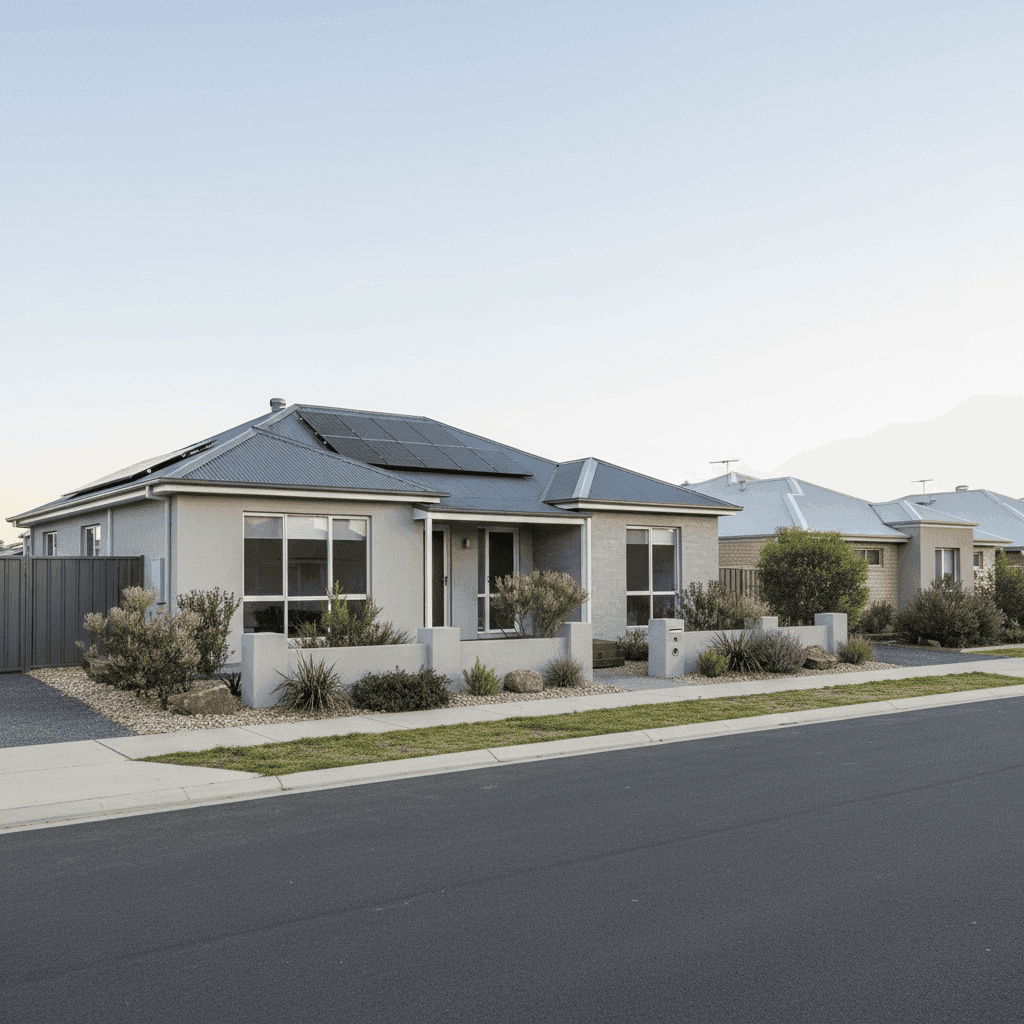
If you own a free standing home in Table Top, NSW 2640, you're probably curious about what a fair home insurance premium looks like for your area. This article breaks down a real home and contents insurance quote for a two-bedroom, two-bathroom property in Table Top — and puts the numbers in context against suburb, state, and national benchmarks so you can judge whether you're getting a good deal.
---
Is This Quote Fair?
The short answer: yes — and then some.
This quote came in at $2,015 per year (or roughly $203 per month), covering both building (insured for $695,000) and contents ($106,000). Our pricing analysis rates this quote as CHEAP — Below Average, which is a strong result for any homeowner.
To put that in perspective, the suburb average premium in Table Top sits at $4,037 per year, and the median is $3,849 per year. That means this quote is roughly 50% below the suburb average — a significant saving of over $2,000 annually. Even compared to the cheapest quarter of quotes in the area (the 25th percentile at $3,058/yr), this premium still undercuts the competition by more than $1,000.
For a property with above-average fittings quality and a solid $695,000 building sum insured, landing a premium this far below the local norm is genuinely impressive. It suggests the insurer has assessed the risk profile of this particular property favourably — and the building's characteristics likely play a meaningful role in that outcome.
---
How Table Top Compares
Understanding your local insurance market is key to knowing whether you're overpaying. Here's how Table Top stacks up against broader benchmarks:
| Benchmark | Average Premium | Median Premium |
|---|---|---|
| Table Top (NSW 2640) | $4,037/yr | $3,849/yr |
| Snowy Valleys LGA | $2,666/yr | — |
| NSW State | $3,801/yr | $3,410/yr |
| National | $2,965/yr | $2,716/yr |
A few things stand out here. Table Top's suburb average of $4,037 is notably higher than both the NSW state average of $3,801 and the national average of $2,965. This suggests that insuring a home in Table Top typically costs more than the state and national norms — making a below-average quote all the more valuable.
Interestingly, the Snowy Valleys LGA average of $2,666 is considerably lower than the Table Top suburb average, which points to meaningful variation within the local government area itself. Suburb-level data can tell a very different story from LGA-wide figures, which is why it's worth looking at Table Top-specific stats when benchmarking your own premium.
It's worth noting that the suburb sample size for Table Top is 18 quotes, which is a reasonable dataset for a smaller regional area but means the averages can shift as more data comes in. Keep that in mind when interpreting the numbers.
---
Property Features That Affect Your Premium
Several characteristics of this property are likely working in the homeowner's favour when it comes to pricing.
Concrete external walls are generally viewed positively by insurers. Concrete is highly resistant to fire, pests, and severe weather — all key risk factors that underwriters assess. Compared to timber-framed homes, concrete construction can translate to lower premiums due to its durability and lower susceptibility to structural damage.
Steel/Colorbond roofing is another tick in the right column. Colorbond is a popular and well-regarded roofing material in Australia, known for its resistance to corrosion, fire, and high winds. It's a low-maintenance option that holds up well across a range of weather conditions, which insurers tend to reward.
Slab foundation construction is standard for modern Australian homes and is generally considered a stable, low-risk foundation type — particularly in areas without significant soil movement or flood risk.
The 2002 construction year means the home is over two decades old but still relatively modern by Australian standards. Homes built after the late 1990s typically comply with more stringent building codes, which can reduce risk in the eyes of insurers.
Solar panels are present on this property. While solar panels can add to the replacement cost of a home (and should be factored into your building sum insured), they don't typically push premiums up significantly. It's important to confirm with your insurer that your solar system is included in your building cover.
Above-average fittings quality means the cost to rebuild or repair the home is higher than a standard fit-out. This is already reflected in the $695,000 building sum insured, which is on the higher end for a 105 sqm home — but getting the sum insured right is critical to avoiding underinsurance.
The property has no pool and no ducted climate control, both of which can add complexity and cost to a policy. Their absence here keeps things straightforward.
---
Tips for Homeowners in Table Top
Whether you're reviewing an existing policy or shopping for the first time, here are some practical steps to make sure you're well covered and not overpaying.
1. Check your building sum insured regularly. At $695,000 for a 105 sqm home with above-average fittings, this policy reflects a higher-than-average rebuild cost. Construction costs have risen sharply across regional NSW in recent years, so it's worth revisiting your sum insured annually to ensure it keeps pace. Underinsurance is one of the most common — and costly — mistakes homeowners make.
2. Confirm your solar panels are covered. Solar panel systems can cost $5,000–$15,000 or more to replace. Check your policy wording to confirm whether panels are included under building cover, and whether damage from specific events (such as hail or electrical faults) is included.
3. Review your excess levels strategically. This policy carries a $3,000 building excess and a $1,000 contents excess. A higher excess typically lowers your premium, but make sure you could comfortably cover that amount out of pocket in the event of a claim. If cash flow is a concern, it may be worth comparing quotes with a lower excess.
4. Compare quotes at renewal time. Even if you're happy with your current insurer, the insurance market changes every year. Premiums can shift significantly between providers, and loyalty doesn't always pay. Running a comparison before your renewal date is one of the simplest ways to ensure you're still on a competitive rate.
---
Ready to Compare?
Whether you're a first-time buyer or a long-time homeowner in Table Top, comparing quotes is the best way to make sure you're getting value for money. At CoverClub, we make it easy to benchmark your premium against real data from your suburb, state, and across Australia.
Get a home insurance quote today and see how your premium stacks up — you might be surprised at what you find.