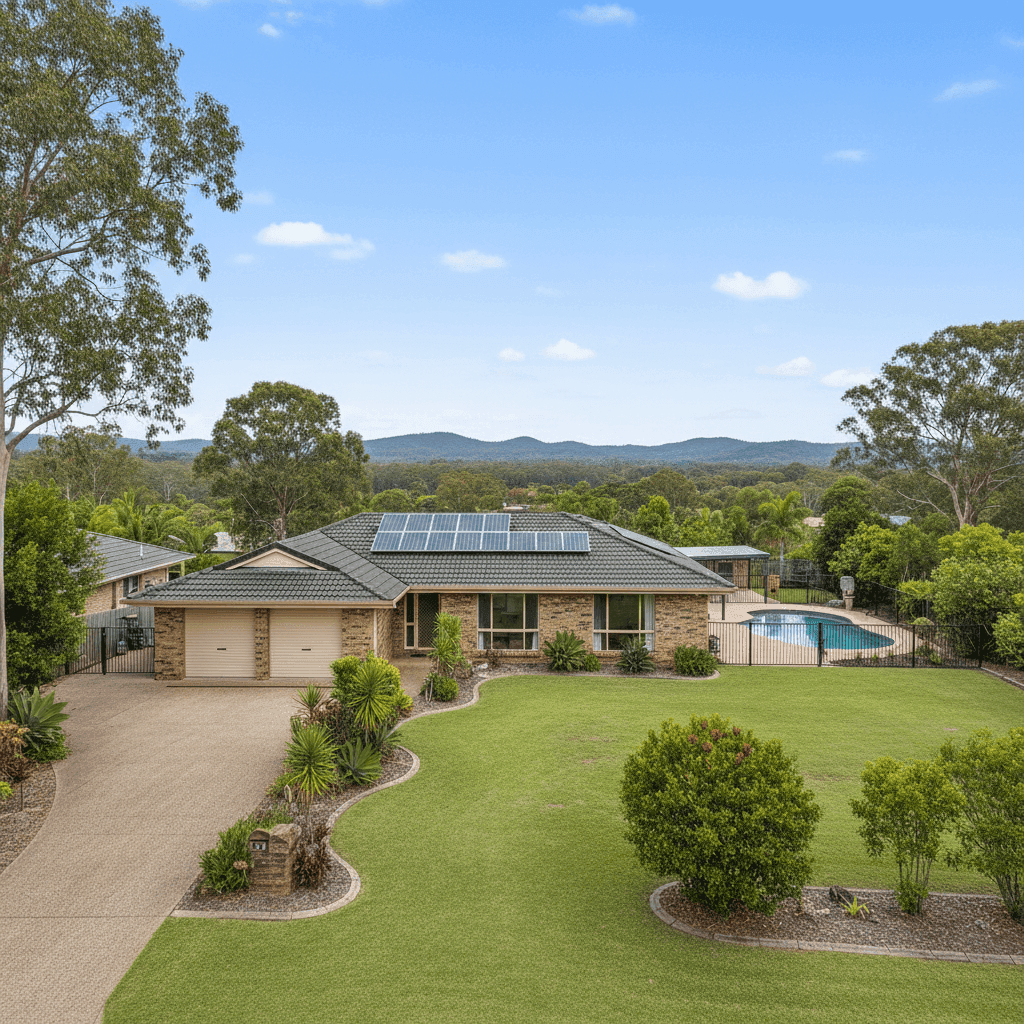
If you own a free standing home in Tallai, QLD 4213, you may be wondering whether you're paying a fair price for your home and contents insurance — or leaving money on the table. This article breaks down a real insurance quote for a four-bedroom, two-bathroom brick veneer home in Tallai, compares it against suburb, state, and national benchmarks, and offers practical tips to help you get the best value cover.
---
Is This Quote Fair?
The short answer: yes — and then some. This quote came in at $1,614 per year (or roughly $171 per month) for combined home and contents cover, with a building sum insured of $700,000 and contents valued at $50,000. Our price rating system classifies this as CHEAP — below average — meaning it sits well below what most homeowners in the area are paying.
To put that in perspective, the average home insurance premium across Tallai sits at $6,447 per year, with a median of $5,305. Even the cheapest quarter of quotes in the suburb (the 25th percentile) averages $4,777 per year. This quote at $1,614 is a remarkable outlier — coming in at less than a third of the suburb median.
For a property with a pool, solar panels, and ducted climate control — features that typically nudge premiums upward — this result is particularly impressive. It suggests that the combination of insurer, coverage terms, and property characteristics has aligned in the homeowner's favour.
---
How Tallai Compares
Tallai is a leafy, semi-rural suburb nestled in the Gold Coast hinterland, and its insurance landscape reflects the region's unique risk profile. Here's how the numbers stack up:
| Benchmark | Premium |
|---|---|
| This quote | $1,614/yr |
| Tallai suburb average | $6,447/yr |
| Tallai suburb median | $5,305/yr |
| Gold Coast LGA average | $8,161/yr |
| QLD state average | $9,129/yr |
| QLD state median | $3,903/yr |
| National average | $5,347/yr |
| National median | $2,764/yr |
You can explore the full breakdown of Tallai insurance statistics, compare with Queensland-wide data, or view national home insurance benchmarks to see where your own suburb sits.
A few things stand out from the data. The Gold Coast LGA average of $8,161 is notably higher than both the Queensland median and the national average — a reflection of the region's exposure to severe weather events, storm surge, and the high replacement costs associated with premium coastal and hinterland properties. Tallai itself skews high, with a suburb average nearly 20% above the national figure.
The wide gap between the QLD average ($9,129) and the QLD median ($3,903) is also telling. A relatively small number of high-risk or high-value properties are pulling the average up significantly — a pattern common in Queensland, where cyclone-prone northern regions and flood-affected inland areas can carry extreme premiums that distort state-wide figures.
---
Property Features That Affect Your Premium
Every home tells its own story when it comes to insurance risk. Here's how this particular property's features likely influenced the quote:
Brick veneer construction and tiled roof are generally viewed favourably by insurers. Brick veneer offers solid fire resistance and structural durability, while a tiled roof — compared to, say, Colorbond or corrugated iron — can be seen as a quality indicator. That said, tiles can be more expensive to repair after hail or storm damage, so the benefit isn't always straightforward.
Slab foundation is a common and well-understood construction type in Queensland, typically associated with lower subsidence risk compared to suspended timber floors, and generally straightforward to assess for insurers.
Tiled flooring throughout the home is a practical choice in Queensland's climate and is typically regarded as a durable, lower-maintenance finish — which may contribute to a modest reduction in contents and building risk.
Swimming pool adds liability exposure and increases the overall replacement cost of the property, which usually nudges premiums higher. Insurers factor in the cost of pool fencing compliance, equipment, and the liability risk associated with pool ownership.
Solar panels are an increasingly common feature on Queensland homes and represent a meaningful addition to the building sum insured. Panels, inverters, and associated wiring can cost tens of thousands of dollars to replace, and some insurers are more competitive than others when it comes to pricing this risk.
Ducted climate control is another high-value fixture that adds to the building replacement cost. Systems of this type can cost $10,000–$20,000 or more to replace, so ensuring your sum insured accurately reflects this is important.
No cyclone risk is a significant factor in this quote's competitiveness. Properties in northern Queensland can face cyclone loading premiums that dramatically increase the cost of cover. Tallai, situated in the Gold Coast hinterland, falls outside designated cyclone risk zones — a meaningful advantage when shopping for insurance.
---
Tips for Homeowners in Tallai
1. Review your sum insured regularly With a building sum insured of $700,000 and a 214 sqm home built in 1995, it's worth checking whether your coverage reflects current construction costs. Building costs in South East Queensland have risen sharply in recent years — underinsurance remains one of the most common and costly mistakes homeowners make.
2. Don't overlook your pool and solar in the sum insured Both your pool and solar system should be factored into your building sum insured. If you've upgraded panels, added battery storage, or made other improvements since taking out your policy, update your insurer — otherwise you may find yourself short at claim time.
3. Compare quotes at renewal — every year The fact that this quote came in well below the suburb average is a reminder that premiums vary enormously between insurers for the same property. Loyalty doesn't always pay in insurance. Use a comparison tool at renewal to ensure you're not quietly drifting into an overpriced policy.
4. Consider your excess strategically This policy carries a $4,000 building excess and a $1,000 contents excess. A higher excess typically lowers your premium, but make sure you're comfortable covering that amount out of pocket in the event of a claim. If cash flow is a concern, it may be worth modelling the cost difference of a lower excess option.
---
Ready to Compare?
Whether you're a first-time buyer or a long-time Tallai resident, it pays to know what the market looks like before you renew. Get a home insurance quote at CoverClub and see how your current policy stacks up against real market data — in seconds, with no obligation.