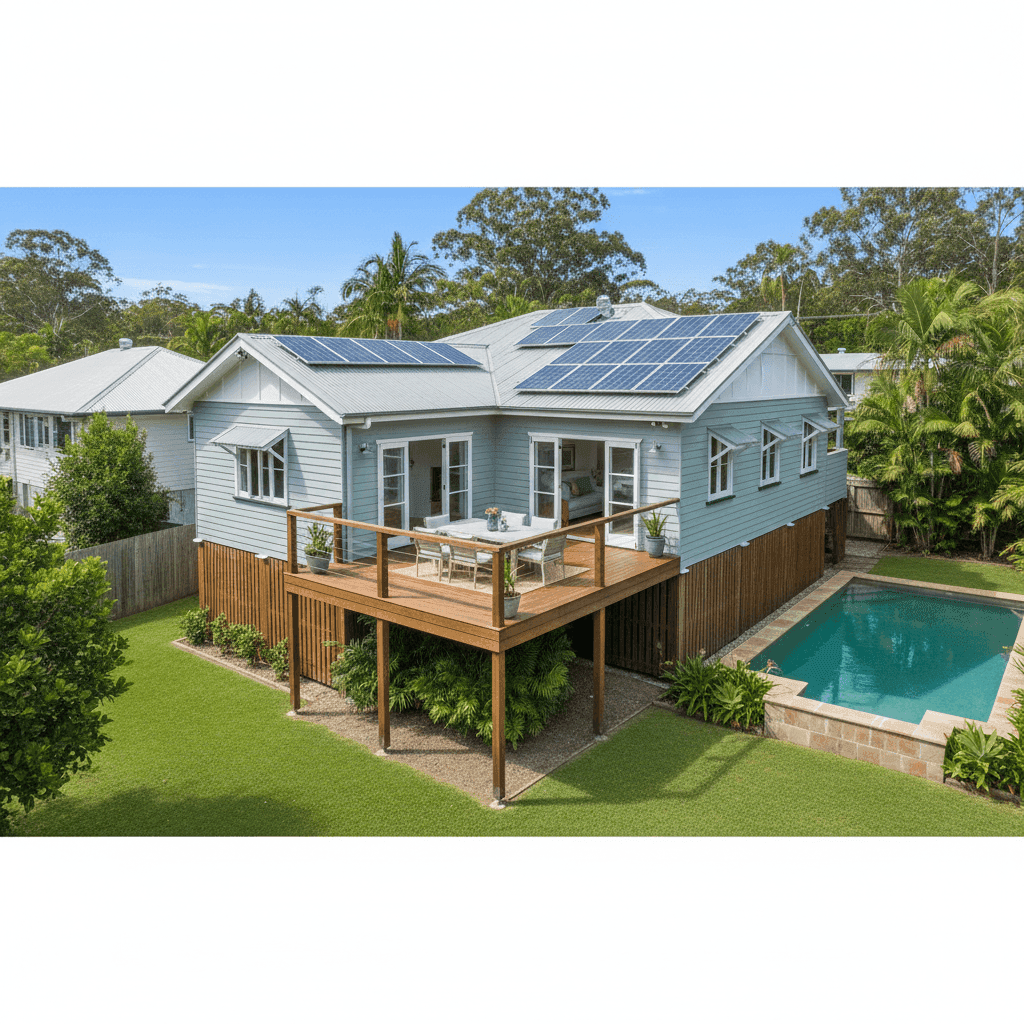
Tallebudgera is one of the Gold Coast hinterland's most sought-after pockets — a leafy, semi-rural suburb that blends acreage lifestyle with coastal convenience. For owners of a four-bedroom, free-standing home in this area, getting the right home and contents insurance is just as important as finding the right property. This article breaks down a real insurance quote for a property in Tallebudgera (postcode 4228), explains whether the price stacks up, and offers practical advice for local homeowners.
---
Is This Quote Fair?
The quote in question comes to $3,404 per year (or $338/month) for combined home and contents cover, with a building sum insured of $659,000 and contents valued at $40,000. Both the building and contents excess are set at $1,000.
Our price rating for this quote is FAIR — Around Average, and the data backs that up. Based on 37 quotes collected for Tallebudgera, the suburb's median premium sits at $4,113/yr, meaning this quote comes in roughly $700 below the midpoint for the area. It also falls comfortably between the 25th percentile ($3,038/yr) and the 75th percentile ($5,253/yr), placing it solidly in the middle of the market.
In other words, this isn't a bargain-basement price, but it's also not an overpriced outlier. For a property with this combination of features — timber construction, a pool, solar panels, and a pole foundation — landing near the median is a reasonable outcome. There may still be room to shop around and push the premium closer to that 25th percentile mark.
---
How Tallebudgera Compares
To put this quote in proper context, it helps to zoom out and look at the broader picture.
| Benchmark | Premium |
|---|---|
| This quote | $3,404/yr |
| Tallebudgera suburb median | $4,113/yr |
| Tallebudgera suburb average | $5,161/yr |
| Gold Coast LGA average | $8,161/yr |
| QLD state median | $3,903/yr |
| QLD state average | $9,129/yr |
| National median | $2,764/yr |
| National average | $5,347/yr |
A few things stand out here. First, the Queensland state average of $9,129/yr is extraordinarily high — driven upward by cyclone-prone regions in Far North Queensland, where premiums can be eye-watering. The state median of $3,903/yr is a much more useful comparison for South East Queensland homeowners, and this quote sits just below it.
Compared to the national picture, the quote is above the national median of $2,764/yr, but that's expected — Queensland carries higher risk profiles than many southern states due to storm, flood, and weather-related exposures, even in areas not classified as cyclone zones.
The Gold Coast LGA average of $8,161/yr is particularly notable. That figure is heavily influenced by beachside and flood-prone suburbs within the LGA. Tallebudgera's hinterland position and elevation mean it tends to fare better than many coastal Gold Coast properties, and this quote reflects that advantage.
---
Property Features That Affect Your Premium
Several characteristics of this property have a meaningful influence on the insurance premium. Understanding them can help you make informed decisions about your cover.
Weatherboard timber construction is one of the most significant rating factors. Timber-framed homes with weatherboard cladding are considered higher risk than brick veneer or double-brick homes — they're more susceptible to fire spread and can deteriorate faster if not well maintained. Insurers typically price this in.
Pole (stump) foundation is common in Queensland's older Queenslander-style homes and those built on sloped or elevated blocks. While the elevation here is less than one metre, the pole foundation still signals a particular construction type to underwriters. It can also affect reinstatement costs, which feeds into the building sum insured calculation.
Timber and laminate flooring throughout the home adds to the overall replacement value. Quality timber flooring can be expensive to replace after a flood or fire event, and insurers factor this into their pricing.
The swimming pool adds liability exposure and increases the overall replacement cost of the property. Pool fencing compliance, equipment value, and liability risk all contribute to a slightly higher premium.
Solar panels are an increasingly common feature on Queensland homes, and they add to the insured value of the building. A rooftop solar system can cost $8,000–$20,000 or more to replace, and most policies cover them as part of the building sum insured — so it's worth confirming this with your insurer.
Steel/Colorbond roofing is actually a positive from an insurance perspective. Colorbond roofs are durable, cyclone-resistant, and less prone to the issues that plague terracotta or concrete tiles. This may have helped moderate the premium slightly.
No cyclone risk classification is a significant advantage for this property. Being outside a designated cyclone zone means the premium avoids the substantial loading that applies to homes in North Queensland.
---
Tips for Homeowners in Tallebudgera
1. Review your building sum insured carefully. At $659,000, the building sum insured needs to reflect the full cost of rebuilding — not the market value of the property. Timber construction, pole foundations, and features like ducted air conditioning and solar panels all increase rebuild costs. Use a building cost calculator or get a quantity surveyor's assessment to make sure you're not underinsured.
2. Shop around at renewal time. A "fair" rating means there's likely a better deal available. Insurers reprice risk differently, and a premium that's competitive today may creep up at renewal. Use a comparison platform like CoverClub to benchmark your renewal quote against the market each year.
3. Maintain your timber exterior. Weatherboard homes require regular upkeep — repainting, checking for rot, and ensuring the cladding is in good condition. Some insurers can reduce cover or deny claims if poor maintenance contributed to damage. Staying on top of maintenance protects both your home and your claim eligibility.
4. Check your pool and solar are properly covered. Confirm with your insurer that your swimming pool equipment and solar panel system are explicitly included in your building cover. Ask about the limits that apply and whether any additional endorsements are needed. This is especially important after storm events, which are not uncommon in South East Queensland.
---
Compare Your Options with CoverClub
Whether you're reviewing an existing policy or shopping for cover on a new property, it pays to see what the market has to offer. CoverClub aggregates real quote data from across Australia, so you can see exactly how your premium stacks up against your neighbours and the broader market. Get a home insurance quote today and find out if you're paying a fair price — or if there's a better deal waiting for you.