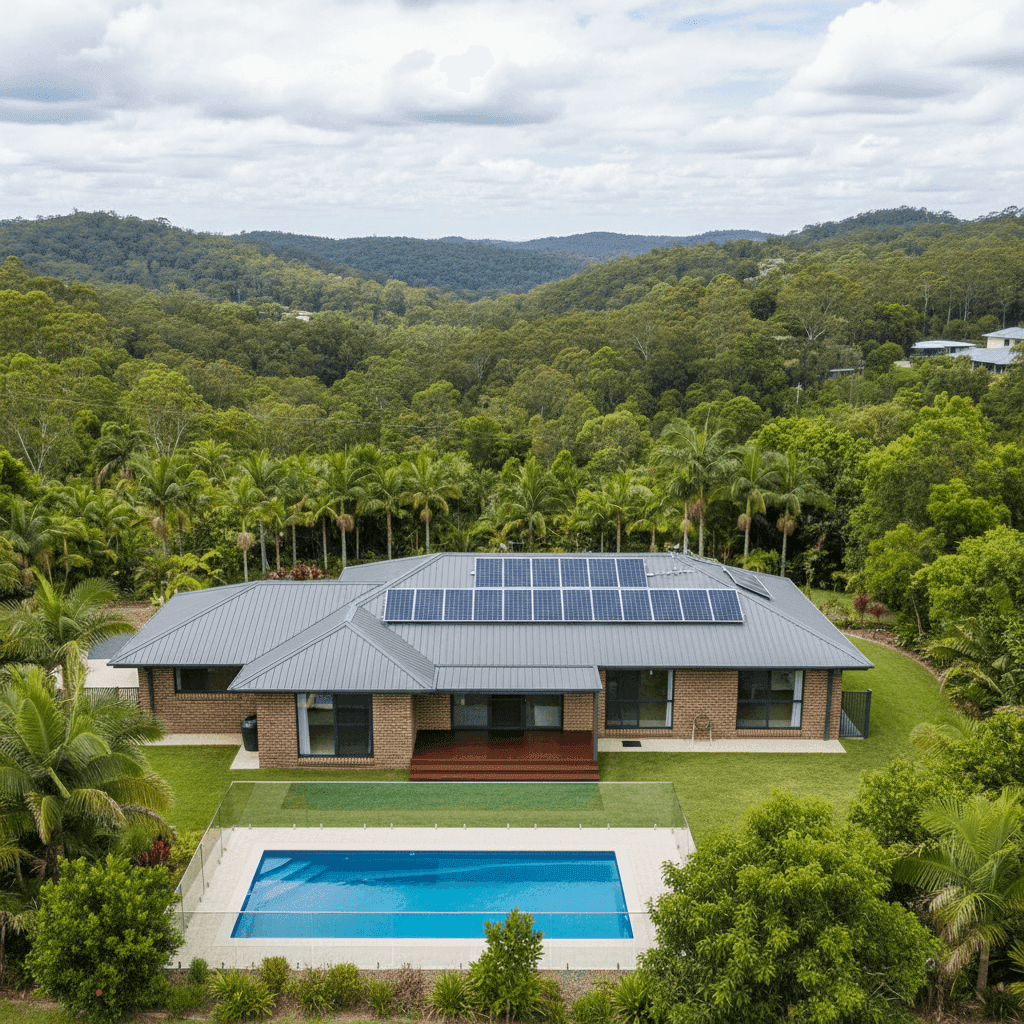
Tallebudgera Valley is one of the Gold Coast hinterland's most sought-after pockets — a lush, semi-rural escape that still sits within easy reach of the coast. But owning a free-standing home here comes with real insurance considerations, and understanding whether you're paying a fair premium can save you hundreds of dollars a year. This article breaks down a real building-only insurance quote for a 4-bedroom, 3-bathroom home in Tallebudgera Valley (postcode 4228), and puts the numbers in context so you can make a more informed decision.
---
Is This Quote Fair?
The quote in question comes in at $6,915 per year (or $663/month) for building-only cover on a 214 sqm brick veneer home with a sum insured of $983,000 and a $1,000 building excess.
Our price rating for this quote is EXPENSIVE — Above Average. That's not a label we apply lightly. Based on a sample of 32 quotes for comparable properties in the Tallebudgera Valley area, this premium sits above the suburb's 75th percentile of $6,686/yr, meaning it's higher than at least three-quarters of quotes collected locally. The suburb average sits at $6,830/yr, so this quote is broadly in line with the mean — but the median tells a more revealing story.
The suburb median premium is just $4,715/yr, which means half of homeowners in this area are paying significantly less. If your insurer is quoting you $6,915, it's worth asking why — and whether a comparable policy is available at a lower price point.
---
How Tallebudgera Valley Compares
To put this quote in proper perspective, here's how Tallebudgera Valley stacks up against broader benchmarks:
| Benchmark | Average Premium | Median Premium |
|---|---|---|
| Tallebudgera Valley (4228) | $6,830/yr | $4,715/yr |
| Gold Coast LGA | $8,161/yr | — |
| Queensland | $9,129/yr | $3,903/yr |
| National | $5,347/yr | $2,764/yr |
A few things stand out here. First, Queensland's average premium of $9,129/yr is substantially higher than the national average of $5,347/yr — a reflection of the state's elevated exposure to natural hazards including flooding, storms, and hail events. The Gold Coast LGA average of $8,161/yr also sits well above the national figure, suggesting that insurers price this region with a degree of caution.
Interestingly, Tallebudgera Valley's suburb average of $6,830/yr is actually below the Gold Coast LGA average, which may reflect the valley's slightly more sheltered geography compared to coastal or flood-prone parts of the region. You can explore the full Tallebudgera Valley suburb stats here.
The wide gap between the QLD mean ($9,129) and median ($3,903) is also worth noting — it signals that a relatively small number of very high-risk or high-value properties are pulling the average up considerably. If your property doesn't fall into those categories, you may have room to negotiate a better rate.
---
Property Features That Affect Your Premium
Several characteristics of this particular property will influence how insurers assess and price the risk:
Brick Veneer Walls & Colorbond Roof Brick veneer construction is generally well-regarded by insurers — it's durable, fire-resistant, and widely understood. A steel Colorbond roof is similarly viewed as a reliable, low-maintenance option that holds up well in Australian conditions. Together, these materials typically attract more competitive premiums compared to timber-framed or older fibrous cement construction.
Slab Foundation A concrete slab is a straightforward foundation type that carries relatively low risk of subsidence or movement-related claims, which is a positive factor for insurers.
Pool A swimming pool adds to the insurable value of the property and introduces some liability considerations. Pools must be correctly included in your sum insured to avoid being underinsured in the event of a claim.
Solar Panels Solar panels are a fixed improvement to the building and should be explicitly covered under your building policy. Not all standard policies include solar as a default — it's worth confirming with your insurer that your panels are covered for damage from storms, hail, or fire.
Ducted Climate Control Ducted air conditioning systems are a significant fixture and should be factored into your building sum insured. At $983,000, this property's sum insured appears to account for a well-appointed home, which is appropriate given the inclusions.
Building Size & Age At 214 sqm and built in 1990, this home is mid-sized and approaching 35 years old. Older homes can carry slightly higher risk due to ageing electrical systems, plumbing, and roofing — though the Colorbond roof likely mitigates some of that concern.
---
Tips for Homeowners in Tallebudgera Valley
1. Check your sum insured regularly Construction costs in South East Queensland have risen sharply in recent years. A sum insured set even two or three years ago may no longer be sufficient to fully rebuild your home. Review your figure annually and use a building cost calculator to validate it.
2. Compare quotes — don't auto-renew The gap between the 25th percentile ($3,403/yr) and this quote ($6,915/yr) in Tallebudgera Valley is substantial. Auto-renewing without shopping around could mean you're paying double what a comparable policy might cost. Get a fresh quote at CoverClub to see what's available for your address.
3. Confirm your solar panels and pool are explicitly covered These are common exclusions or underinsured items in standard building policies. Ask your insurer directly whether storm or hail damage to solar panels is covered, and whether your pool and associated equipment are included in the building sum insured.
4. Review your excess A $1,000 building excess is fairly standard, but opting for a higher voluntary excess can reduce your annual premium. If you have a solid emergency fund and are unlikely to make small claims, this trade-off may be worth considering.
---
Compare Your Home Insurance Today
Whether you're reviewing an existing policy or shopping for the first time, comparing quotes is the single most effective way to ensure you're not overpaying. CoverClub makes it easy to see what insurers are quoting for homes like yours in Tallebudgera Valley — in just a few minutes. Start your comparison at CoverClub and find out if there's a better deal waiting for you.