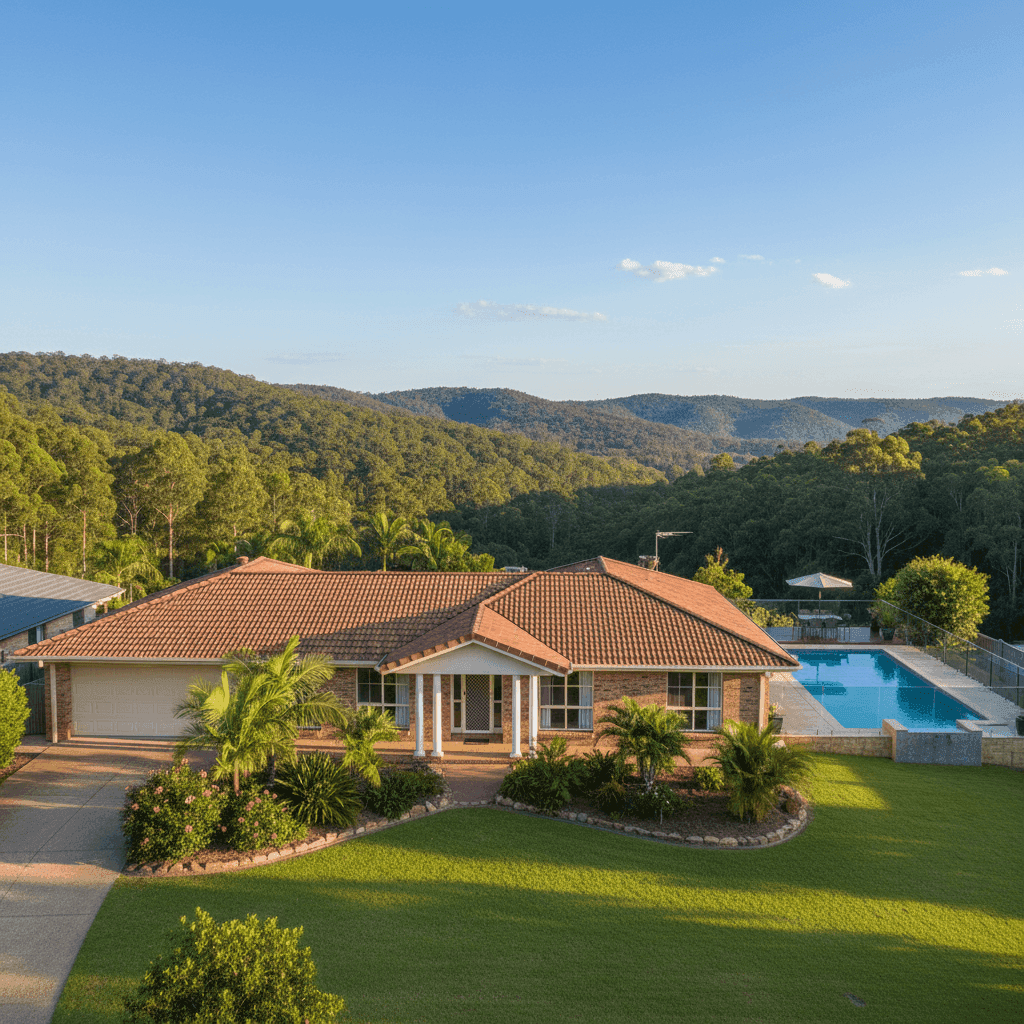
Tallebudgera Valley is one of the Gold Coast hinterland's most sought-after pockets — a lush, semi-rural enclave where spacious free standing homes sit among rolling greenery, just a short drive from the coast. But living the good life in this part of Queensland comes with its own set of insurance considerations. This article breaks down a real building insurance quote for a four-bedroom, two-bathroom free standing home in Tallebudgera Valley (postcode 4228), and puts the numbers in context so you can judge whether you're getting a fair deal.
---
Is This Quote Fair?
The quote in question comes in at $6,903 per year (or $662/month) for building-only cover, with a $1,000 building excess and a sum insured of $2,002,000. Our price rating for this quote is Expensive (Above Average).
To understand what that means in practice, it helps to look at where this premium sits relative to the local market. The suburb average for Tallebudgera Valley is $6,830/yr, so this quote is sitting just above the local average — not dramatically so, but enough to warrant a closer look. More telling is the comparison to the suburb median of $4,715/yr. Because medians are less distorted by outliers than averages, this gap suggests that while some properties in the area attract very high premiums (pulling the average up), the majority of homeowners are paying noticeably less.
At $6,903/yr, this quote also exceeds the suburb's 75th percentile of $6,686/yr — meaning it's priced higher than roughly three-quarters of the 32 quotes sampled in this area. That's a meaningful signal that there may be room to find a more competitive rate.
That said, context matters. A sum insured of over $2 million is substantial, and above-average fittings quality will always push rebuilding costs — and therefore premiums — upward. The quote isn't outrageous given the property's profile, but it's worth shopping around.
---
How Tallebudgera Valley Compares
One of the most useful ways to assess any insurance quote is to zoom out and compare it across different geographic levels. Here's how the numbers stack up:
| Benchmark | Average Premium | Median Premium |
|---|---|---|
| Tallebudgera Valley (4228) | $6,830/yr | $4,715/yr |
| Gold Coast LGA | $8,161/yr | — |
| Queensland | $9,129/yr | $3,903/yr |
| National | $5,347/yr | $2,764/yr |
A few things stand out here. First, Queensland's average premium of $9,129/yr is significantly higher than the national average of $5,347/yr — a reflection of the state's exposure to extreme weather events, including flooding, storms, and cyclones. Tallebudgera Valley's local average of $6,830/yr actually sits well below the Queensland average, which is a positive sign for homeowners in this suburb.
Interestingly, the Gold Coast LGA average of $8,161/yr is higher than the Tallebudgera Valley suburb average, suggesting that coastal and lower-lying parts of the Gold Coast carry greater risk — and greater cost — than this hilly hinterland pocket. The valley's elevated terrain and distance from the coast likely contribute to a more favourable risk profile overall.
Compared to the national average, however, this quote is still above the mark — a reminder that Queensland homeowners broadly pay more for insurance than their counterparts in most other states.
---
Property Features That Affect Your Premium
Several characteristics of this property have a direct bearing on what insurers charge. Here's a breakdown of the key factors at play:
Brick veneer construction and tiled roof — This is generally considered a favourable combination by insurers. Brick veneer offers solid fire resistance and structural durability, while tiled roofs are long-lasting and perform well in most weather conditions. Compared to properties with timber frames and corrugated iron roofing, this build type typically attracts lower risk ratings.
Slab foundation — Concrete slab foundations are standard in Queensland and are well-regarded by insurers for their stability. They're less susceptible to subfloor moisture and pest damage than raised timber stumped foundations.
Above-average fittings quality — This is one of the more significant premium drivers in this quote. Higher-quality fixtures, fittings, and finishes cost more to repair or replace after a claim, which is reflected in both the sum insured and the premium. It's important that the sum insured accurately reflects the full cost of rebuilding to the same standard — underinsurance is a genuine risk for premium properties.
Swimming pool — The presence of a pool adds to the overall replacement value of the property and introduces additional liability considerations. Most insurers factor this into their building premium calculations.
Ducted climate control — Ducted air conditioning systems are expensive to replace and are typically included within the building sum insured. This adds to the overall rebuild cost and, by extension, the premium.
Body corporate / strata property — It's worth noting that this property has a body corporate arrangement. Homeowners in strata or community title schemes should clarify with their body corporate exactly what the strata insurance covers and what gaps may exist, to avoid double-insuring or — worse — being underinsured.
No cyclone risk — Tallebudgera Valley falls outside designated cyclone risk zones, which is a meaningful cost saving compared to properties in Far North Queensland or coastal northern areas. This contributes to the suburb's premiums sitting below the Queensland state average.
---
Tips for Homeowners in Tallebudgera Valley
1. Review your sum insured carefully A sum insured of $2,002,000 is significant. Make sure this figure reflects the true cost of rebuilding your home from scratch — including demolition, professional fees, and the cost of replicating above-average fittings. Use a quantity surveyor or an online building cost calculator to sense-check the figure. Overinsuring wastes money; underinsuring can be financially devastating after a claim.
2. Shop around — especially at renewal Insurers often reserve their best pricing for new customers. If your policy is coming up for renewal and the premium has crept up, it's worth getting at least two or three competing quotes before automatically renewing. Compare quotes at CoverClub to see what other insurers are offering for your specific property.
3. Clarify your strata cover If your property is part of a body corporate, obtain a copy of the strata insurance certificate of currency and check what's actually covered under the building policy. Understand where the body corporate's responsibility ends and your own begins — particularly for internal fittings, fixtures, and improvements you've made to the property.
4. Consider your excess level A $1,000 building excess is fairly standard, but some insurers offer lower premiums in exchange for a higher excess. If you have a strong financial buffer and are unlikely to make small claims, opting for a higher excess (say, $2,500 or $5,000) can reduce your annual premium meaningfully.
---
Compare Your Home Insurance Today
Whether this quote reflects good value for your situation depends on your property's specific rebuild cost, your risk tolerance, and what other insurers are willing to offer. The best way to know if you're overpaying is to compare. Get a home insurance quote at CoverClub and see how your premium stacks up against the market — it takes just a few minutes and could save you hundreds of dollars a year.