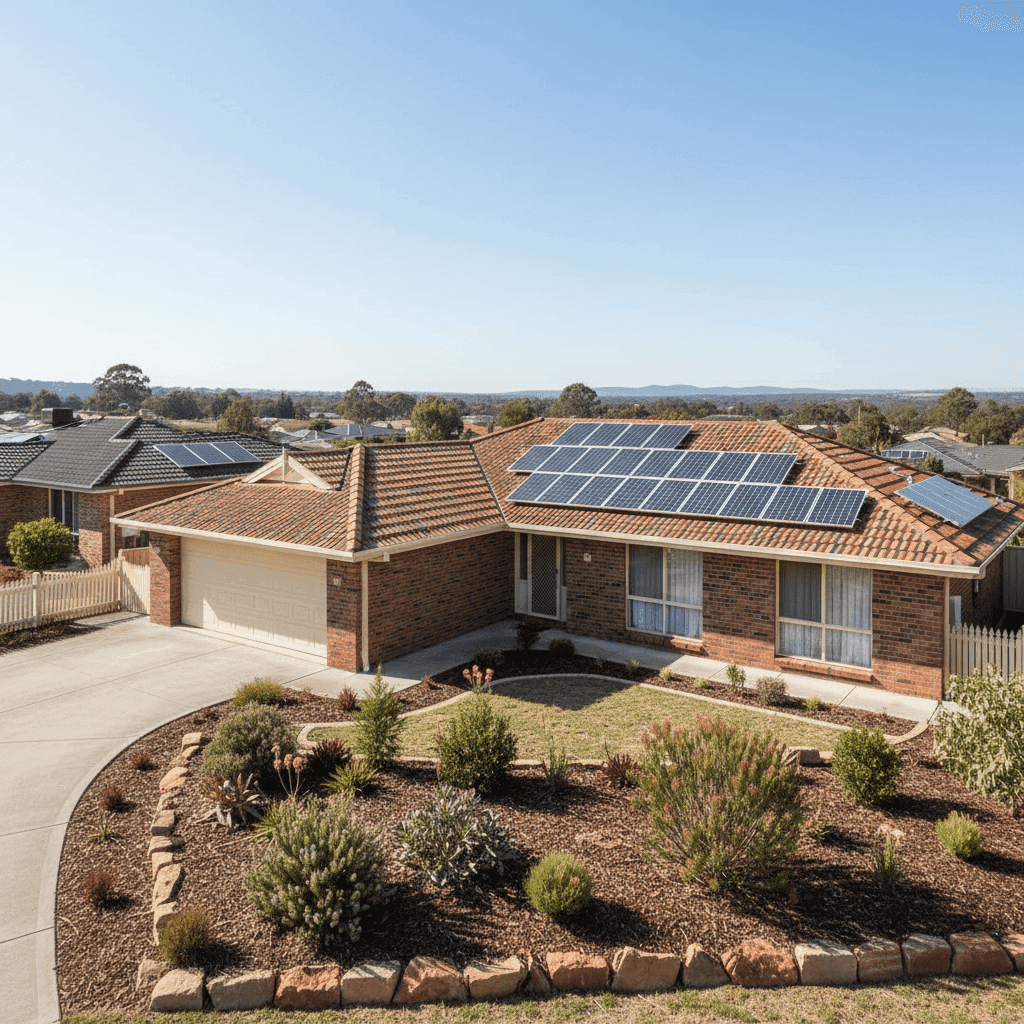
If you own a free standing home in Tallong, NSW 2579, you've probably wondered whether you're paying a fair price for your home and contents insurance. With premiums varying widely across the Southern Tablelands region, getting a clear picture of what's typical — and what's not — can make a real difference to your household budget. This article breaks down a recent quote for a five-bedroom, brick veneer home in Tallong, compares it against local, state, and national benchmarks, and offers practical advice for homeowners in the area.
---
Is This Quote Fair?
The annual premium in question comes in at $3,525 per year (or $364 per month) for a combined home and contents policy. This covers a building sum insured of $1,201,000 and contents valued at $100,000, with a building excess of $3,000 and a contents excess of $1,000.
Our pricing engine rates this quote as Fair — Around Average, and the data backs that up. Within the Tallong suburb (postcode 2579), the average premium sits at $4,197 per year and the median at $4,048. That means this particular quote comes in roughly $500 below the suburb average — a meaningful saving, even if it's not in bargain territory.
The quote also falls comfortably within the middle range of local pricing. The 25th percentile for the suburb is $3,231 per year, and the 75th percentile is $4,919. At $3,525, this premium sits in the lower half of the typical range — closer to the cheaper end without being an outlier. For a property of this size and value, that's a reasonable outcome worth noting.
---
How Tallong Compares
To put this quote in proper context, it helps to look beyond the suburb and examine how Tallong stacks up against broader benchmarks. You can explore the full data on our Tallong suburb stats page.
| Benchmark | Average Premium | Median Premium |
|---|---|---|
| Tallong (postcode 2579) | $4,197/yr | $4,048/yr |
| Upper Lachlan LGA | $3,209/yr | — |
| New South Wales | $9,528/yr | $3,770/yr |
| National | $5,347/yr | $2,764/yr |
A few things stand out here. First, the NSW state average of $9,528 is dramatically higher than the Tallong suburb average — but this is heavily skewed by high-value coastal and metro properties. The NSW median of $3,770 is a much more representative figure for typical homeowners, and Tallong's median of $4,048 sits only modestly above it.
Compared to the national picture, Tallong's premiums are broadly in line with the national average, though above the national median of $2,764. This reflects the relatively high building values common in regional NSW, where rebuilding costs can rival those in major cities.
Interestingly, the Upper Lachlan LGA average of $3,209 is notably lower than the Tallong suburb average. This suggests that some parts of the LGA attract cheaper premiums, likely due to differences in risk profiles, property values, or construction types across the broader council area.
For a deeper dive into NSW home insurance pricing trends, our state stats page is a great starting point.
---
Property Features That Affect Your Premium
Several characteristics of this property influence what insurers charge — for better and for worse.
Brick veneer construction is generally viewed favourably by insurers. It offers solid fire resistance and structural durability, which can help keep premiums lower compared to timber-framed or clad homes. Combined with a tiled roof, this property sits in one of the more insurer-friendly construction categories.
The slab foundation is standard for homes built in the late 1990s and is considered low-risk from an insurer's perspective — there's no subfloor space to trap moisture or pests, and slab homes tend to be structurally stable over time.
Solar panels are worth flagging. While they add value to the property and reduce energy bills, they also add to the replacement cost in the event of a claim. Insurers will typically factor the panels into the building sum insured, so it's important to ensure your coverage amount reflects their current replacement value. If your panels were installed some years ago, it may be worth getting an updated valuation.
At 277 square metres, this is a generously sized home, and the $1,201,000 building sum insured reflects that. Getting the sum insured right is critical — underinsuring a large home can leave you significantly out of pocket after a major loss event. It's worth periodically checking that your building sum insured keeps pace with rising construction costs.
The vinyl flooring throughout is a practical, cost-effective choice that's also relatively straightforward to replace, which can have a minor positive effect on contents and building claims costs.
---
Tips for Homeowners in Tallong
1. Review your building sum insured annually Construction costs in regional NSW have risen sharply in recent years. A sum insured that was accurate two or three years ago may no longer cover the full cost of rebuilding your home today. Use an independent building calculator or speak with a quantity surveyor to make sure you're adequately covered.
2. Consider a higher excess to reduce your premium The building excess on this policy is $3,000, which is already on the higher side. However, if you have a solid emergency fund and rarely make small claims, opting for a higher excess on your contents cover (currently $1,000) could bring your annual premium down meaningfully.
3. Update your solar panel details with your insurer Solar panel technology and installation costs change frequently. Make sure your insurer has accurate details about your system — including the number of panels, inverter type, and installation year — so you're not left underinsured if they're damaged in a storm or fire.
4. Compare quotes at renewal time Even if your current premium feels reasonable, the insurance market is competitive and pricing can shift significantly from year to year. Running a fresh comparison at renewal is one of the simplest ways to ensure you're not paying more than you need to.
---
Ready to Compare?
Whether you're reviewing your current policy or shopping for the first time, comparing quotes is the smartest move you can make. Get a home insurance quote at CoverClub and see how different insurers price your specific property — it takes just a few minutes and could save you hundreds.