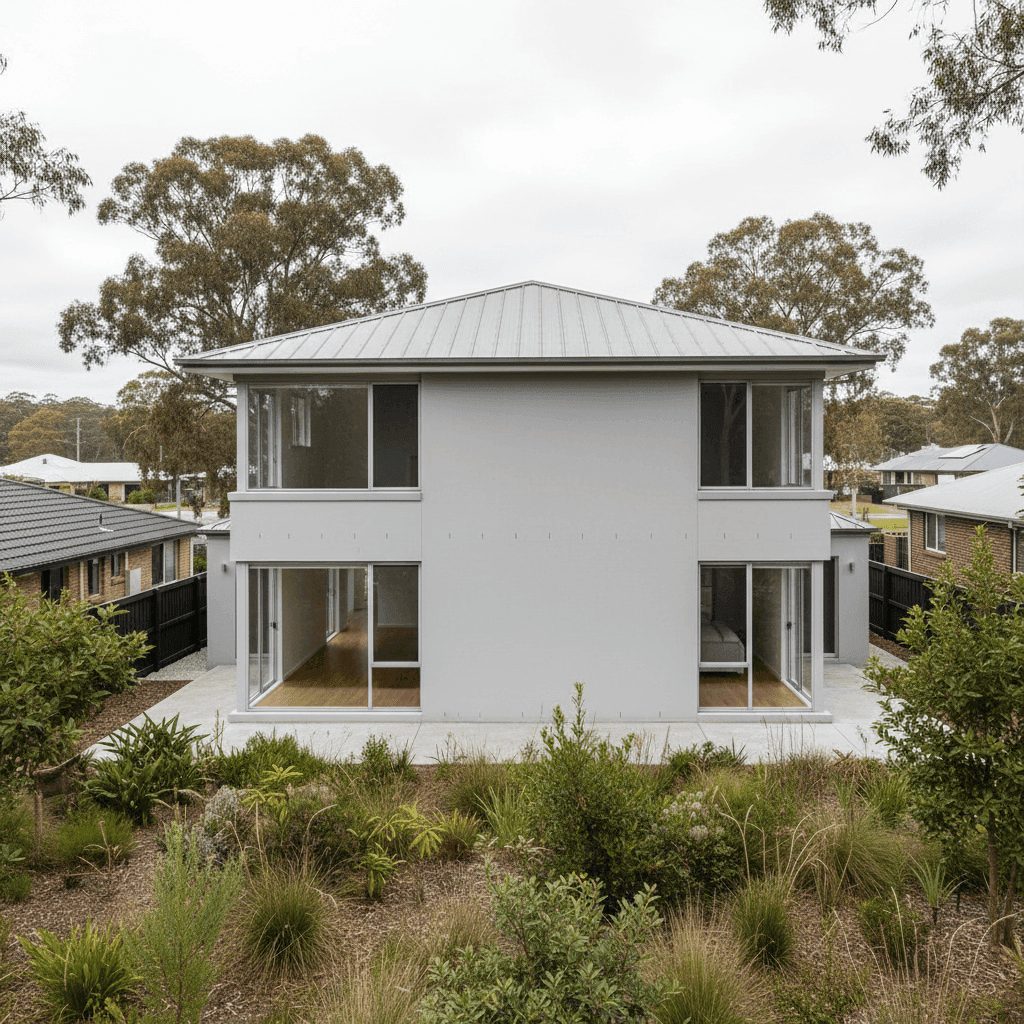
If you own a free standing home in Tallwoods Village, NSW 2430, you might be wondering whether the premium you're paying for home and contents insurance is reasonable — or whether you're leaving money on the table. This article breaks down a real quote for a four-bedroom, three-bathroom property in the suburb, compares it against local, state, and national benchmarks, and offers practical tips to help you get the best value cover.
---
Is This Quote Fair?
The quote in question comes in at $2,557 per year (or $245 per month) for combined home and contents insurance, with a $550,000 building sum insured and $30,000 in contents cover. Both the building and contents excess are set at $1,000.
Our price rating for this quote is FAIR — around average. That might sound underwhelming, but in context it's actually a solid result. The quote sits comfortably below the suburb average of $3,518/year and just above the 25th percentile of $2,387/year for Tallwoods Village. In other words, this homeowner is paying less than the majority of their neighbours for comparable cover.
For a property of this size and specification — four bedrooms, three bathrooms, built in 2012 with quality fittings — a "fair" rating represents genuine value. The quote is neither a bargain-basement outlier nor an overpriced premium, which often signals that the insurer has priced the risk accurately rather than cutting corners on coverage.
---
How Tallwoods Village Compares
To put this quote in perspective, here's how it stacks up across different geographic benchmarks:
| Benchmark | Average Premium | Median Premium |
|---|---|---|
| Tallwoods Village (suburb) | $3,518/yr | $3,528/yr |
| Mid-Coast LGA | $5,840/yr | — |
| NSW (state) | $9,528/yr | $3,770/yr |
| National | $5,347/yr | $2,764/yr |
A few things stand out here. The NSW state average of $9,528/year is dramatically higher than the median of $3,770/year, which tells us the state average is being pulled up significantly by high-risk or high-value properties — likely in flood-prone, bushfire-affected, or coastal areas. The median is almost always the more meaningful number for typical homeowners.
Similarly, the national average of $5,347/year is skewed by extreme-risk regions, while the national median of $2,764/year is much closer to what most Australians actually pay.
At $2,557/year, this Tallwoods Village quote sits below both the suburb median and the national median, which is a reassuring outcome. The Mid-Coast LGA average of $5,840/year suggests that some nearby properties — perhaps those with greater flood exposure or older construction — are attracting significantly higher premiums, making this result even more favourable by comparison.
The suburb sample size of 13 quotes is relatively modest, so individual results can vary, but the data provides a useful directional guide. You can explore the full local data on the Tallwoods Village insurance stats page.
---
Property Features That Affect Your Premium
Several characteristics of this property work in the homeowner's favour from an insurance pricing perspective.
Hebel external walls are a notable positive. Autoclaved aerated concrete (AAC) panels like Hebel are non-combustible, which reduces fire risk considerably compared to timber-clad homes. Insurers generally view this material favourably, and it can contribute to a lower premium.
Steel/Colorbond roofing is another tick in the right column. Colorbond is durable, weather-resistant, and less susceptible to storm damage than older terracotta or concrete tile roofs. It's also non-combustible, which further supports a lower fire-risk profile.
Slab foundation homes tend to be straightforward to assess for insurers — there's no subfloor space to worry about, and slab construction is considered structurally sound in most Australian conditions.
Timber and laminate flooring is worth noting for contents and internal damage claims. While these materials are attractive and durable, they can be costly to replace if water damage occurs, so it's worth ensuring your policy covers internal water damage adequately.
The property was built in 2012, meaning it's relatively modern and likely constructed to current building codes, including cyclone and wind-load standards relevant to coastal NSW. The absence of a pool, solar panels, and ducted climate control also keeps the risk profile clean — each of those features can add complexity (and cost) to a policy.
Tallwoods Village is not classified as a cyclone risk area, which is a meaningful factor for coastal NSW properties. Cyclone endorsements can add hundreds of dollars to annual premiums in affected zones, so being outside one is a genuine financial advantage.
---
Tips for Homeowners in Tallwoods Village
1. Review your sum insured annually A $550,000 building sum insured needs to reflect the actual cost to rebuild your home — not its market value. Construction costs in regional NSW have risen sharply in recent years. Use a building cost calculator or speak to a quantity surveyor to make sure you're not underinsured.
2. Consider increasing your excess to reduce your premium With both excesses set at $1,000, there may be room to increase them slightly (say, to $1,500 or $2,000) in exchange for a lower annual premium. This works well if you have an emergency fund and are unlikely to make small claims.
3. Don't underestimate your contents $30,000 in contents cover is on the lower end for a four-bedroom, three-bathroom home. Walk through each room and tally up the replacement cost of furniture, appliances, clothing, and valuables. Many homeowners discover they're underinsured for contents when they actually need to make a claim.
4. Compare quotes every year at renewal Insurance loyalty doesn't always pay off. Insurers frequently offer better rates to new customers than existing ones. Use a comparison tool like CoverClub at each renewal to check whether a better deal is available without sacrificing the cover you need.
---
Ready to Compare?
Whether you're buying your first home in Tallwoods Village or reviewing your existing policy, comparing quotes is the single most effective way to ensure you're getting fair value. Get a home insurance quote at CoverClub and see how your premium stacks up against the suburb, state, and national benchmarks — in minutes, with no obligation.