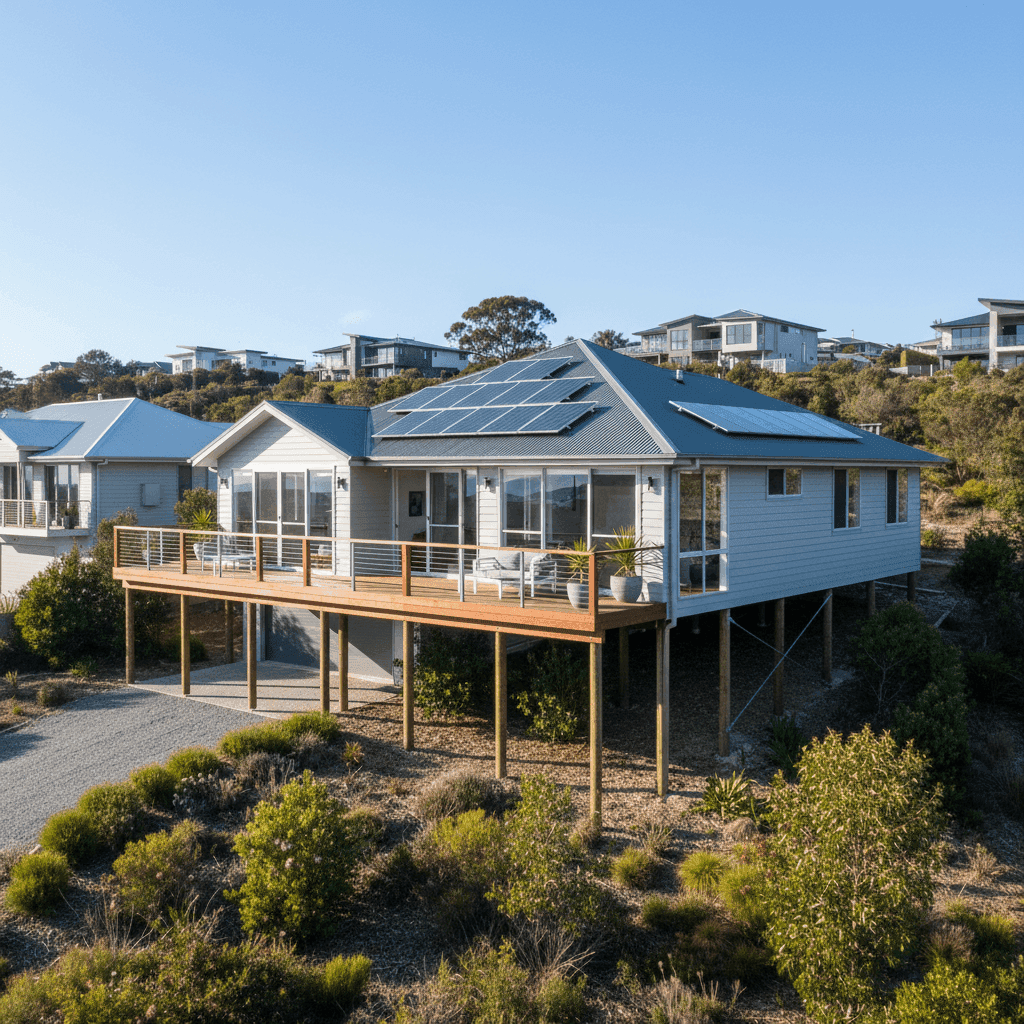
Nestled within a coastal residential estate on the Mid-North Coast of New South Wales, Tallwoods Village (NSW 2430) is a popular destination for homeowners seeking a relaxed lifestyle close to beaches and bushland. As with any property purchase, understanding the true cost of home insurance in this area is essential — and the numbers can vary significantly depending on your property's characteristics. This article breaks down a real home and contents insurance quote for a three-bedroom free standing home in Tallwoods Village, benchmarks it against local, state and national data, and offers practical tips to help you make the most of your cover.
---
Is This Quote Fair?
The quote in question comes in at $3,200 per year (or $341 per month) for combined home and contents cover, with a building sum insured of $947,000 and contents valued at $104,000. The building excess is set at $4,000, while the contents excess sits at a more modest $500.
Based on CoverClub's pricing analysis, this quote has been rated Fair — Around Average. That's a reasonable result, particularly given the property's elevated construction, above-average fittings, and the relatively high building sum insured. It's not the cheapest quote available in the suburb, but it's well within the normal range for a home of this type and value.
A building excess of $4,000 is on the higher side and is worth noting — while it helps bring the annual premium down, it does mean a larger out-of-pocket cost if you need to make a claim on the building. The contents excess of $500 is standard and shouldn't cause concern.
---
How Tallwoods Village Compares
To put this quote in context, here's how it stacks up against suburb, state and national benchmarks:
| Benchmark | Premium |
|---|---|
| This Quote | $3,200/yr |
| Tallwoods Village (2430) Suburb Average | $3,518/yr |
| Tallwoods Village Suburb Median | $3,528/yr |
| Tallwoods Village 25th Percentile | $2,387/yr |
| Tallwoods Village 75th Percentile | $4,598/yr |
| Mid-Coast LGA Average | $5,840/yr |
| NSW State Median | $3,770/yr |
| NSW State Average | $9,528/yr |
| National Median | $2,764/yr |
| National Average | $5,347/yr |
A few things stand out here. At $3,200, this quote sits below both the suburb average ($3,518) and the NSW state median ($3,770) — a solid result. It also comfortably undercuts the Mid-Coast LGA average of $5,840, which suggests that insurers are viewing this particular property somewhat favourably relative to others in the broader region.
It's worth noting that the NSW state average of $9,528 is dramatically higher than the median of $3,770. This kind of skew typically indicates that a small number of very high-risk or high-value properties are pulling the average upward — so the median is generally a more useful comparison point for typical homeowners.
The suburb sample size of 13 quotes is relatively modest, so the local benchmarks should be treated as indicative rather than definitive. That said, this quote landing below the suburb median is a positive sign.
---
Property Features That Affect Your Premium
Several characteristics of this property influence how insurers price the risk:
Elevated Foundation (Poles)
The home is built on pole foundations and elevated by at least one metre. This style — common in coastal and bushland areas of NSW — can actually work in your favour when it comes to flood and storm surge risk, as water is less likely to penetrate the living areas. However, elevated homes can also be more expensive to repair after storm or wind events, which insurers factor into their modelling.
Hardiplank/Hardiflex Cladding
The external walls are clad in Hardiplank or Hardiflex, a fibre cement product widely used in Australian construction. It's considered a durable, low-maintenance material that performs well in coastal environments and offers reasonable fire resistance — generally viewed positively by underwriters compared to older timber weatherboard.
Steel/Colorbond Roof
A Colorbond steel roof is one of the most insurer-friendly roofing materials available in Australia. It's highly durable, resistant to corrosion and fire, and holds up well in high-wind conditions. This is likely contributing to a more competitive premium outcome.
Solar Panels
The property has solar panels installed. While solar adds value and can reduce energy costs, it does introduce an additional insurable asset. It's important to confirm with your insurer whether solar panels are covered under the building sum insured or whether they require separate notation in your policy.
Ducted Climate Control
Ducted air conditioning systems are relatively expensive to repair or replace, and their presence contributes to the above-average fittings quality rating. This is appropriately reflected in the sum insured and the premium.
Above-Average Fittings
With above-average fittings quality across a 235 sqm home with two bathrooms, the $947,000 building sum insured is substantial but likely justified. Underinsurance is a serious risk in Australia — if your sum insured doesn't reflect the true cost to rebuild, you could face a significant shortfall at claim time.
---
Tips for Homeowners in Tallwoods Village
1. Review Your Building Sum Insured Regularly
Construction costs have risen sharply across Australia in recent years. A sum insured that was accurate two or three years ago may no longer reflect current rebuild costs. Use a building cost calculator or speak with a quantity surveyor to ensure your coverage keeps pace with inflation.
2. Confirm Solar Panel Coverage
Solar panels can be a grey area in home insurance policies. Check whether your panels are explicitly listed under your building cover, and ask your insurer about coverage for inverters and battery storage systems if applicable.
3. Consider the Trade-Off on Your Building Excess
A $4,000 building excess is helping to keep this premium in the "fair" range, but it's a meaningful amount to find at short notice after a storm or fire. If cash flow is a concern, it may be worth requesting a quote with a lower excess to see how much it affects the annual premium.
4. Shop the Market at Renewal
Even a "fair" rated quote has room for improvement. Insurance premiums can shift significantly between providers for the same property and cover level. Using a comparison platform at renewal — rather than simply auto-renewing — is one of the simplest ways to avoid overpaying year after year.
---
Compare Home Insurance Quotes in Tallwoods Village
Whether you're a current homeowner in Tallwoods Village or considering a purchase in the area, it pays to see what the market has to offer. CoverClub makes it easy to compare home and contents insurance quotes tailored to your specific property — so you can be confident you're getting the right cover at a competitive price. Enter your address to get started.