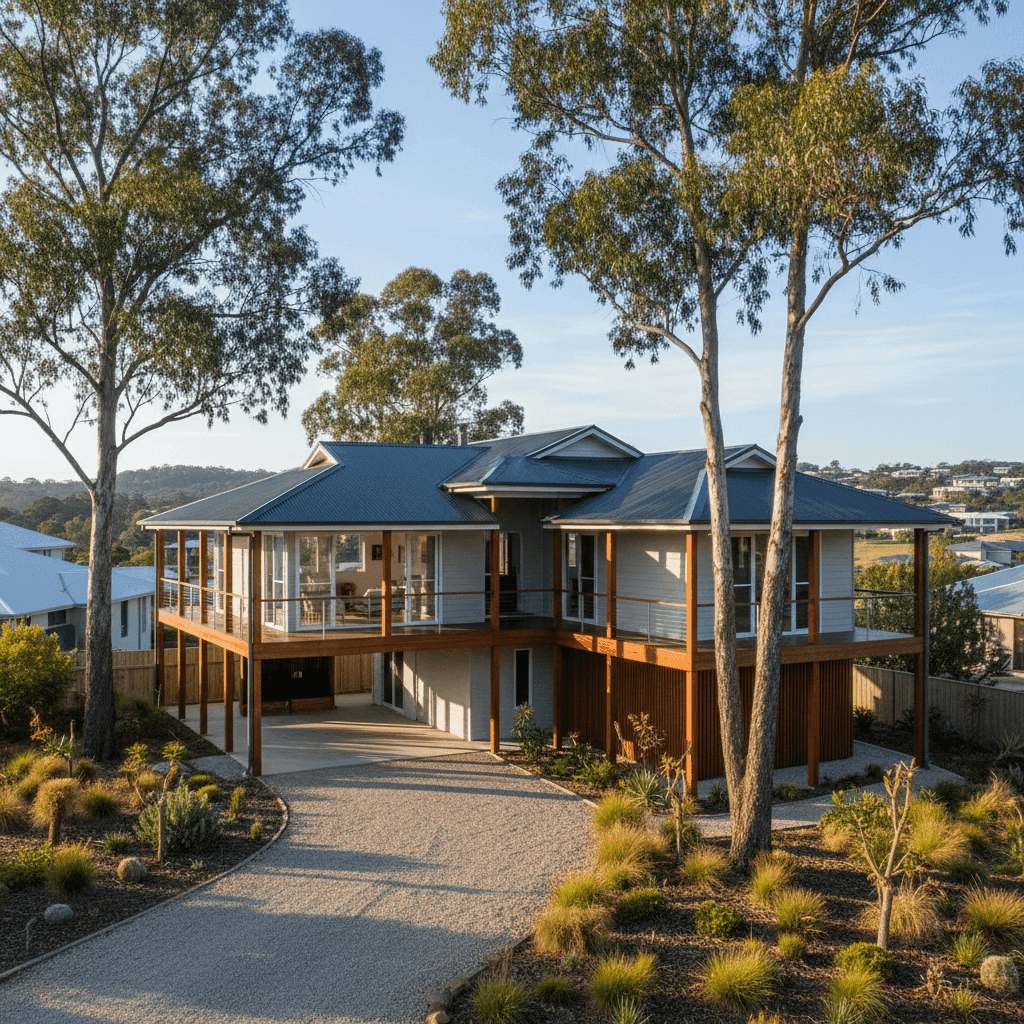
Tallwoods Village is a relaxed coastal-hinterland community in the Mid-Coast region of New South Wales, sitting within postcode 2430 alongside towns like Forster and Tuncurry. It's an area that attracts families and sea-changers alike, and the housing stock reflects that lifestyle — generous, modern homes designed to make the most of the natural surroundings. This article breaks down a real home and contents insurance quote for a four-bedroom, two-bathroom free standing home in Tallwoods Village, and puts the numbers in context so you can judge whether you're getting a fair deal.
---
Is This Quote Fair?
The annual premium for this property came in at $1,419 per year (or $142/month), covering a building sum insured of $990,000 and $100,000 in contents. CoverClub's pricing engine rates this as CHEAP — below average for the area, and the comparison data backs that up strongly.
To put it plainly: this quote is roughly half what most homeowners in the same suburb are paying. The suburb average sits at $2,811/yr and the median at $2,843/yr, meaning this premium undercuts the typical Tallwoods Village policy by more than $1,400 annually. Even compared to the cheapest quarter of quotes in the area (the 25th percentile at $2,060/yr), this figure still comes in well below the pack.
For a home insured at close to $1 million in building value, that's a genuinely competitive result — and it's worth understanding why before assuming every insurer will offer the same.
---
How Tallwoods Village Compares
Home insurance premiums in Tallwoods Village are already elevated compared to many parts of Australia, which makes this quote even more impressive in context. Here's how the numbers stack up:
| Benchmark | Annual Premium |
|---|---|
| This quote | $1,419 |
| Suburb average (2430) | $2,811 |
| Suburb median (2430) | $2,843 |
| Suburb 25th percentile | $2,060 |
| Suburb 75th percentile | $3,338 |
| NSW state average | $3,801 |
| NSW state median | $3,410 |
| National average | $2,965 |
| National median | $2,716 |
| Mid-Coast LGA average | $4,463 |
The Tallwoods Village suburb average of $2,811/yr is itself below the NSW state average of $3,801/yr, which may seem surprising for a coastal area. However, the Mid-Coast LGA average of $4,463/yr tells a different story — premiums across the broader local government area are significantly higher, suggesting that Tallwoods Village may sit in a relatively lower-risk pocket within the region.
Zooming out to the national picture, the Australian average of $2,965/yr and median of $2,716/yr both sit well above this quote, reinforcing just how competitive this particular result is. If you're a homeowner in the area currently paying closer to the suburb average, it's absolutely worth shopping around.
---
Property Features That Affect Your Premium
Several characteristics of this property likely contribute to its favourable premium. Understanding these factors can help you anticipate how insurers assess risk.
Modern Construction (Built 2021)
A home built in 2021 is subject to the latest Australian building codes, which mandate higher standards for structural integrity, fire resistance, and weather resilience. Insurers generally view newer homes as lower risk, and this is reflected in the pricing.
Hardiplank/Hardiflex External Walls
Fibre cement cladding such as Hardiplank and Hardiflex is highly regarded by insurers. It's resistant to rot, termites, and fire, and performs well in coastal environments where moisture and salt air can degrade lesser materials. This is a meaningful risk-reduction factor compared to older weatherboard or brick veneer homes.
Steel/Colorbond Roof
Colorbond steel roofing is one of the most insurer-friendly roof types available in Australia. It's durable, low-maintenance, and performs well in high-wind events. Compared to terracotta or concrete tiles — which can crack, lift, or become projectiles in storms — a Colorbond roof is seen as a lower-liability choice.
Elevated Foundation (Poles, At Least 1m)
This is a particularly important feature in a coastal-adjacent area. Homes elevated at least one metre on poles are significantly better protected against flood inundation and storm surge. This can have a dramatic effect on premium pricing, especially in regions where flood risk is a known concern. The elevation essentially removes or greatly reduces one of the most costly perils an insurer might otherwise price in.
Timber/Laminate Flooring
While not as dramatic a factor as structural elements, flooring type does play a role. Timber and laminate floors are generally straightforward to repair or replace following a water damage event, which can keep claims costs — and therefore premiums — more predictable.
Ducted Climate Control
The presence of ducted climate control adds to the replacement value of the home but is already captured within the building sum insured. It's worth ensuring your sum insured accurately accounts for this system, as it can be costly to replace.
---
Tips for Homeowners in Tallwoods Village
1. Don't Assume Your Current Insurer Is Competitive
If you're paying anywhere near the suburb average of $2,811/yr or the LGA average of $4,463/yr, this quote demonstrates there's likely a better deal available. The gap between the cheapest and most expensive quotes in this suburb spans over $1,200 — that's real money left on the table each year.
2. Review Your Sum Insured Regularly
A building sum insured of $990,000 for a 235 sqm home built in 2021 with quality finishes is reasonable, but construction costs in regional NSW have risen sharply in recent years. Make sure your sum insured reflects current rebuild costs — not the purchase price or market value — to avoid being underinsured after a major event.
3. Understand What Your Excess Means in Practice
This policy carries a $3,000 building excess and a $1,000 contents excess. A higher excess is one reason premiums can be lower, so weigh up whether these levels are comfortable for your financial situation. If a $3,000 outlay in an emergency would be a stretch, it may be worth paying a slightly higher premium for a lower excess.
4. Keep Documentation of Your Contents
With $100,000 in contents cover, it's worth maintaining an up-to-date home inventory — photos, receipts, and serial numbers for valuable items. This makes claims faster and reduces the risk of disputes over item values. Store this documentation securely off-site or in the cloud.
---
Compare Quotes and Find Your Best Rate
Whether you're a new homeowner in Tallwoods Village or you've been renewing with the same insurer for years, the data here makes a compelling case for shopping around. CoverClub makes it easy to compare home and contents insurance quotes from multiple insurers in minutes — no phone calls, no pressure.
Get a home insurance quote today at CoverClub and see how your current premium stacks up against the market.