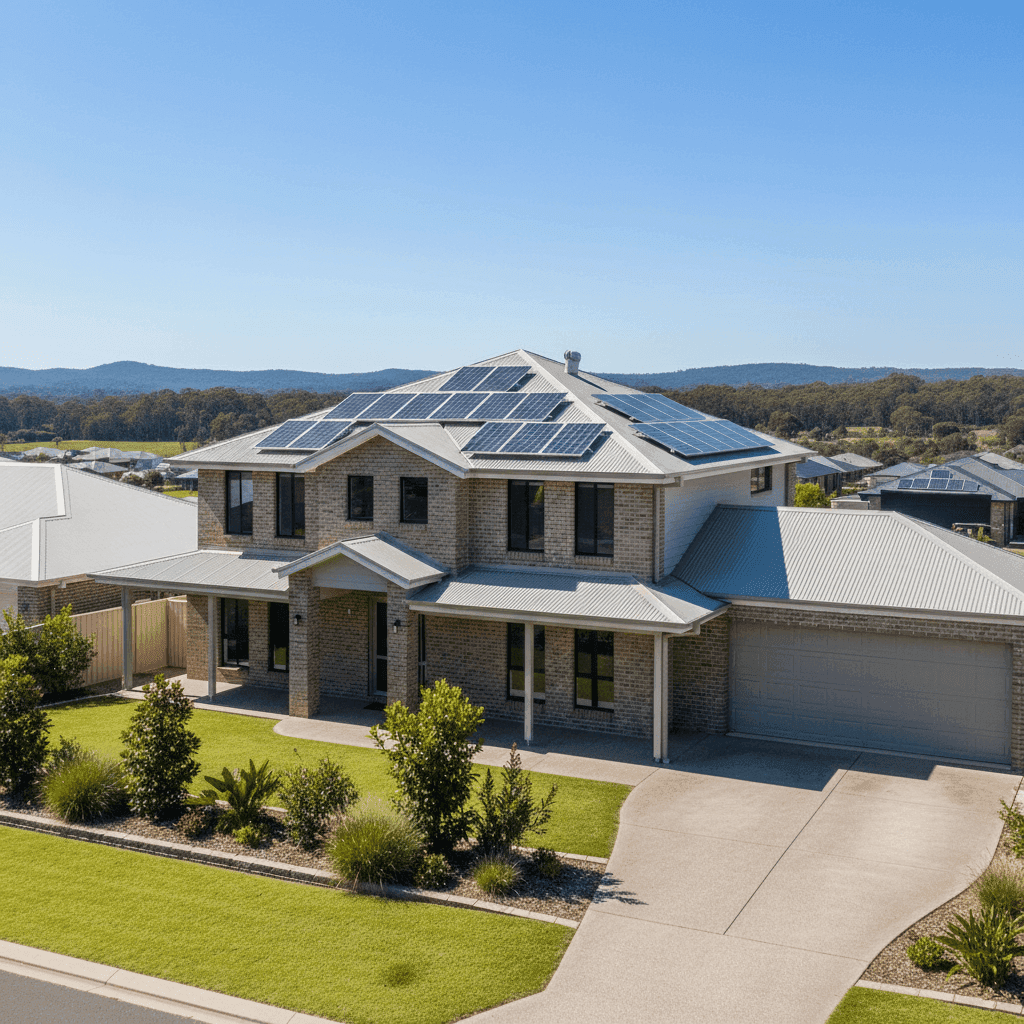
If you own a free standing home in Tallwoods Village, NSW 2430, you're living in one of the Mid-Coast region's more relaxed residential enclaves — a leafy, master-planned community that blends golf-course living with coastal convenience. But even in a peaceful setting like this, home insurance is a serious consideration. This article breaks down a recent home and contents insurance quote for a four-bedroom property in the area, puts the premium in context, and offers practical tips for getting the best value on your cover.
---
Is This Quote Fair?
The quote in question comes in at $4,182 per year (or $394 per month) for combined home and contents cover, with a building sum insured of $1,205,000 and contents valued at $106,000. Both the building and contents excess sit at $1,000.
Our price rating for this quote is FAIR — Around Average, and the data backs that up. Within the Tallwoods Village suburb, the average annual premium sits at $3,518 and the median at $3,528, meaning this quote is running modestly above the local midpoint. However, it falls well within the suburb's interquartile range — the 25th percentile is $2,387 and the 75th percentile is $4,598 — so it's by no means an outlier.
In other words, you're not being stung, but there's likely room to shop around. A premium closer to the suburb's 25th percentile would represent a meaningful annual saving, and that's worth pursuing when renewal time rolls around.
---
How Tallwoods Village Compares
Understanding where your suburb sits relative to broader benchmarks helps you gauge whether local premiums are elevated by structural risk factors or simply by market dynamics. Here's how the numbers stack up:
| Benchmark | Average Premium | Median Premium |
|---|---|---|
| Tallwoods Village | $3,518/yr | $3,528/yr |
| Mid-Coast LGA | $5,840/yr | — |
| NSW | $9,528/yr (avg) | $3,770/yr |
| National | $5,347/yr (avg) | $2,764/yr |
A few things stand out here. The NSW state average of $9,528 is dramatically higher than the median of $3,770 — a gap that reflects how heavily Sydney's high-value properties skew the statewide mean. When you compare Tallwoods Village against the NSW median, the suburb actually looks quite competitive.
Against the national median of $2,764, Tallwoods Village premiums are higher, which is fairly typical for coastal NSW properties where flood, storm, and bushfire risk factors can push premiums up. The Mid-Coast LGA average of $5,840 is notably higher than the suburb average, suggesting that Tallwoods Village may benefit from relatively favourable local risk characteristics compared to other parts of the council area.
You can explore the full data for this suburb at the Tallwoods Village insurance stats page, compare it against NSW state-wide figures, or zoom out to the national insurance statistics.
---
Property Features That Affect Your Premium
Every insurer prices risk differently, but the physical characteristics of a home play a significant role in determining your premium. Here's how this property's features factor in:
Brick Veneer Walls Brick veneer is generally viewed favourably by insurers. It offers solid fire resistance and structural durability, which can help moderate building premiums compared to lightweight cladding materials like timber weatherboard.
Steel / Colorbond Roof A Colorbond steel roof is one of the better choices from an insurance perspective. It's resistant to ember attack, handles heavy rain well, and has a long service life. Insurers typically regard this roofing type as lower risk than older materials like terracotta tiles or fibrous cement.
Concrete Slab Foundation Slab-on-ground construction is standard for modern builds and generally presents fewer concerns for insurers than raised timber stumps, which can be susceptible to moisture and pest damage.
Built in 2021 A relatively new home is a genuine advantage when it comes to insurance pricing. Modern construction must comply with current Australian building codes, meaning better structural integrity, updated electrical systems, and improved resistance to weather events. Insurers often reward newer builds with more competitive premiums.
Solar Panels This property has rooftop solar, which is worth noting on your policy. Solar panels represent a meaningful capital investment — typically $8,000–$20,000 depending on system size — and should be explicitly covered under your building sum insured. Check your policy wording to confirm panels are included and that the sum insured reflects their replacement value.
Ducted Climate Control Ducted air conditioning systems are a significant fixed asset and are generally included under building cover. As with solar, it's worth confirming this with your insurer and ensuring your building sum insured accounts for the cost of replacing the full system.
Timber / Laminate Flooring Timber and laminate floors are more susceptible to water damage than ceramic tiles, which can be relevant in storm or flood scenarios. Ensure your policy covers internal water damage, and check whether flood cover (as distinct from storm cover) is included or needs to be added.
Building Size: 235 sqm At 235 square metres, this is a substantial home. The $1,205,000 building sum insured translates to roughly $5,128 per square metre — a reasonable figure for a modern brick veneer build with quality fittings, though it's always worth getting a professional rebuild cost estimate to make sure you're not under- or over-insured.
---
Tips for Homeowners in Tallwoods Village
1. Get a professional rebuild cost estimate The single most important thing you can do is ensure your building sum insured accurately reflects what it would actually cost to rebuild your home from scratch — not its market value. With construction costs rising across regional NSW, an estimate from a quantity surveyor or using an insurer's calculator can protect you from being underinsured when you need to claim most.
2. Confirm solar panels and ducted systems are covered Don't assume these are automatically included. Contact your insurer to verify that your rooftop solar system and ducted climate control are explicitly listed under your building cover, and that the sum insured is sufficient to replace them at current prices.
3. Shop around at renewal This quote sits in the "fair" range, but the spread between the 25th and 75th percentile in Tallwoods Village is over $2,200 per year — which means there's genuine variation in the market. Loyalty doesn't always pay in insurance, so use renewal time as a prompt to compare at least two or three quotes. CoverClub makes this straightforward.
4. Review your contents sum insured annually At $106,000, the contents cover here is relatively modest for a four-bedroom, three-bathroom home. Take stock of electronics, furniture, appliances, jewellery, and sporting equipment — it adds up faster than most people expect. Being underinsured on contents is one of the most common and costly mistakes homeowners make.
---
Ready to Compare?
Whether you're reviewing an existing policy or insuring a home for the first time, comparing quotes is the most reliable way to find value. Get a home insurance quote on CoverClub and see how your premium stacks up against what others in Tallwoods Village and across NSW are paying. It takes just a few minutes and could save you hundreds.