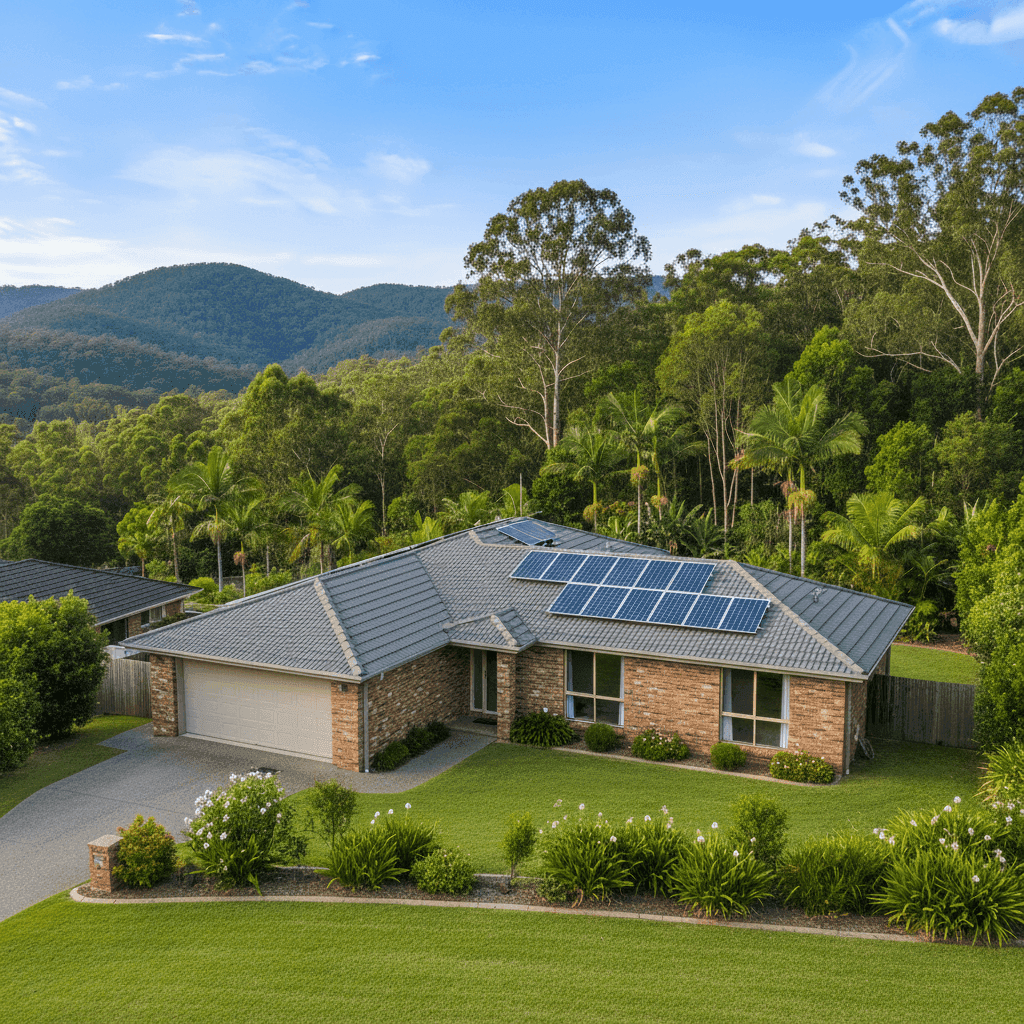
Nestled in the hinterland of South East Queensland, Tamborine Mountain is one of the region's most picturesque addresses — but like any elevated, semi-rural location, it comes with its own set of insurance considerations. This article breaks down a real home and contents insurance quote for a four-bedroom, free-standing home in postcode 4272, and puts the numbers into context so you can judge whether you're paying a fair price.
---
Is This Quote Fair?
The quote in question comes in at $2,195 per year (or roughly $215 per month) for combined home and contents cover — $750,000 in building sum insured and $50,000 in contents. Our price rating for this quote is CHEAP, meaning it sits meaningfully below the average for the area.
To put that in perspective:
- The suburb average for Tamborine Mountain is $4,019/yr, and the median sits at $3,227/yr
- This quote falls just below the 25th percentile of $2,266/yr — meaning it's cheaper than roughly 75% of quotes collected in the suburb
- Compared to the Queensland state average of $4,547/yr, this premium is less than half
By any measure, $2,195/yr is a strong result for a property of this size and location. Whether this reflects the specific insurer's pricing model, the property's construction quality, or a combination of both, homeowners receiving a quote in this range should take it seriously.
---
How Tamborine Mountain Compares
Understanding where your suburb sits relative to broader benchmarks helps you gauge whether local premiums reflect genuine risk or simply market dynamics. Based on data from 79 quotes collected in Tamborine Mountain, here's how the area stacks up:
| Benchmark | Annual Premium |
|---|---|
| This quote | $2,195 |
| Suburb 25th percentile | $2,266 |
| Suburb median | $3,227 |
| Suburb average | $4,019 |
| Suburb 75th percentile | $4,979 |
| QLD state average | $4,547 |
| National average | $2,965 |
| National median | $2,716 |
| Scenic Rim LGA average | $8,744 |
A few things stand out here. First, Queensland's state average of $4,547/yr is already well above the national average of $2,965/yr — a reflection of the elevated weather and climate risks that affect much of the Sunshine State. Second, the Scenic Rim LGA average of $8,744/yr is extraordinarily high, suggesting that many properties in the broader local government area face significant risk loadings — likely driven by flood, storm, and bushfire exposure in surrounding rural areas. Tamborine Mountain's own suburb average of $4,019/yr is more moderate by comparison, but still above the national benchmark.
This context makes the $2,195/yr quote even more impressive — it's well below every relevant comparison point except the suburb's 25th percentile, which it narrowly undercuts.
---
Property Features That Affect Your Premium
Insurance pricing is never arbitrary. Insurers assess dozens of property characteristics when calculating risk. Here's how the key features of this particular home are likely influencing its premium:
Brick Veneer Walls Brick veneer is one of the most common and well-regarded external wall materials in Australia. It offers solid fire resistance and reasonable structural integrity, which insurers generally view favourably. It's neither the cheapest nor the most premium construction type, but it sits comfortably in the middle ground.
Concrete Roof Concrete tile roofing is durable and performs well in storm and hail events — both relevant risks for South East Queensland. It's heavier than Colorbond or terracotta, which can have structural implications, but from an insurance standpoint it's typically associated with lower weather-related claims.
Slab Foundation A concrete slab foundation is standard for homes built in Queensland and is generally considered low-risk from an insurer's perspective. It's less susceptible to subsidence and pest damage than older pier-and-beam constructions.
Built in 2008 A construction year of 2008 means the home was built under relatively modern building codes. Post-2000 homes in Queensland benefited from updated cyclone and storm-resistance standards, which can translate to lower premiums.
Solar Panels Solar panels add replacement value to the home and can be a source of claims if damaged by hail, storms, or fire. It's worth confirming with your insurer that your solar system is explicitly covered under your policy — not all standard home policies automatically include solar panels without a specific endorsement.
Vinyl Flooring Vinyl is a practical, water-resistant flooring choice that's relatively inexpensive to replace compared to hardwood or stone. This can modestly reduce the cost of contents and building claims, and may contribute to a slightly lower premium.
No Pool, No Ducted Climate Control The absence of a swimming pool removes a common source of liability and equipment-related claims. Similarly, no ducted air conditioning means one less major mechanical system that could fail or cause water damage.
---
Tips for Homeowners in Tamborine Mountain
1. Don't assume your solar panels are covered Solar panel systems can cost $5,000–$20,000 or more to replace. Review your policy documents carefully to confirm whether panels are included in your building sum insured, and whether storm and hail damage is covered. If in doubt, call your insurer directly.
2. Review your sum insured annually Building costs in Queensland have risen significantly in recent years. A sum insured of $750,000 may be appropriate today, but rebuilding costs can shift quickly. Use a building cost estimator or consult a quantity surveyor to ensure you're not underinsured.
3. Understand your excess structure This policy carries a $2,000 building excess and a $1,000 contents excess. Higher excesses typically reduce premiums, but make sure you can comfortably cover those amounts out of pocket if you need to make a claim. If cash flow is a concern, it may be worth comparing policies with lower excesses.
4. Shop around — even when you have a good deal A quote rated "cheap" is a great outcome, but insurance markets shift year to year. Insurers reprice based on claims data, reinsurance costs, and regional risk models. What's competitive today may not be next renewal. Comparing quotes annually takes only a few minutes and can save hundreds of dollars.
---
Compare Home Insurance Quotes at CoverClub
Whether you're renewing your existing policy or insuring a new property in Tamborine Mountain, it pays to see what's available across the market. At CoverClub, you can compare home and contents quotes in minutes — with transparent pricing data and suburb-level benchmarks to help you make a confident decision. Don't leave money on the table at renewal time.