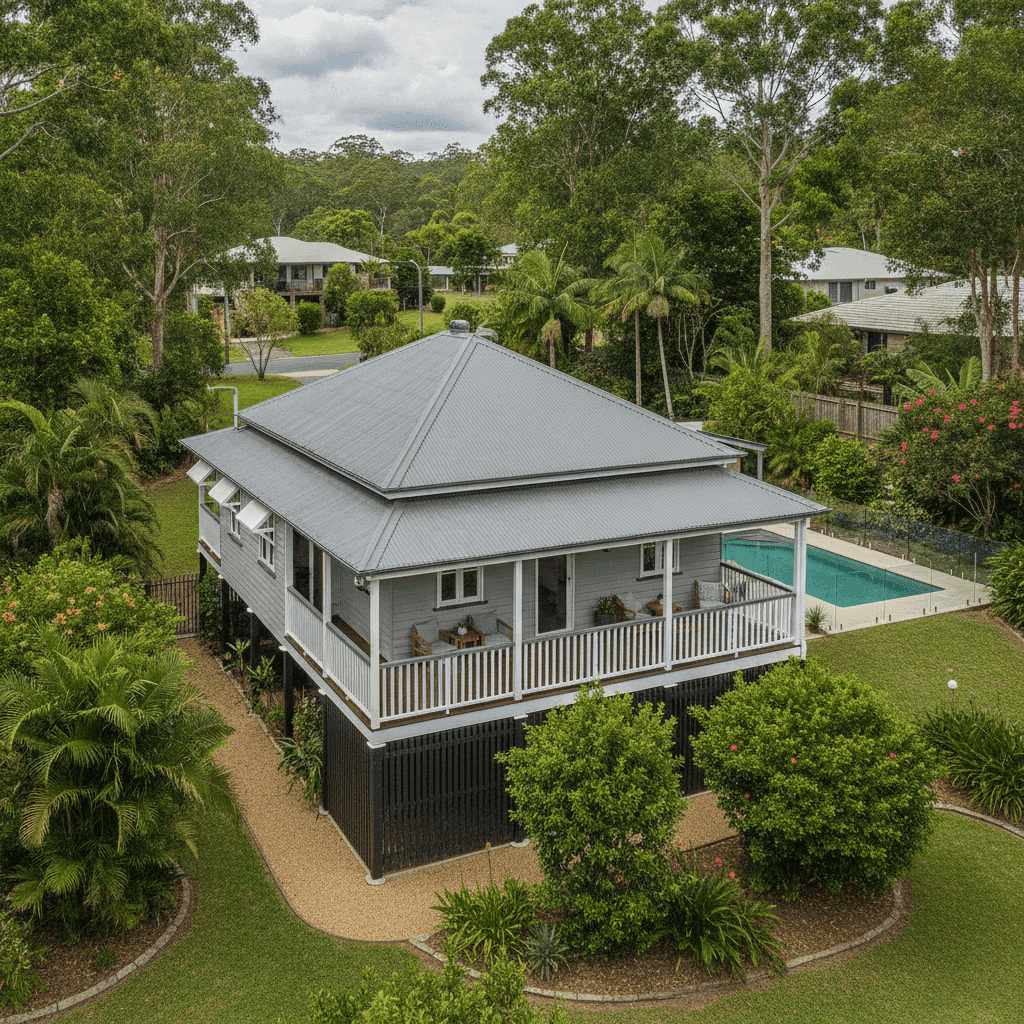
Tamborine is a relaxed semi-rural community nestled in the scenic hinterland of South East Queensland, sitting between the Gold Coast and the Scenic Rim. It's the kind of place where established homes sit on generous blocks, often with a pool out back and a verandah that catches the afternoon breeze. If you own a free standing home here, understanding what you should be paying for home and contents insurance — and why — can save you hundreds of dollars a year.
This article breaks down a real home and contents insurance quote for a four-bedroom, one-bathroom free standing home in Tamborine (postcode 4270), comparing it against local, state, and national benchmarks.
---
Is This Quote Fair?
The annual premium for this property came in at $3,091 per year (or $276 per month), covering a building sum insured of $600,000 and $50,000 in contents, each with a $1,000 excess. CoverClub's pricing engine rates this as CHEAP — below average for the area.
That's a meaningful finding. In a suburb where the average premium sits at $4,371 per year and the median lands at $4,146, paying $3,091 puts this homeowner well below what most of their neighbours are forking out. In fact, it even comes in beneath the suburb's 25th percentile of $3,317 — meaning this quote is cheaper than at least 75% of comparable quotes collected in Tamborine.
For context, the interquartile range in the suburb runs from $3,317 to $4,811, so there's meaningful spread in what insurers are willing to charge here. That variance underscores why shopping around — rather than auto-renewing — makes such a practical difference.
---
How Tamborine Compares
To really appreciate this quote, it helps to zoom out and look at the broader picture. Here's how Tamborine stacks up against Queensland and the rest of the country:
| Benchmark | Average Premium | Median Premium |
|---|---|---|
| Tamborine (4270) | $4,371/yr | $4,146/yr |
| LGA (Logan) | $4,617/yr | — |
| Queensland | $9,129/yr | $3,903/yr |
| National | $5,347/yr | $2,764/yr |
A few things stand out here. Queensland's average premium of $9,129 is extraordinarily high compared to the median of $3,903 — a classic sign that a relatively small number of very high-risk properties (think cyclone-exposed coastal areas in Far North Queensland) are dragging the state average upward. Tamborine, sitting well inland and outside designated cyclone risk zones, benefits from a more moderate risk profile.
The national picture tells a similar story: a $5,347 average versus a $2,764 median suggests significant skew from high-risk postcodes around the country.
Tamborine's suburb average of $4,371 is actually below the Logan LGA average of $4,617, which is a positive signal for homeowners in this pocket of South East Queensland. You can explore the full breakdown of local pricing data on the Tamborine suburb stats page, or compare it against the Queensland state overview and national insurance statistics.
---
Property Features That Affect Your Premium
Every home is different, and insurers price risk based on a detailed combination of construction, location, and features. Here's how the characteristics of this particular property likely influence the premium:
Hardiplank / Hardiflex External Walls Fibre cement cladding like Hardiplank is generally viewed favourably by insurers. It's resistant to rot, termites, and fire — all meaningful risks in Queensland. Compared to older weatherboard or timber-clad homes, Hardiflex tends to attract more competitive premiums.
Steel / Colorbond Roof A Colorbond steel roof is one of the more insurer-friendly roof types in Australia. It's durable, low-maintenance, and performs well in storms and high winds. This is a definite positive for premium pricing compared to tile or older corrugated iron roofing.
Stump Foundation (Elevated Under 1 Metre) Homes on stumps are common in Queensland — they allow airflow underneath and provide some natural flood protection. Being elevated by less than one metre keeps this property in a lower-risk bracket compared to homes at full Queenslander height, but still offers better flood resilience than a slab-on-ground construction.
Vinyl Flooring Vinyl is practical and relatively inexpensive to replace compared to hardwood timber floors or high-end tiles. This keeps the contents and building replacement cost estimates more manageable.
Swimming Pool A pool adds some liability exposure and increases the overall replacement cost of the property, which can nudge premiums upward slightly. Ensuring the pool is properly fenced and maintained to Queensland safety standards is important both legally and from an insurance perspective.
Ducted Climate Control Ducted air conditioning is a significant fixture that adds to the building's insured value. It's worth confirming that your sum insured adequately accounts for the cost of replacing this system, particularly as supply chain costs have pushed HVAC replacement prices higher in recent years.
No Cyclone Risk Tamborine falls outside Queensland's designated cyclone risk zones, which is a substantial pricing advantage. Cyclone-rated premiums in North Queensland can be multiples of what homeowners in the south-east pay.
Construction Year: 1988 A home built in 1988 is well-established, but not so old as to raise major red flags. However, homes of this era may have older electrical wiring, plumbing, or roofing components that could be approaching end-of-life. It's worth having these assessed periodically to avoid claim complications.
---
Tips for Homeowners in Tamborine
1. Review your sum insured annually Building costs in Queensland have risen sharply since 2020. A $600,000 sum insured may have been accurate when set, but it's worth cross-checking with a quantity surveyor or using an online building calculator to ensure you're not underinsured. Underinsurance is one of the most common — and costly — mistakes homeowners make.
2. Keep your pool compliant Queensland has strict pool fencing regulations, and non-compliance can affect both your legal liability and your insurance cover. Make sure your pool barriers meet current standards under the Building Act 1975 and that your insurer is aware the pool exists.
3. Don't auto-renew without comparing This quote came in well below the suburb average, which is a great outcome — but premiums shift each year. Make it a habit to compare quotes at renewal time rather than simply accepting your insurer's renewal figure. Even a loyal customer can often find a better rate elsewhere.
4. Check your excess strategy Both the building and contents excess on this policy sit at $1,000. Opting for a higher excess (say, $2,000) can reduce your annual premium meaningfully — just make sure you'd genuinely be comfortable covering that amount out of pocket in the event of a claim.
---
Compare Your Own Quote
Whether you're renewing your existing policy or shopping for cover on a new purchase, it pays to know what the market looks like. CoverClub aggregates real quote data from across Australia so you can see exactly where your premium sits relative to your neighbours. Get a home insurance quote today and find out if you're paying a fair price — or leaving money on the table.