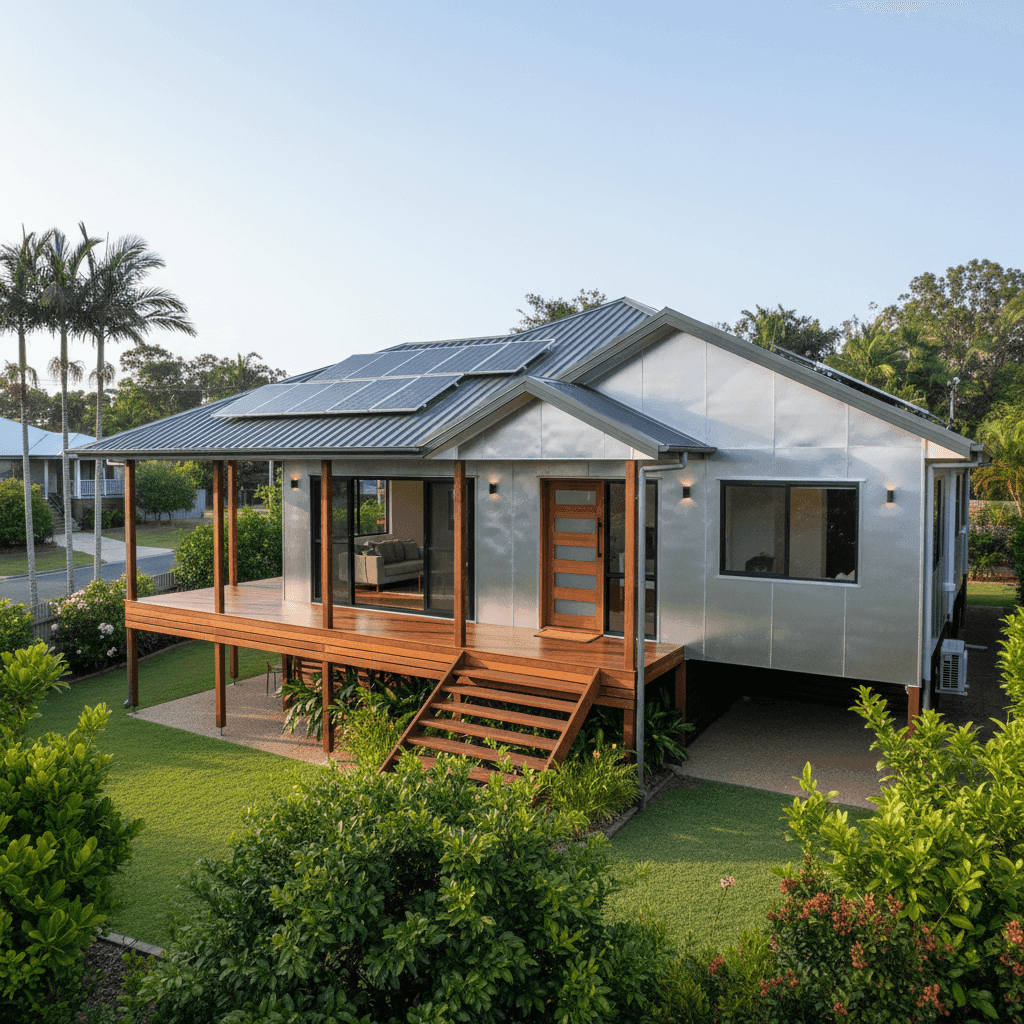
If you own a free standing home in Tandur, QLD 4570, you're probably curious about whether your home insurance premium stacks up against what others are paying — locally, across Queensland, and around the country. We recently analysed a real home and contents insurance quote for a four-bedroom, two-bathroom property in this area, and the results are worth unpacking. Whether you're a new homeowner or simply reviewing your existing policy, this breakdown will help you make a more informed decision.
---
Is This Quote Fair?
The annual premium for this property came in at $3,749 per year (or $352/month), covering both building and contents with a building sum insured of $516,000 and contents valued at $50,000. Both the building and contents excess are set at $1,000.
Our pricing engine rates this quote as CHEAP — below average for the area. That's genuinely good news for the homeowner. In a state like Queensland, where premiums can be eye-watering due to extreme weather exposure, landing a below-average rate on a well-appointed property is a solid outcome.
It's worth noting that the property carries several features that insurers typically view favourably: it was built in 2020 (relatively new construction), sits on stumps with an elevation of at least one metre, and is located outside a designated cyclone risk zone. Each of these factors plays a meaningful role in keeping the premium competitive.
---
How Tandur Compares
Let's put this $3,749 annual premium into context using available benchmarks:
| Benchmark | Annual Premium |
|---|---|
| This Quote | $3,749 |
| Fraser Coast LGA Average | $4,810 |
| QLD State Median | $3,903 |
| QLD State Average | $9,129 |
| National Average | $5,347 |
| National Median | $2,764 |
A few things stand out here. The Queensland state average of $9,129 is dramatically higher than this quote — a difference of over $5,300 per year. That average is heavily skewed by high-risk coastal and cyclone-prone postcodes across the state, so it's not always the most useful comparison point. The QLD median of $3,903 is a more representative benchmark, and this quote sits just below it — reinforcing the "cheap" rating.
Compared to the national average of $5,347, this premium is about 30% lower, which is a meaningful saving. Interestingly, it does sit above the national median of $2,764, which reflects the fact that Queensland properties — even those in lower-risk areas — tend to attract higher base premiums than many other states due to the broader climate risk profile of the region.
Within the Fraser Coast LGA, the average sits at $4,810, and this quote comes in roughly $1,060 below that — another positive signal that this is a competitive rate for the area.
You can explore more localised data for this postcode on the Tandur suburb stats page.
---
Property Features That Affect Your Premium
Several characteristics of this property have a direct bearing on what insurers charge. Here's how they play out:
New Construction (Built 2020) Newer homes are generally cheaper to insure. Modern building codes require higher standards for structural integrity, fire resistance, and weather resilience. A home built in 2020 is unlikely to have the maintenance issues or outdated wiring that older properties might carry.
Elevated on Stumps (At Least 1m) This is a significant factor in Queensland. Homes elevated by at least one metre on stumps are far less vulnerable to flood and storm surge damage — two of the most common and costly claims in South-East Queensland. Insurers reward this with lower premiums, and it's one of the key reasons this quote is competitive.
Steel/Colorbond Roof Colorbond roofing is highly regarded by insurers. It's durable, resistant to corrosion, and performs well in high-wind events. Compared to older materials like terracotta tiles or fibrous cement sheeting, steel roofing is considered a lower-risk material.
Aluminium External Walls Aluminium cladding is lightweight and resistant to rust and rot, which can reduce maintenance-related claims. However, it's worth ensuring your policy accurately reflects the wall construction type, as some insurers treat non-masonry walls differently in terms of fire risk.
Solar Panels The property has solar panels installed. Most standard home insurance policies cover solar panels as part of the building, but it's important to confirm this with your insurer. If the panels were added after the original build, check whether they're included in the building sum insured or need to be listed separately.
Above-Average Fittings With above-average fittings quality, the building sum insured of $516,000 for a 139 sqm home reflects the higher cost of materials and finishes. This is appropriate — underinsuring a premium-fitted home is a common and costly mistake.
No Pool, No Cyclone Risk Zone The absence of a pool removes a liability exposure that some insurers price in. Being outside a cyclone risk zone is a significant premium reducer in Queensland, where cyclone cover can add substantially to the annual cost.
---
Tips for Homeowners in Tandur
1. Review Your Building Sum Insured Annually Construction costs in Queensland have risen sharply over the past few years. A sum insured that was adequate in 2022 may no longer be sufficient to fully rebuild your home today. Use a building cost calculator or speak with a quantity surveyor to ensure your $516,000 figure still reflects current rebuild costs.
2. Confirm Solar Panel Coverage Check your policy documents to verify that your solar panels are explicitly covered — both for physical damage and for any liability associated with the system. Some policies include them automatically; others require a separate endorsement or listing.
3. Document Your Contents Thoroughly A $50,000 contents value is a starting point, but it's easy to underestimate. Walk through each room and list high-value items — electronics, jewellery, appliances, furniture, and clothing. Keep receipts or photos stored securely in the cloud. This makes claims significantly smoother and ensures you're not left short.
4. Ask About Discounts for Security and Safety Features If your home has a monitored alarm system, deadbolts, or smoke detectors, let your insurer know. These features can attract discounts that aren't always applied automatically. Given the property's above-average fittings, it's likely some of these features are already in place — make sure you're getting credit for them.
---
Compare Quotes and Save
Even if your current premium looks competitive, it's always worth checking the market. Insurers price risk differently, and a small change in how you describe your property can sometimes unlock a better rate. At CoverClub, you can compare home and contents quotes in minutes — no jargon, no pressure, just clear comparisons to help you find the right cover at the right price.