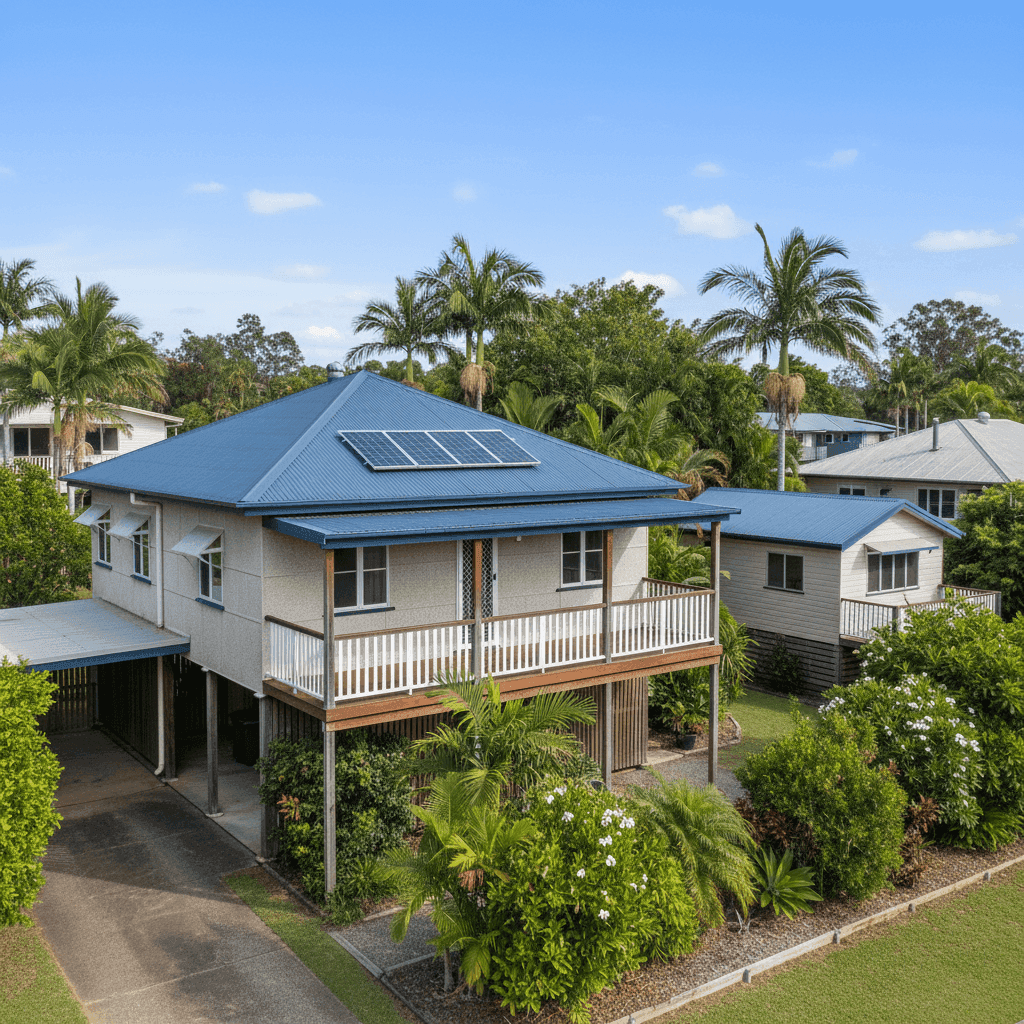
If you own a free standing home in Tannum Sands, QLD 4680, you've probably noticed that home insurance can be a significant household expense — particularly in coastal Queensland. This article breaks down a real building insurance quote for a 2-bedroom, 2-bathroom property in the suburb, examines how it stacks up against local, state, and national benchmarks, and offers practical advice for homeowners looking to manage their premiums.
---
Is This Quote Fair?
The annual premium for this property came in at $2,537 per year (or $249/month), which CoverClub has rated as CHEAP — below average for the area. Given the range of factors that can push Queensland home insurance premiums sky-high, this is a genuinely competitive result.
To put it in context:
- The suburb average for Tannum Sands is $3,821/yr, meaning this quote is roughly $1,284 cheaper than what most local homeowners are paying.
- It also sits comfortably below the suburb median of $3,201/yr and even below the 25th percentile of $2,809/yr — meaning it's cheaper than at least 75% of the 43 quotes sampled in the area.
For a building-only policy with a $493,000 sum insured, this represents solid value. The higher building excess of $3,000 (compared to a more typical $500–$1,000) is likely one of the key levers keeping the premium down — something worth factoring in when assessing the true cost of a claim.
---
How Tannum Sands Compares
Tannum Sands is a coastal town in the Gladstone Region, and like much of Queensland, insurance premiums here reflect the elevated risk profile of the state. Here's how the numbers line up:
| Benchmark | Premium |
|---|---|
| This quote | $2,537/yr |
| Suburb average (Tannum Sands) | $3,821/yr |
| Suburb median | $3,201/yr |
| QLD state average | $9,129/yr |
| QLD state median | $3,903/yr |
| National average | $5,347/yr |
| National median | $2,764/yr |
A few things stand out here. The QLD state average of $9,129/yr is dramatically higher than both the suburb average and this individual quote — a reminder of just how wide the spread can be across the state. Areas like Far North Queensland, Cairns, and Townsville routinely see premiums in the tens of thousands due to cyclone exposure, which pulls the state average up considerably.
Tannum Sands itself sits in a more moderate risk zone, which is reflected in its comparatively reasonable suburb average. Interestingly, this quote also beats the national median of $2,764/yr by a slim margin, making it competitive even on a country-wide basis.
You can explore more local data on the Tannum Sands insurance stats page, compare it against the broader Queensland picture, or see where it sits against national benchmarks.
---
Property Features That Affect Your Premium
Every property is different, and insurers weigh up a range of characteristics when calculating your premium. Here's how the features of this particular home likely influenced the quote:
Fibro (Asbestos) Walls
This is one of the most significant rating factors for this property. Homes constructed with fibro asbestos cladding — common in Queensland builds from the 1950s through to the late 1970s — attract higher premiums due to the cost and complexity of repairs. If damaged, fibro must be handled by licensed asbestos removalists, which adds substantially to claim costs. The 1976 construction year places this home squarely in that era.
Elevated Foundation (Poles)
The home is elevated by at least one metre on poles — a classic Queensland design that offers real advantages in flood-prone areas. Elevation can reduce the risk of inundation damage, which insurers view favourably. This is likely a contributing factor to the competitive premium.
Steel/Colorbond Roof
Colorbond roofing is generally well-regarded by insurers. It's durable, resistant to ember attack, and less prone to damage than older tile or fibrous cement roofing. This works in the homeowner's favour at renewal time.
Solar Panels
The property has solar panels installed. While these add value to the home, they also add replacement cost in the event of a claim. It's important to ensure the sum insured accounts for the full replacement value of the system — panels, inverter, and installation costs included.
Granny Flat
The presence of a granny flat on the property adds to the overall insurable value and complexity. Homeowners should confirm with their insurer that the granny flat structure is explicitly covered under the building policy, as some policies may require this to be declared separately or may have specific conditions around secondary dwellings.
Timber/Laminate Flooring & Standard Fittings
These are relatively neutral factors. Timber flooring can be more costly to replace than tiles in a water damage scenario, but standard-grade fittings generally keep rebuild estimates modest compared to high-end finishes.
---
Tips for Homeowners in Tannum Sands
1. Review Your Sum Insured Annually
At $493,000 for a 116 sqm home with a granny flat and solar panels, the sum insured here seems reasonable — but building costs have risen sharply in recent years. Use a building cost calculator each year to make sure you're not underinsured, especially given the additional cost of asbestos removal if walls are damaged.
2. Understand Your Excess Strategy
This policy carries a $3,000 building excess. While that helps reduce the annual premium, it means you'll need to cover the first $3,000 of any building claim out of pocket. If your financial buffer is limited, it may be worth comparing quotes with a lower excess to find the right balance.
3. Confirm Granny Flat Coverage
Before renewing or switching policies, call your insurer and specifically ask whether the granny flat is covered as part of the main building policy. Some insurers treat secondary dwellings differently, and you don't want to discover a gap at claim time.
4. Don't Assume Loyalty Saves You Money
The Queensland insurance market is competitive, and premiums can vary enormously between providers for the same property. Even if your current insurer has treated you well, it's worth comparing quotes at renewal — particularly given that this property is already achieving a below-average rate, which suggests the market has room to move.
---
Compare Your Own Home Insurance
Whether you're a first-time buyer or a long-time Tannum Sands local, comparing quotes is the single most effective way to make sure you're not overpaying. CoverClub makes it easy to see real quotes from multiple insurers side by side, benchmarked against local data so you always know where you stand.