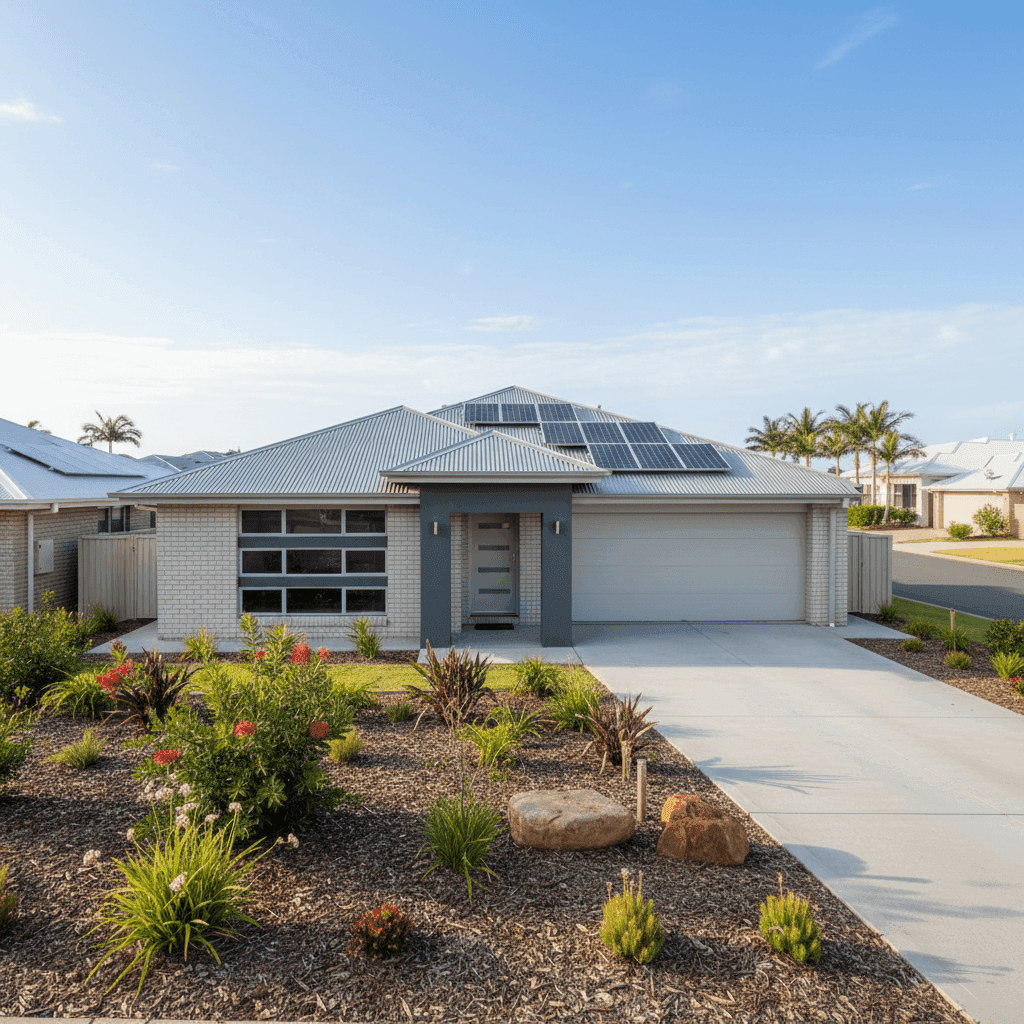
Tannum Sands is a relaxed coastal suburb sitting on the southern edge of Gladstone Region in central Queensland — and like many beachside communities in QLD, home insurance here can carry a premium that surprises first-time buyers. This article breaks down a real home and contents insurance quote for a four-bedroom, free-standing home in Tannum Sands (postcode 4680), and puts the numbers into context so you can judge whether your own policy is working hard enough for you.
---
Is This Quote Fair?
The quote in question comes in at $3,604 per year (or $352/month) for combined home and contents cover — with a building sum insured of $715,000 and contents valued at $50,000. Both the building and contents excess sit at $1,000.
Our pricing engine rates this quote as CHEAP — below average for the area. That's a meaningful finding. Based on 28 quotes collected for Tannum Sands (4680), the suburb average premium sits at $4,988/year, which means this particular policy is coming in roughly $1,384 below the local average — a saving of around 28%. Even compared to the suburb's 25th percentile (the cheapest quarter of quotes), at $3,870/year, this quote still undercuts the field.
For homeowners who've been auto-renewed on their existing policy without shopping around, this kind of gap is a wake-up call. A difference of over $1,300 per year adds up to more than $13,000 over a decade.
---
How Tannum Sands Compares
To really understand what this quote means, it helps to zoom out and look at the broader picture.
| Benchmark | Premium |
|---|---|
| This Quote | $3,604/yr |
| Tannum Sands Suburb Average | $4,988/yr |
| Tannum Sands Suburb Median | $4,301/yr |
| Tannum Sands 25th Percentile | $3,870/yr |
| QLD State Average | $4,547/yr |
| QLD State Median | $3,931/yr |
| National Average | $2,965/yr |
| National Median | $2,716/yr |
A few things stand out here. First, Tannum Sands premiums are notably higher than the national average — the suburb average of $4,988 is nearly 68% above the national average of $2,965. This reflects the elevated risk profile that insurers assign to coastal Queensland properties, even those that fall outside designated cyclone risk zones.
Second, Queensland as a state also runs well above national benchmarks, with a state average of $4,547 versus the national figure of $2,965. This is consistent with QLD's exposure to severe weather events including storms, flooding, and hail — all of which drive up claims costs and, in turn, premiums across the board.
The quote analysed here sits well below both the suburb and state averages, making it a genuinely competitive result for this type of property and location.
---
Property Features That Affect Your Premium
Several characteristics of this property will have influenced how insurers priced the risk.
Brick veneer walls and Colorbond roof are generally viewed favourably by insurers. Brick veneer offers solid fire and impact resistance, while steel/Colorbond roofing is durable, low-maintenance, and performs well in high-wind conditions — an important consideration in coastal Queensland even outside formal cyclone zones.
Slab foundation is the standard construction method for homes of this era in QLD and typically presents no additional risk concerns for insurers. Similarly, tile flooring is considered durable and straightforward to assess for replacement costs.
Construction year of 2005 places this home in a relatively modern bracket. Properties built after the early 2000s generally benefit from updated building codes, particularly around wind and storm resistance, which can positively influence underwriting decisions.
Solar panels are worth noting. While they add value to the property, they can also add complexity to a home insurance claim if damaged — for instance, in a hailstorm or during a roof repair. It's worth confirming with your insurer that your solar system is explicitly covered under your building policy, including the panels, inverter, and associated wiring.
The absence of a swimming pool removes one common source of liability claims, and the lack of ducted climate control means there's no large mechanical system embedded in the structure that could generate a claim.
At 244 sqm, this is a well-sized family home, and the building sum insured of $715,000 reflects a reasonable rebuild cost estimate for a four-bedroom brick veneer home in regional Queensland. It's always worth reviewing your sum insured annually — construction costs have risen sharply in recent years, and being underinsured at claim time can leave you significantly out of pocket.
---
Tips for Homeowners in Tannum Sands
1. Review your sum insured every year Rebuild costs in regional Queensland have climbed considerably since 2020 due to labour shortages and rising material costs. Use a building cost calculator or ask your insurer to reassess your coverage annually to avoid being caught underinsured.
2. Confirm your solar panels are covered Solar installations are not always automatically included in standard home insurance policies. Check your Product Disclosure Statement (PDS) to confirm coverage for panels, inverter, mounting hardware, and any associated electrical components.
3. Shop around at renewal time As this quote demonstrates, there can be a significant spread in premiums for the same property. Insurers price risk differently, and loyalty doesn't always pay — in fact, long-term customers are often charged more than new ones. Comparing quotes annually is one of the simplest ways to keep your costs down.
4. Understand your excess and how it affects your premium A $1,000 excess is relatively standard, but increasing your excess voluntarily can reduce your annual premium. If you have the financial buffer to cover a higher out-of-pocket cost in a claim scenario, this trade-off can make sense — just make sure you're not setting your excess so high that you'd hesitate to claim when you genuinely need to.
---
Compare Your Home Insurance Today
Whether you're a long-term Tannum Sands local or you've recently bought in the area, it pays to know where your premium stands. CoverClub makes it easy to compare home and contents quotes from multiple insurers in one place — so you can see the full picture before you commit. Get a quote now at CoverClub and find out if you're paying more than you need to. You can also explore detailed suburb-level pricing data for Tannum Sands (4680) and the broader Queensland market to benchmark your own policy.