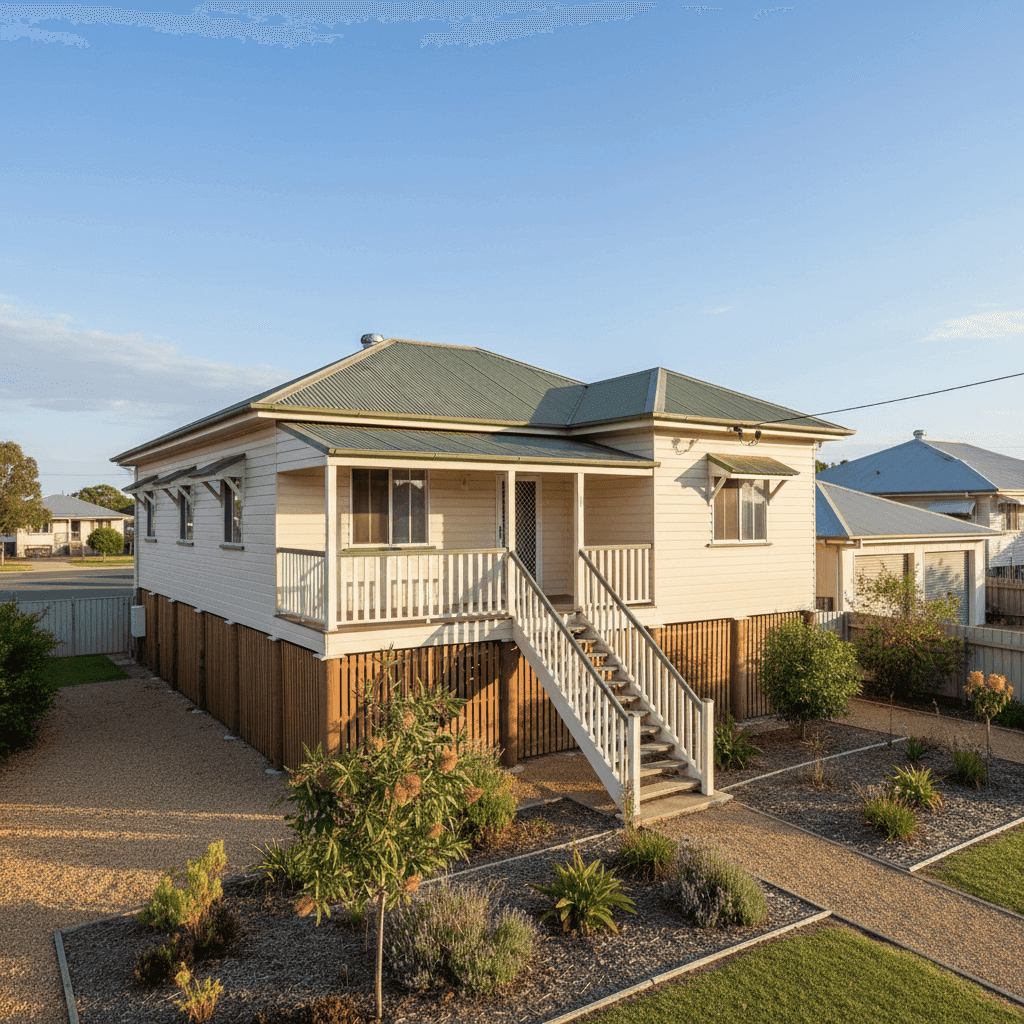
If you own a free standing home in Tara, QLD 4421, you've probably wondered whether your home insurance premium is competitive — or whether you're quietly overpaying. This article breaks down a real building insurance quote for a three-bedroom, one-bathroom weatherboard home in Tara, comparing it against suburb, state, and national benchmarks so you can make a genuinely informed decision.
---
Is This Quote Fair?
The short answer: yes — this is an exceptionally competitive quote.
At $943 per year (or roughly $87 per month), this building-only policy sits well below what most homeowners in Tara are paying. Our price rating for this quote is CHEAP, meaning it falls significantly beneath the suburb average. To put that in perspective, the suburb average premium for Tara sits at $2,942 per year, and the median is $2,652 per year — meaning this quote comes in at less than a third of what a typical Tara homeowner pays.
Even compared to the 25th percentile of quotes in the area (i.e., the cheapest quarter of premiums), which sits at $2,091 per year, this policy is still dramatically lower. That's a remarkable result for a property in regional Queensland.
The building sum insured is $484,000, which is a reasonable figure for a 130 sqm home in this part of the Western Downs region. The building excess is set at $5,000 — higher than average — which is one of the key levers that brings the annual premium down. It's worth factoring that into your thinking: a lower premium today means a higher out-of-pocket cost if you ever need to make a claim.
---
How Tara Compares
To understand just how well this quote performs, it helps to zoom out and look at the broader picture.
| Benchmark | Premium |
|---|---|
| This Quote | $943/yr |
| Tara (suburb average) | $2,942/yr |
| Tara (suburb median) | $2,652/yr |
| QLD (state average) | $9,129/yr |
| QLD (state median) | $3,903/yr |
| National average | $5,347/yr |
| National median | $2,764/yr |
| Western Downs LGA average | $18,732/yr |
The Queensland state average of $9,129 per year reflects the enormous variation in premiums across the state — driven heavily by cyclone-prone coastal areas in Far North Queensland, which push averages sky-high. The state median of $3,903 is a more grounded figure, and this quote still undercuts it by a wide margin.
Nationally, the average home insurance premium sits at $5,347 per year, with a median of $2,764. Again, this quote beats both comfortably.
Perhaps the most striking figure is the Western Downs LGA average of $18,732 per year. That number is likely skewed by high-value rural properties, farm buildings, or commercial holdings in the region — but it underscores just how variable premiums can be even within a single local government area. Based on 41 quotes sampled in Tara, the suburb-level data is a far more reliable comparison point for a standard residential home like this one.
---
Property Features That Affect Your Premium
Several characteristics of this property work together to produce a favourable premium outcome.
Weatherboard timber walls are a key factor. While timber-framed homes can attract higher premiums in some markets due to fire risk, the combination of construction era, roof type, and location all interact to shape the final figure. Insurers assess timber homes carefully, but a well-maintained weatherboard property in a low-cyclone zone can still attract competitive rates.
Steel/Colorbond roofing is generally viewed favourably by insurers. It's durable, low-maintenance, and performs well in harsh Australian conditions — particularly against hail and wind. Compared to older tile or fibro roofing, Colorbond is a strong asset when it comes to risk assessment.
The elevated foundation (raised by at least one metre) is a significant premium driver in regional Queensland. Elevated homes — often in the classic Queenslander style — can be more vulnerable to underfloor damage, but they also offer better flood resilience in some scenarios. Insurers price this characteristic carefully, and in flood-prone inland areas, elevation can actually be a protective feature.
No pool, no solar panels, and no ducted climate control all simplify the risk profile. Each of these additions can increase a sum insured and introduce additional claim scenarios. Their absence keeps things straightforward.
Construction year of 1950 means this is an older home. Older properties sometimes attract higher premiums due to ageing wiring, plumbing, or structural elements — but with standard fittings and a modest footprint of 130 sqm, the overall risk profile remains manageable.
Tara is not in a designated cyclone risk area, which is a meaningful advantage for any Queensland homeowner. Cyclone cover is one of the biggest premium inflators in this state, and being outside that zone provides real savings.
---
Tips for Homeowners in Tara
1. Understand your excess before you commit This policy carries a $5,000 building excess — higher than many standard policies. That's a deliberate trade-off for a lower annual premium. Think carefully about whether you could comfortably cover that amount out of pocket in the event of a claim. If not, it may be worth exploring policies with a lower excess, even if the annual cost rises slightly.
2. Review your sum insured regularly Building costs in regional Queensland have risen significantly in recent years. A sum insured of $484,000 for a 130 sqm home may be appropriate today, but it's worth reassessing annually. Underinsurance is one of the most common — and costly — mistakes homeowners make.
3. Maintain your weatherboard exterior Timber homes require consistent upkeep. Cracked or rotting weatherboards, deteriorating paint, or signs of moisture ingress can affect both the structural integrity of your home and your ability to make a successful claim. Regular maintenance protects both your property and your policy.
4. Compare at renewal time Even with a great premium today, insurers often increase rates at renewal. Set a reminder to compare quotes before your policy rolls over each year. The gap between the best and worst quotes in Tara — ranging from around $2,091 at the 25th percentile to $3,491 at the 75th — shows just how much variation exists in this market.
---
Find the Right Cover for Your Home
Whether you're a first-time buyer or a long-term Tara local, getting the right building insurance at the right price starts with comparing your options. CoverClub makes it easy to see how your quote stacks up against real data from your suburb, your state, and across Australia.
Get a home insurance quote today and find out whether your current policy is working as hard as it should be. You can also explore detailed premium data for Tara and surrounds to see exactly where you sit in the market.