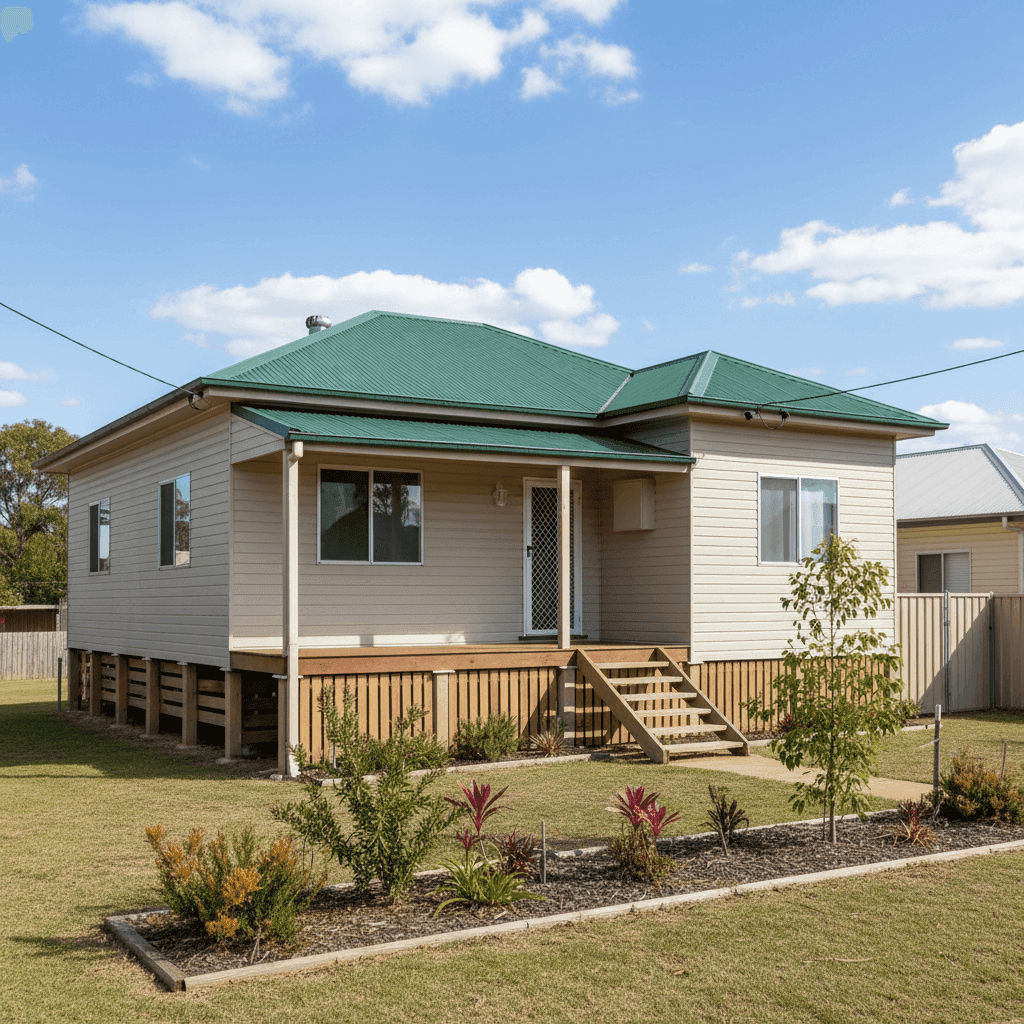
If you own a free standing home in Tara, QLD 4421, you're probably wondering whether the insurance premium you've been quoted is competitive — or whether you're leaving money on the table. This article breaks down a real building insurance quote for a two-bedroom, one-bathroom home in Tara, comparing it against suburb, state, and national benchmarks so you can make a confident, informed decision.
---
Is This Quote Fair?
The quote in question is $3,203 per year (or $300 per month) for building-only cover on a free standing home with a sum insured of $480,000 and a building excess of $2,000.
Our price rating for this quote is FAIR — Around Average, and the data backs that up. Based on a sample of 41 quotes collected for the Tara area, the suburb average sits at $2,942 per year, with a median of $2,652. This quote lands above both of those figures, but it's well within the upper half of the market — the 75th percentile for the suburb is $3,491, meaning roughly a quarter of quotes in the area are actually higher than this one.
In other words, while you're not getting the cheapest deal on the street, you're not being overcharged either. The "fair" rating is appropriate: this is a reasonable premium for the property type, construction, and coverage level involved. That said, "fair" doesn't mean you can't do better — and a quick comparison could reveal savings worth chasing.
---
How Tara Compares
To put this quote in proper context, it helps to zoom out and look at the broader picture. You can explore the full data on the Tara suburb insurance stats page.
| Benchmark | Premium |
|---|---|
| This quote | $3,203/yr |
| Tara suburb average | $2,942/yr |
| Tara suburb median | $2,652/yr |
| QLD state average | $9,129/yr |
| QLD state median | $3,903/yr |
| National average | $5,347/yr |
| National median | $2,764/yr |
| Western Downs LGA average | $18,732/yr |
A few things stand out here. First, this quote is dramatically cheaper than the Queensland state average of $9,129 per year — a figure heavily skewed upward by cyclone-prone coastal and far-north Queensland properties. The QLD state insurance stats paint a stark picture of just how expensive premiums can be in high-risk parts of the state. Tara, located in the Western Downs region and outside designated cyclone risk zones, benefits from a considerably lower risk profile.
Second, the Western Downs LGA average of $18,732 per year might seem alarming at first glance, but this figure is likely influenced by a mix of rural and agricultural properties, larger homes, and higher-value or harder-to-insure dwellings across the region. It's not a meaningful comparison for a standard residential home in Tara township.
Compared to national benchmarks, this quote also performs well — sitting below the national average of $5,347 and only marginally above the national median of $2,764. For a Queensland property, that's a solid result.
---
Property Features That Affect Your Premium
Several characteristics of this particular home influence the premium calculation. Understanding them can help you anticipate how insurers assess your risk.
Hardiplank / Hardiflex External Walls
Fibre cement cladding such as Hardiplank or Hardiflex is generally viewed favourably by insurers. It's resistant to rot, termites, and fire — all relevant concerns in regional Queensland. Compared to older weatherboard or asbestos-clad homes of a similar era, this wall type can contribute to a more competitive premium.
Steel / Colorbond Roof
A Colorbond steel roof is one of the more insurer-friendly roofing materials available. It performs well in high-wind events, resists corrosion, and has a long serviceable life. This is a positive factor in the premium calculation.
Stumped Foundation (Elevated Less Than 1m)
The home sits on stumps and is elevated by less than one metre. This style of construction is common across regional Queensland and offers some flood resilience compared to slab-on-ground homes. However, elevated homes can carry slightly higher rebuilding costs due to the additional structural complexity, which may be partially reflected in the sum insured.
Construction Year: 1980
Homes built in 1980 are now over four decades old. While not ancient, insurers may factor in the age of plumbing, electrical systems, and structural elements when pricing risk. Regular maintenance and updated systems can help keep premiums in check.
Ducted Climate Control
The presence of ducted climate control is noted on this policy. This adds to the replacement value of the home's fixed fittings and is appropriately reflected in the sum insured and premium.
No Pool, No Solar Panels
The absence of a swimming pool removes a meaningful liability and maintenance risk factor. No solar panels means no added complexity around inverter or panel replacement — both of which can add to rebuild costs.
---
Tips for Homeowners in Tara
Whether you're reviewing an existing policy or shopping for the first time, here are some practical steps to make sure you're getting the best value.
- Review your sum insured annually. Building costs in regional Queensland have risen significantly in recent years. A sum insured of $480,000 may be appropriate today, but it's worth rechecking against current construction cost estimates each renewal period. Being underinsured at claim time can be a costly mistake.
- Consider a higher excess to reduce your premium. This quote carries a $2,000 building excess. If you have the financial buffer to absorb a larger out-of-pocket cost in a claim scenario, opting for a higher excess (say, $2,500 or $3,000) can meaningfully reduce your annual premium.
- Keep up with home maintenance. Insurers can reduce or deny claims where damage is attributed to poor maintenance rather than a sudden insured event. Keeping your roof, stumps, and guttering in good condition protects both your home and your claim eligibility.
- Compare quotes at renewal — every year. The insurance market shifts constantly. A premium that was competitive last year may not be this year, and vice versa. Running a fresh comparison at renewal takes only a few minutes and could save you hundreds of dollars.
---
Compare Your Home Insurance with CoverClub
Whether this quote is the right one for your home or you're simply exploring your options, CoverClub makes it easy to see what's available in your area. Get a quote today and compare building insurance options for your Tara property — it's free, fast, and gives you the market context you need to choose with confidence.