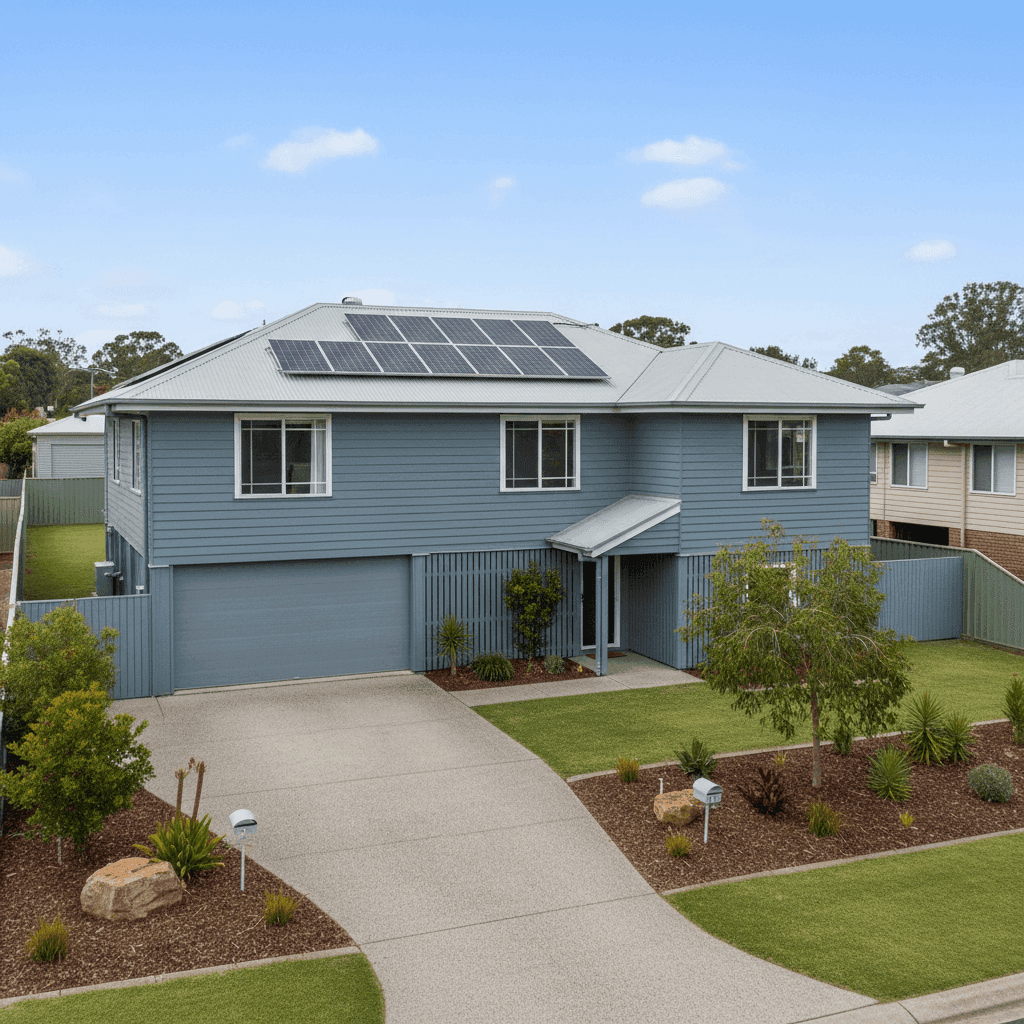
Taranganba is a quiet residential suburb on Queensland's Capricorn Coast, sitting just outside Yeppoon in the Livingstone local government area. It's a popular spot for families seeking space and a relaxed coastal lifestyle — and that lifestyle comes with its own set of insurance considerations. This article breaks down a real home and contents insurance quote for a five-bedroom, free-standing home in Taranganba (postcode 4703), helping you understand what's driving the price and how it stacks up against the broader market.
---
Is This Quote Fair?
The quote in question comes in at $4,090 per year (or $392 per month), covering a building sum insured of $1,008,000 and $80,000 worth of contents. The building excess is $1,000 and the contents excess is $500.
Our pricing engine rates this quote as Fair — Around Average, and the data backs that up. The suburb average for Taranganba sits at $3,975 per year, with a median of $4,008. This quote lands just $82 above the suburb median — well within normal variation and comfortably inside the middle range of what locals are paying.
It's worth noting that the suburb's 25th percentile is $3,326 and the 75th percentile is $4,639, meaning this quote falls neatly between the midpoint and the upper-middle range. There's room to potentially find a cheaper option, but this is by no means an outlier — it's a reasonable price for the property type and risk profile.
---
How Taranganba Compares
To put this quote in broader context, it helps to look beyond the suburb boundary.
| Benchmark | Average Premium | Median Premium |
|---|---|---|
| Taranganba (suburb) | $3,975/yr | $4,008/yr |
| QLD (state) | $9,129/yr | $3,903/yr |
| Australia (national) | $5,347/yr | $2,764/yr |
| Livingstone LGA | $13,146/yr | — |
A few things stand out here. The QLD state average of $9,129 is dramatically higher than the state median of $3,903 — a sign that the Queensland market is heavily skewed by extremely expensive premiums in high-risk areas (think flood plains, cyclone corridors, and remote communities). Taranganba's figures sit much closer to the median, suggesting it's not among the worst-affected areas in the state.
However, the Livingstone LGA average of $13,146 is striking. This figure is pulled up by pockets within the LGA that carry significantly elevated risk — coastal erosion zones, cyclone-prone areas, and properties with challenging construction profiles. Taranganba itself appears to be a more moderate-risk part of the LGA, which explains why its suburb-level figures are far more reasonable.
Compared to the national average of $5,347, this quote is actually below average — a reassuring finding for homeowners in the area. You can explore more local data on the Taranganba suburb stats page, the QLD state overview, or the national insurance stats.
---
Property Features That Affect Your Premium
Several characteristics of this particular home have a direct influence on what insurers are willing to charge. Here's how each one plays into the pricing:
Cyclone Risk Area
This is arguably the single biggest risk factor for this property. Taranganba falls within a designated cyclone risk zone, and insurers price this in carefully. Weatherboard timber homes in cyclone-prone regions are considered more vulnerable than brick or rendered masonry construction, which can push premiums higher. The fact that this quote is still around the suburb average suggests the other property features are helping to balance the risk profile.
Weatherboard Timber Walls
Timber weatherboard is a common construction type in coastal Queensland, particularly in homes built during the 1970s and 1980s. While it's a charming and durable material, insurers generally view it as higher risk than brick veneer or double brick — primarily due to fire susceptibility and wind damage potential in cyclone-affected areas.
Steel / Colorbond Roof
Good news here. A steel Colorbond roof is viewed favourably by insurers, particularly in cyclone zones. It's durable, well-anchored when installed correctly, and resistant to many of the weather events that cause the most claims in coastal Queensland. This likely helps moderate the premium.
Construction Year (1984)
At 40+ years old, this home sits in a bracket where insurers may factor in age-related wear. Older homes can have ageing electrical systems, plumbing, and roofing components that increase claims risk. That said, a 1984 build is far from ancient, and if the home has been well maintained, this shouldn't be a major concern.
Solar Panels
The presence of solar panels adds a modest amount to the insured value and, in some cases, to the risk profile — particularly in cyclone areas where panels can become projectiles in extreme wind events. It's worth confirming with your insurer that your solar system is explicitly covered under your policy.
Building Size (286 sqm) and Sum Insured ($1,008,000)
A 286 sqm home is a substantial property, and the $1,008,000 sum insured reflects the cost to fully rebuild — not the market value. For a five-bedroom, three-bathroom home of this size with standard fittings, this figure seems appropriate. Underinsurance is a common and costly mistake, so it's important the sum insured reflects true rebuild costs, including demolition, debris removal, and current construction prices.
---
Tips for Homeowners in Taranganba
1. Cyclone-proof your home where possible Insurers often reward proactive risk mitigation. Installing cyclone shutters, reinforcing roof tie-downs, and ensuring your home meets current building codes for wind resistance can sometimes lead to lower premiums or better policy terms. Ask your insurer directly whether any upgrades could reduce your costs.
2. Check that your solar panels are covered Not all standard home insurance policies automatically cover solar panel systems — or they may cover them only up to a certain value. Review your policy's Product Disclosure Statement (PDS) carefully and speak with your insurer to confirm your system is fully protected, including inverters and mounting hardware.
3. Review your sum insured annually Construction costs in regional Queensland have risen significantly in recent years. A sum insured that was accurate two or three years ago may now leave you underinsured. Use a building cost calculator or speak with a quantity surveyor to verify your figure each year at renewal time.
4. Compare quotes before renewing Loyalty doesn't always pay in insurance. Premiums can vary significantly between providers — even for identical properties — and many insurers offer better rates to new customers. Before accepting your renewal, take 10 minutes to compare quotes on CoverClub and see whether you're getting the best deal available.
---
Find a Better Deal with CoverClub
Whether you're happy with your current quote or curious whether you could be paying less, CoverClub makes it easy to compare home and contents insurance options across Australia. Our data-driven platform gives you real market context — not just a list of prices — so you can make a genuinely informed decision. Get a quote today and see how your premium stacks up.