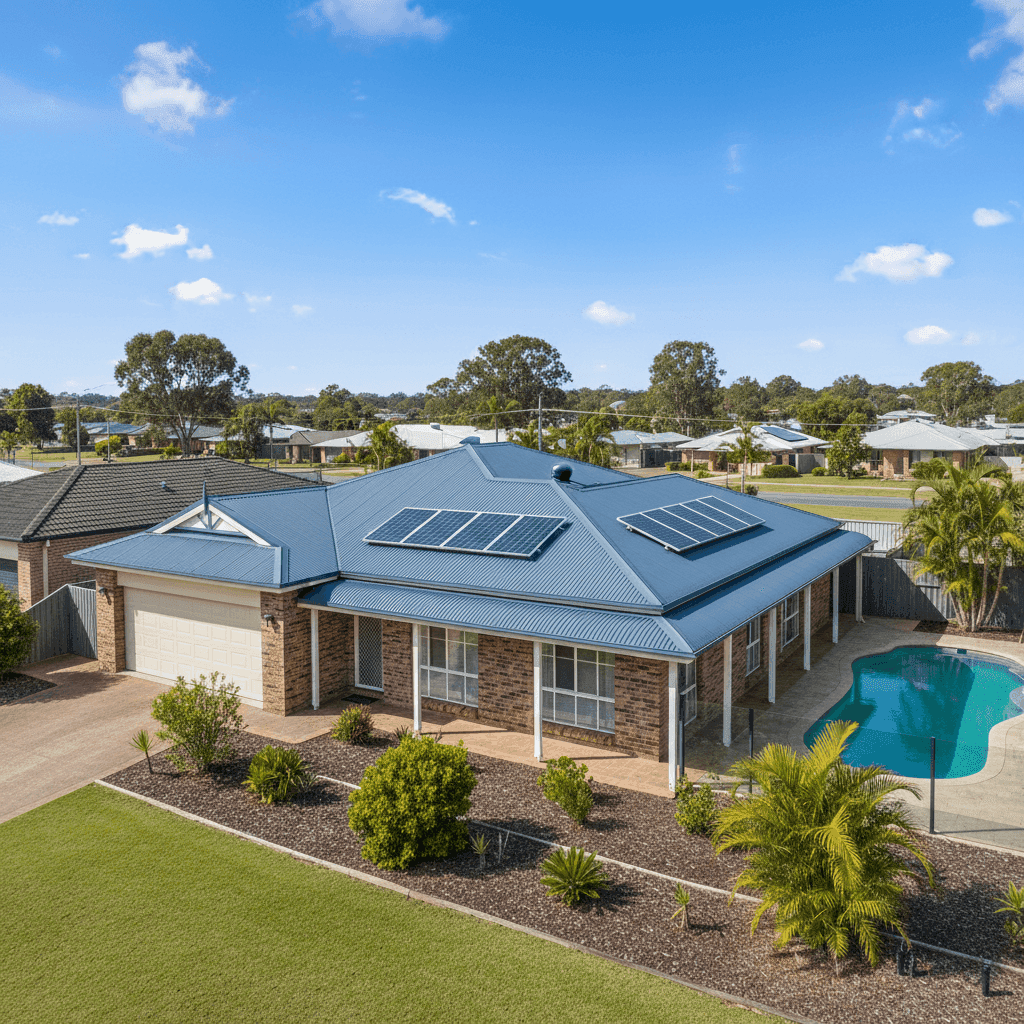
If you own a four-bedroom free standing home in Taranganba, QLD 4703, you're probably wondering whether what you're paying for home insurance is fair — or whether you're leaving money on the table. This article breaks down a real home and contents insurance quote for a property in Taranganba, compares it against local, state and national benchmarks, and offers practical tips to help you get the best value cover.
---
Is This Quote Fair?
The quote in question comes in at $2,362 per year (or $226/month) for combined home and contents insurance, covering a building sum insured of $682,000 and contents valued at $100,000. The building excess is $5,000 and the contents excess is $1,000.
Based on our pricing data, this quote is rated CHEAP — sitting below the suburb average. That's a meaningful result, particularly for a property in coastal Queensland where cyclone risk, weather exposure and rebuilding costs can all push premiums higher.
To put it in perspective: the average premium for comparable properties in Taranganba sits at $3,975/year, with a median of $4,008/year. This quote comes in roughly $1,600 below the suburb average — a saving of around 40%. Even when compared to the suburb's 25th percentile (the cheapest quarter of quotes), which sits at $3,326/year, this result is still notably lower.
It's worth noting that the higher $5,000 building excess does contribute to the reduced premium — accepting a larger out-of-pocket cost in the event of a claim is one way insurers price down the annual cost. Whether that trade-off suits your financial situation is a personal decision, but for homeowners who are unlikely to make small claims, it can be a smart strategy.
---
How Taranganba Compares
Understanding how Taranganba fits into the broader insurance landscape helps put this quote in context. You can explore full pricing data on the Taranganba suburb stats page.
| Benchmark | Premium |
|---|---|
| This Quote | $2,362/yr |
| Taranganba Suburb Average | $3,975/yr |
| Taranganba Suburb Median | $4,008/yr |
| QLD State Average | $9,129/yr |
| QLD State Median | $3,903/yr |
| Livingstone LGA Average | $13,146/yr |
| National Average | $5,347/yr |
| National Median | $2,764/yr |
A few things stand out here. First, the QLD state average of $9,129/year is dramatically higher than the state median of $3,903 — a sign that extreme outliers (think high-risk flood zones, beachfront properties and areas with frequent severe weather events) are pulling the average up significantly. For most Queensland homeowners, the median is a more realistic reference point.
Second, the Livingstone LGA average of $13,146/year is eye-catching. Livingstone Shire covers a wide range of properties, including many in highly exposed coastal and cyclone-prone locations, which inflates the LGA-wide figure. Taranganba, as a suburb within Livingstone, benefits from being a more established residential area, which can moderate risk assessments.
At a national level, the national average sits at $5,347/year, while the national median is $2,764/year — meaning this quote is actually very close to the national median, and well below the national average. For Queensland specifically, the premium environment is generally elevated compared to southern states, making a sub-$2,400 result even more noteworthy.
---
Property Features That Affect Your Premium
Several characteristics of this property have a direct bearing on how insurers assess and price the risk.
Cyclone Risk Area
Taranganba falls within a designated cyclone risk zone, which is one of the most significant premium drivers in Queensland. Insurers apply cyclone-specific loading to properties in these areas, and some policies include a separate cyclone excess. The fact that this quote remains competitive despite this risk factor is a strong result.
Brick Veneer Walls & Colorbond Roof
The combination of brick veneer external walls and a steel/Colorbond roof is generally viewed favourably by insurers. Brick veneer offers solid structural integrity and fire resistance, while Colorbond roofing is durable, low-maintenance and performs well in both cyclonic winds and hail events — all of which can reduce perceived risk.
Concrete Slab Foundation
A slab-on-ground foundation is standard for homes built in this era and region, and is typically considered a neutral-to-positive factor by underwriters. It avoids the moisture and pest concerns sometimes associated with raised timber floors.
Swimming Pool
The presence of a pool adds a modest amount to the premium — primarily through increased liability exposure and the cost of pool equipment under contents or building cover. It's worth confirming with your insurer exactly what pool-related items are covered under your policy.
Solar Panels
Solar panels are increasingly common in Queensland homes and are generally covered under building insurance, though the specific terms vary by insurer. It's important to confirm that your panels and inverter are included in your sum insured, as they can be costly to replace.
2012 Build
A home built in 2012 benefits from being constructed under relatively modern building codes, which incorporated improved cyclone and structural standards following earlier severe weather events. This can positively influence how insurers assess the property's resilience.
Standard Fittings
With standard fittings quality, the rebuild cost estimate of $682,000 for a 214 sqm home works out to approximately $3,187/sqm — a reasonable figure for Queensland at current construction rates, particularly factoring in the pool and solar installation.
---
Tips for Homeowners in Taranganba
1. Review your sum insured regularly Construction costs in Queensland have risen significantly over recent years. If your building sum insured hasn't been updated recently, you may be underinsured. Use a building cost calculator or speak with a quantity surveyor to verify your figure reflects current rebuild costs — including the pool, solar system and any renovations.
2. Understand your cyclone excess Many policies in cyclone-affected areas include a separate, higher excess specifically for cyclone-related claims. Read your Product Disclosure Statement (PDS) carefully to understand what applies, as it may differ from your standard $5,000 building excess.
3. Consider the trade-off on excess levels This quote carries a $5,000 building excess, which contributes to the lower annual premium. If you'd prefer a lower excess for peace of mind, request a comparison — the premium difference may be smaller than you expect, or you may decide the current structure suits your situation well.
4. Compare quotes at renewal time Insurance markets shift, and the cheapest insurer this year may not be the most competitive next year. Given that Taranganba premiums vary significantly across providers (from $3,326 at the 25th percentile to $4,639 at the 75th), shopping around at renewal can deliver real savings.
---
Compare Your Home Insurance Quote
Whether you're renewing your policy or insuring a new property, it pays to see what the market is offering. Get a home insurance quote through CoverClub and see how your premium stacks up against suburb, state and national benchmarks — in minutes, with no obligation.