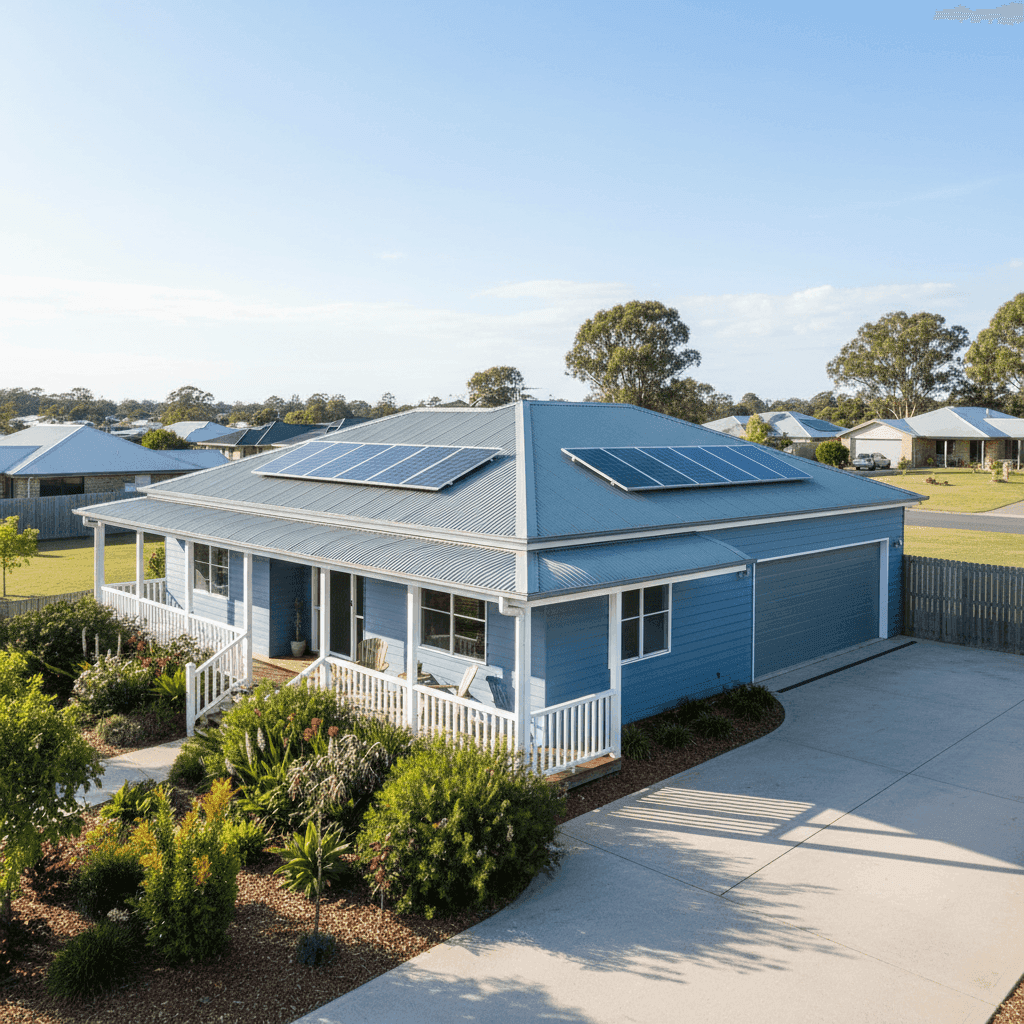
If you own a free standing home in Taranganba, QLD 4703, you've probably noticed that home insurance can feel like a significant outlay — especially in coastal Queensland where natural hazards play a real role in how insurers price risk. This article takes a close look at a recent home and contents insurance quote for a five-bedroom, three-bathroom weatherboard home in Taranganba, breaking down whether the premium is competitive, what's driving the cost, and what local homeowners can do to get better value.
---
Is This Quote Fair?
The quote in question comes in at $4,205 per year (or around $411 per month) for combined home and contents cover. The building is insured for $1,012,000 and contents are covered up to $90,000, with a $1,000 excess applying to both building and contents claims.
Our price rating for this quote is FAIR — Around Average, which means the premium sits in a reasonable range relative to what other homeowners in Taranganba are paying for similar cover. It's not a standout bargain, but it's also not an outlier on the expensive end.
To put that in context: the suburb average premium is $3,975/yr and the suburb median is $4,008/yr, so this quote is only marginally above both benchmarks — a difference of roughly $200–$230 annually. That's well within the normal spread of pricing you'd expect between insurers for a property with this profile.
It's also worth noting that the suburb 25th percentile sits at $3,326/yr, meaning a quarter of comparable quotes in the area come in below that figure. If you're motivated to reduce your premium, there's clear evidence that cheaper options exist in the market — it just takes a bit of shopping around.
---
How Taranganba Compares
One of the most striking things about this quote is how it stacks up against broader benchmarks. Check out the full suburb stats for Taranganba (4703) for a deeper look at local pricing trends.
| Benchmark | Premium |
|---|---|
| This quote | $4,205/yr |
| Taranganba suburb average | $3,975/yr |
| Taranganba suburb median | $4,008/yr |
| QLD state average | $9,129/yr |
| QLD state median | $3,903/yr |
| National average | $5,347/yr |
| National median | $2,764/yr |
| Livingstone LGA average | $13,146/yr |
The Queensland state average of $9,129/yr is dramatically higher than this quote — but that figure is heavily skewed by extremely high-risk postcodes elsewhere in the state (think Far North Queensland cyclone corridors and flood-prone inland areas). The QLD state median of $3,903/yr is a far more representative benchmark, and this quote sits only modestly above it.
Nationally, the average premium is $5,347/yr with a median of $2,764/yr — again, the average is pulled upward by high-risk areas. Compared to the national average, this Taranganba quote is actually quite reasonable.
Perhaps most telling is the Livingstone LGA average of $13,146/yr. This suggests that while Taranganba sits within the Livingstone local government area, it benefits from a more favourable risk profile than many other properties in the broader LGA — a meaningful advantage for homeowners in this suburb.
---
Property Features That Affect Your Premium
Several characteristics of this property have a direct bearing on how insurers calculate risk and, by extension, the premium charged.
Cyclone risk area: Taranganba is located in a designated cyclone risk zone, which is one of the most significant premium drivers for any Queensland coastal property. Insurers apply loading to cover the potential cost of cyclone damage, which can be substantial for weatherboard homes in particular.
Weatherboard timber construction: Timber-framed homes with weatherboard cladding are generally considered higher risk than brick veneer or double-brick properties. Wood is more susceptible to fire, storm damage, and long-term moisture issues — all of which factor into underwriting decisions.
Steel/Colorbond roof: On the positive side, a Colorbond steel roof is well-regarded by insurers. It performs reliably in high-wind events, resists corrosion, and tends to have a longer serviceable life than tiled alternatives. This likely provides some offsetting benefit to the premium.
Solar panels: The presence of solar panels adds to the insured value of the property and introduces some additional risk (electrical faults, storm damage to panels), which can marginally increase premiums. It's important to confirm with your insurer that solar panels are explicitly covered under your policy.
Slab foundation: A concrete slab foundation is generally viewed favourably by insurers — it reduces the risk of subsidence and pest-related structural damage compared to raised or timber-framed sub-floor systems.
Age of construction (1984): At around 40 years old, this home sits in a bracket where insurers may apply some age-related loading, particularly around the condition of electrical wiring, plumbing, and roofing materials. Keeping maintenance records up to date can help demonstrate the property is well cared for.
Ducted climate control: Ducted air conditioning systems are a contents or fixed-fitting item that adds value to the property and can influence both building and contents sum insured calculations.
---
Tips for Homeowners in Taranganba
1. Shop the market at renewal time With a 25th percentile of $3,326/yr in the suburb, there's genuine competition among insurers for this type of property. Don't let your policy auto-renew without getting at least two or three comparison quotes. Even a modest saving of $300–$500/yr compounds significantly over time.
2. Review your sum insured carefully A building sum insured of $1,012,000 for a 286 sqm home works out to roughly $3,538/sqm — which is on the higher end for a standard-finish home, even accounting for cyclone-rated construction requirements. Overpaying on your sum insured directly inflates your premium. Consider getting a professional building replacement cost assessment to make sure your figure is accurate, not just estimated.
3. Cyclone-proof your home where possible In a cyclone risk area, mitigation measures can sometimes lead to premium reductions. Ensuring your roof is properly strapped and secured, that gutters and downpipes are clear, and that outdoor items are secured or stored can reduce both your risk and your insurer's exposure. Ask your insurer whether any cyclone-resilience improvements qualify for a discount.
4. Confirm solar panel coverage explicitly Solar panels are a meaningful asset — don't assume they're automatically covered. Check your Product Disclosure Statement (PDS) to confirm whether panels are included under building cover, what events are covered (e.g. storm, fire, accidental damage), and whether there are any exclusions related to inverter or electrical faults.
---
Compare Your Options with CoverClub
Whether you're reviewing an existing policy or shopping for cover for the first time, it pays to see the full picture. CoverClub makes it easy to get a home insurance quote and compare your options side by side — so you can make a confident, informed decision rather than just accepting whatever lands in your inbox at renewal. With premiums varying by hundreds of dollars for the same property, a few minutes of comparison can go a long way.