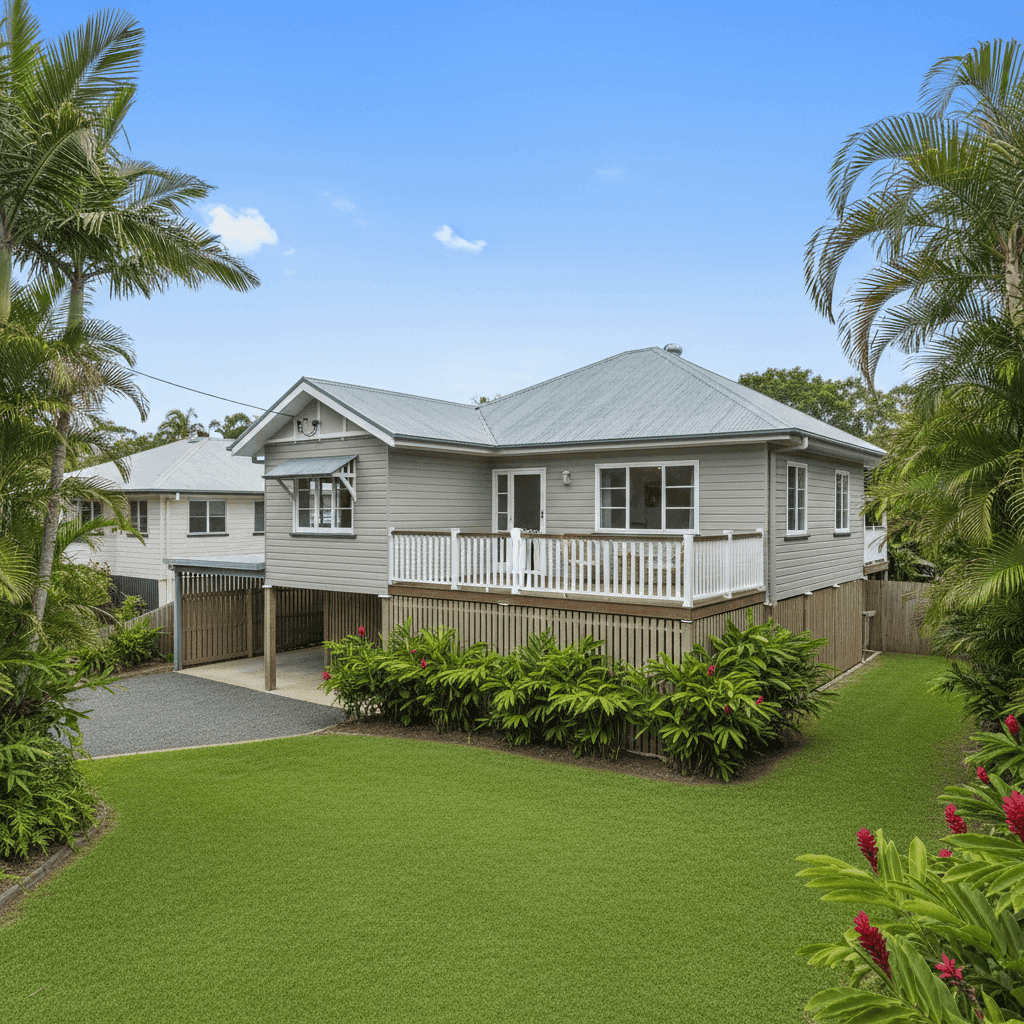
If you own a free standing home in Taranganba, QLD 4703, you're likely all too familiar with the challenge of finding affordable building insurance — especially in a region where cyclone risk and coastal conditions can push premiums sky-high. This article breaks down a real building-only insurance quote for a three-bedroom home in Taranganba, compares it against local, state, and national benchmarks, and offers practical tips to help you get the best value cover for your property.
---
Is This Quote Fair?
The quote in question comes in at $2,963 per year (or $284/month) for building-only cover on a 3-bedroom, 1-bathroom free standing home with a sum insured of $601,000 and a building excess of $2,000.
Our price rating for this quote is CHEAP — below average for the Taranganba suburb. That's genuinely good news. In a postcode where cyclone exposure is a real factor and insurers price accordingly, landing a premium well below the local going rate is a meaningful win for the homeowner.
To put it in perspective: the suburb average premium is $3,975/yr and the suburb median sits at $4,008/yr. This quote beats both figures comfortably, and even comes in below the 25th percentile of $3,326/yr — meaning it's cheaper than at least 75% of comparable quotes collected in the area. For a property with a $601,000 sum insured in a cyclone-prone postcode, that's a result worth noting.
---
How Taranganba Compares
Understanding where Taranganba sits in the broader insurance landscape helps put this quote in full context. Here's how the numbers stack up:
| Benchmark | Premium |
|---|---|
| This Quote | $2,963/yr |
| Taranganba Suburb Average | $3,975/yr |
| Taranganba Suburb Median | $4,008/yr |
| Taranganba 25th Percentile | $3,326/yr |
| QLD State Average | $9,129/yr |
| QLD State Median | $3,903/yr |
| National Average | $5,347/yr |
| National Median | $2,764/yr |
| Livingstone LGA Average | $13,146/yr |
A few things stand out here. First, the QLD state average of $9,129/yr is extraordinarily high — a figure heavily skewed by properties in extreme cyclone and flood zones across Far North Queensland. The state median of $3,903/yr is a far more representative number for most Queensland homeowners, and this quote sits just below it.
The Livingstone LGA average of $13,146/yr is particularly striking. Livingstone Shire encompasses a diverse range of properties, including many in high-risk coastal and cyclone-exposed areas around the Capricorn Coast. The fact that this quote lands so far below the LGA average suggests the property's specific characteristics are working in its favour.
Compared to the national average of $5,347/yr, this quote is nearly 45% cheaper — though it does sit above the national median of $2,764/yr. You can explore more Taranganba suburb insurance statistics, QLD state averages, and national home insurance benchmarks on CoverClub.
> Note: The suburb sample size is 11 quotes, so while directionally useful, these averages should be treated as indicative rather than definitive.
---
Property Features That Affect Your Premium
Several characteristics of this particular property are likely influencing the final premium — some favourably, some less so.
Cyclone Risk Area
This is the single biggest risk factor for properties in Taranganba. Located on Queensland's Capricorn Coast, the area sits within a designated cyclone risk zone. Insurers price this risk heavily into premiums, which is why the Livingstone LGA average is so elevated. The fact that this quote remains competitive despite the cyclone exposure is notable.
Elevated Foundation (Stumps, Raised by At Least 1m)
Being elevated by at least one metre on stump foundations is a genuine advantage in this part of Queensland. Elevated homes are significantly less susceptible to flood and storm surge inundation, which directly reduces the insurer's risk exposure. This is likely one of the key factors keeping this premium below the local average. It's a classic Queenslander-style construction approach that pays dividends at renewal time.
Hardiplank/Hardiflex Exterior Walls
Fibre cement cladding like Hardiplank and Hardiflex is well regarded by insurers for its durability, fire resistance, and resistance to rot and termites. Compared to older timber weatherboard or brick veneer, it's a relatively low-maintenance material that holds up well in humid coastal climates — a positive signal for underwriters.
Steel/Colorbond Roof
Colorbond steel roofing is a strong performer in cyclone-prone areas. It's lightweight, resistant to corrosion, and — when properly installed to Australian Standards — provides excellent wind uplift resistance. Many insurers view Colorbond more favourably than older roofing materials like terracotta tiles or corrugated iron in high-wind zones.
Timber/Laminate Flooring
Timber and laminate floors can be more vulnerable to water damage than tiles, which may factor into claims costs. However, given the home's elevated position, the practical flood risk to internal flooring is reduced.
Ducted Climate Control
The presence of ducted climate control adds to the building's replacement value and is appropriately reflected in the sum insured. It's a component that can be costly to replace after storm or cyclone damage, so ensuring it's captured in your sum insured is important.
1982 Construction
Homes built in 1982 sit in an interesting middle ground. They predate some of the stricter cyclone-resistant building codes introduced after Cyclone Tracy and updated through the 1980s and 1990s, but many have since been upgraded or retrofitted. Insurers may apply a modest loading for older construction, though this varies significantly between providers.
---
Tips for Homeowners in Taranganba
1. Review Your Sum Insured Annually
With a sum insured of $601,000 for a 130 sqm home, it's worth verifying this figure covers the full cost of rebuilding — not just the market value. Construction costs in regional Queensland have risen sharply in recent years. Use a building cost calculator or speak with a quantity surveyor to make sure you're not underinsured.
2. Document Your Cyclone Preparedness
Some insurers offer discounts or more favourable terms for homes that have undertaken cyclone mitigation works — such as roof tie-down upgrades, shutters, or structural reinforcements. If you've made any improvements, make sure your insurer is aware of them.
3. Don't Auto-Renew Without Comparing
Even if your current premium is below average, the insurance market shifts every year. Insurers regularly re-price cyclone-exposed postcodes, and a "cheap" quote today may not be competitive at next renewal. Compare quotes on CoverClub before you accept any renewal offer.
4. Consider Your Excess Carefully
This policy carries a $2,000 building excess. In a cyclone event, a higher excess can mean a significant out-of-pocket cost before your cover kicks in. Weigh up whether a lower excess — even at a slightly higher premium — makes sense for your financial situation and risk appetite.
---
Ready to Compare?
Whether you're happy with your current insurer or looking for a better deal, it pays to know where you stand. CoverClub makes it easy to compare home insurance quotes for properties across Taranganba and the wider Capricorn Coast. Get a quote today and see how your premium stacks up against the market — you might be surprised at what's available.