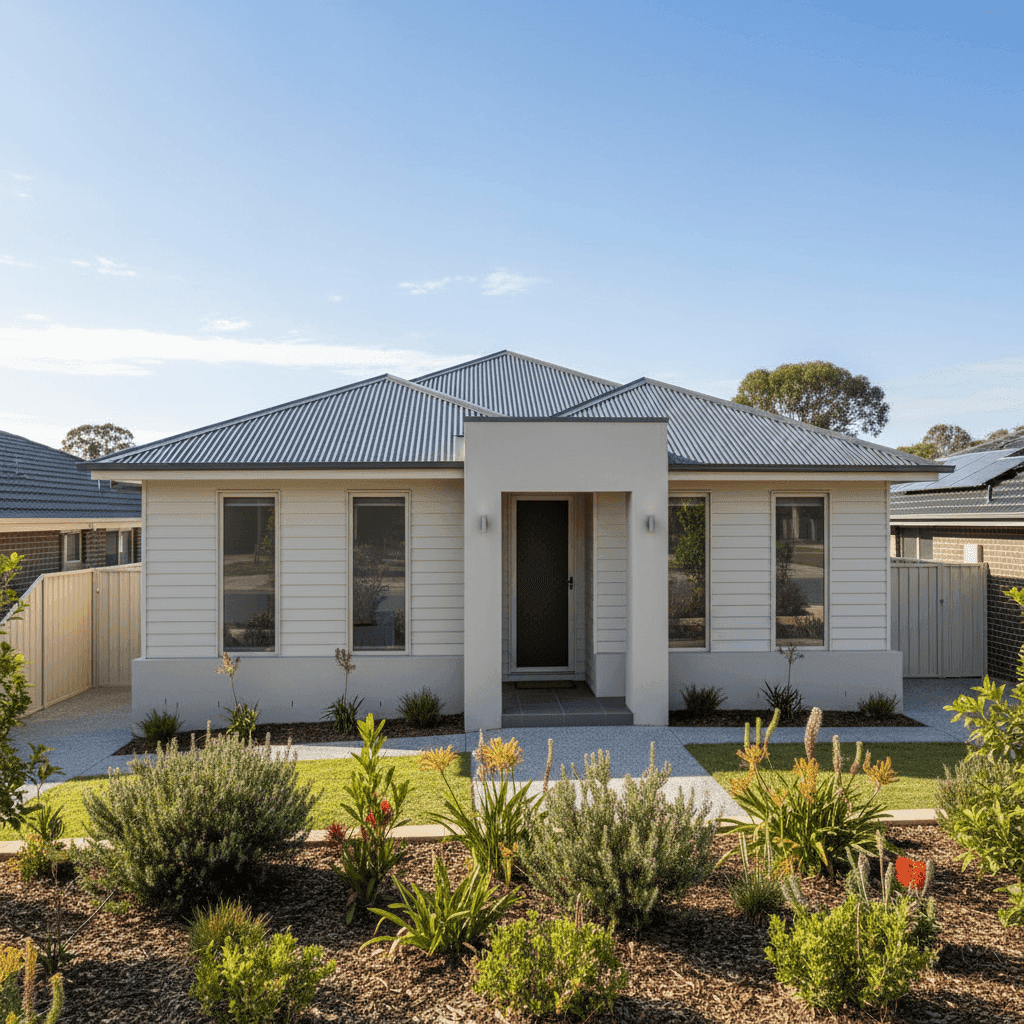
If you own a free standing home in Taree, NSW 2430, you've probably wondered whether you're paying a fair price for home insurance — or quietly overpaying year after year. This article breaks down a real home and contents insurance quote for a four-bedroom property in the area, puts the premium in context against suburb, state and national benchmarks, and offers practical advice for local homeowners looking to get better value.
---
Is This Quote Fair?
The quote in question comes in at $1,994 per year (or $196/month) for combined home and contents cover, with a building sum insured of $974,000 and contents valued at $50,000. The building excess is $2,000 and the contents excess $1,000.
Our pricing engine has rated this quote as FAIR — Around Average, which is a reasonable outcome but not necessarily the best you can do.
To put it plainly: you're not being gouged, but there's room to improve. The quote sits above the suburb median of $1,360/yr — meaning at least half of comparable quotes in the area come in cheaper. It does, however, fall below the suburb's 75th percentile of $2,206/yr, so it's not in the expensive end of the local range either.
For a newly built (2022) home with modern construction materials, a "fair" rating is worth scrutinising. Newer builds often attract more competitive premiums because they carry lower risk profiles — better structural integrity, compliance with updated building codes, and reduced likelihood of claims related to wear and ageing. If your quote is still sitting at average, it may be worth shopping around to see whether another insurer prices your property's modernity more favourably.
---
How Taree Compares
Understanding where Taree sits in the broader insurance landscape helps you interpret your quote more clearly.
| Benchmark | Premium |
|---|---|
| This Quote | $1,994/yr |
| Taree Suburb Average | $1,867/yr |
| Taree Suburb Median | $1,360/yr |
| NSW State Average | $3,801/yr |
| NSW State Median | $3,410/yr |
| National Average | $2,965/yr |
| National Median | $2,716/yr |
| Mid-Coast LGA Average | $4,463/yr |
The numbers tell an interesting story. Taree is significantly cheaper than the NSW state average — residents here pay roughly half of what the typical NSW homeowner pays. It also compares very favourably against the national average and, strikingly, is well below the Mid-Coast LGA average of $4,463/yr.
This disparity between Taree's suburb-level data and the broader Mid-Coast LGA average likely reflects the diversity of risk profiles across the region — coastal and flood-prone pockets of the LGA can push premiums much higher, while Taree itself sits at a more moderate risk level.
Compared to the NSW state average and national benchmarks, Taree homeowners are in a relatively affordable position. You can explore the full local data on the Taree suburb stats page.
> Note: The suburb sample size is 29 quotes, which is a reasonable dataset but still relatively small. Averages can shift as more data is collected.
---
Property Features That Affect Your Premium
Every property has a unique combination of characteristics that insurers weigh up when calculating risk. Here's how the features of this particular home are likely influencing the premium:
Vinyl cladding external walls Vinyl cladding is generally considered a moderate-risk wall material. It's durable, low-maintenance, and resistant to moisture — all qualities insurers tend to view positively. However, it can be more vulnerable to impact damage compared to brick veneer, which may slightly influence the premium.
Steel/Colorbond roof This is one of the most insurer-friendly roof types available. Colorbond is fire-resistant, durable in high-wind conditions, and has a long lifespan. Homes with steel roofing typically attract lower premiums than those with tile or older materials, and it's a genuine asset on this property.
Concrete slab foundation A slab foundation is standard for modern construction in NSW and is viewed as structurally stable. It eliminates the under-floor cavity risks associated with elevated or timber-stumped homes, which can reduce certain categories of risk.
Tile flooring Hard flooring like tiles is generally less susceptible to water damage than carpet, which can work in your favour when it comes to accidental water damage claims.
Ducted climate control This is a noteworthy inclusion. Ducted systems are a significant fixed asset within the home and contribute meaningfully to the building sum insured. Insurers factor in the replacement cost of these systems, which can nudge premiums upward — but it also means you're properly covered if the system needs to be replaced after an insured event.
2022 construction year A home built in 2022 is subject to the latest National Construction Code requirements, including improved structural standards and fire safety measures. This is one of the strongest risk-reducing factors in this profile and should be working in your favour with most insurers.
Slightly elevated (less than 1m) The property is slightly elevated but not significantly so. This modest elevation can offer a small degree of flood protection, though it wouldn't be enough to materially reduce flood risk premiums in a high-risk area.
---
Tips for Homeowners in Taree
1. Review your building sum insured carefully At $974,000, the building sum insured is substantial for a 214 sqm home in Taree. It's worth verifying this figure against a current building cost estimate — over-insuring means you're paying higher premiums than necessary, while under-insuring can leave you exposed at claim time. Use a quantity surveyor or an online rebuild calculator to validate the figure annually.
2. Compare quotes before renewing Insurers rarely reward loyalty with their best pricing. With a "fair" rating on this quote, there's a realistic chance a competing insurer would price this modern, well-constructed home more aggressively. Get a new quote at CoverClub to see how other providers stack up.
3. Consider adjusting your excess The building excess here is set at $2,000. Opting for a higher voluntary excess can meaningfully reduce your annual premium. If you have the savings buffer to cover a larger out-of-pocket cost in the event of a claim, this can be a smart trade-off.
4. Check what's included in your contents cover $50,000 in contents cover is on the lower end for a four-bedroom home. Take stock of your furniture, appliances, electronics, clothing and valuables — it's easy to underestimate the total replacement value of everything inside your home. Inadequate contents cover can leave you significantly out of pocket after a major loss event.
---
Compare Your Options with CoverClub
Whether you're renewing your policy or shopping for the first time, comparing quotes is the single most effective way to ensure you're getting genuine value. CoverClub makes it easy to benchmark your premium against real data from your suburb and beyond. Start your comparison today and find out whether your insurer is truly giving you a competitive rate — or whether it's time to switch.