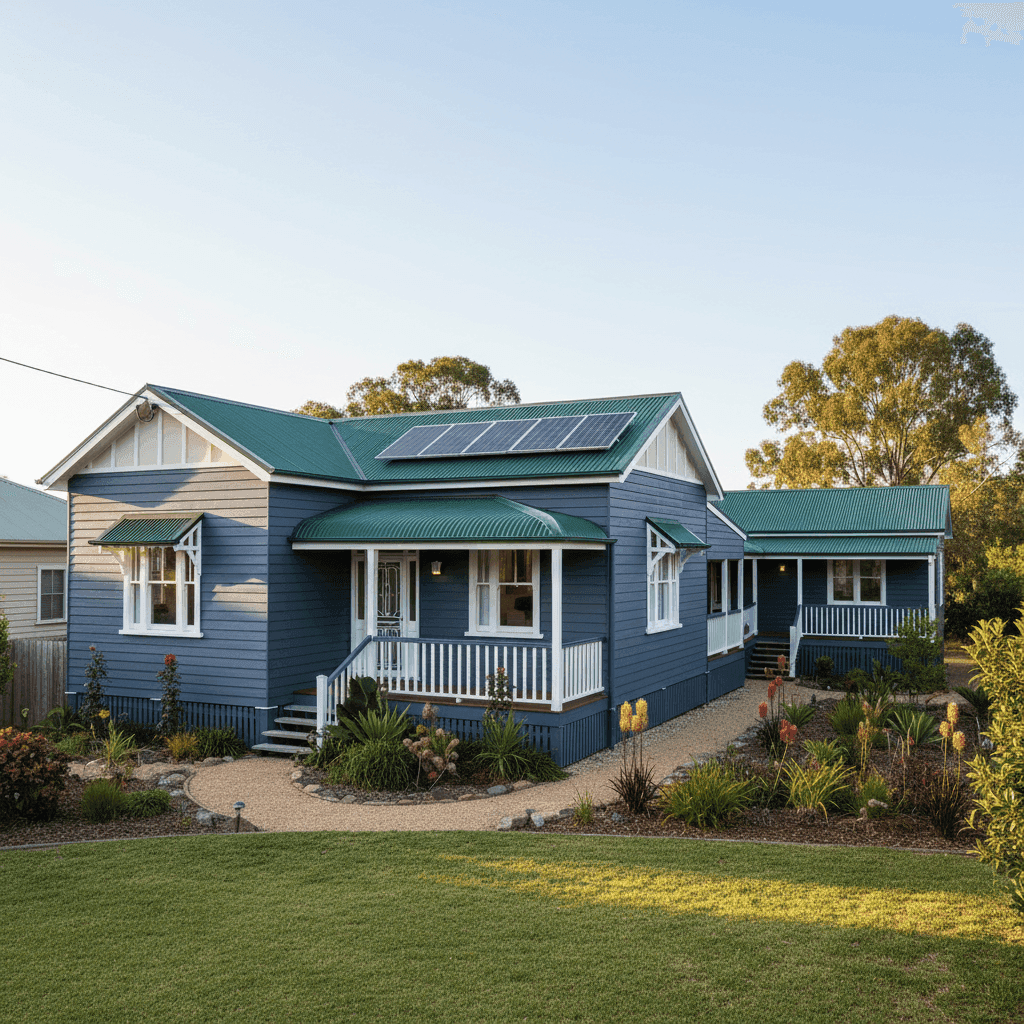
If you own a free standing home in Taree, NSW 2430, you're probably curious about what a fair home insurance premium looks like — and whether your current policy is competitive. This article breaks down a real home and contents insurance quote for a three-bedroom weatherboard property in Taree, benchmarking it against local, state, and national data so you can make an informed decision.
---
Is This Quote Fair?
The annual premium for this quote comes in at $1,875 per year (or $187/month), covering both building (sum insured: $670,000) and contents ($50,000), with a building excess of $2,000 and a contents excess of $1,000.
Our price rating for this quote is FAIR — Around Average, and the data backs that up. The suburb average for Taree (2430) sits at $1,867/year, meaning this quote is almost exactly in line with what most locals are paying. It falls comfortably within the interquartile range — between the 25th percentile of $1,259/yr and the 75th percentile of $2,206/yr — which confirms it's neither a bargain nor a rip-off.
That said, "fair" doesn't necessarily mean "the best available." There's a meaningful gap between the suburb's median premium ($1,360/yr) and this quote ($1,875/yr), suggesting that cheaper options do exist in the market for comparable Taree properties. Whether those cheaper quotes offer equivalent cover is a separate question worth investigating.
---
How Taree Compares
One of the most striking takeaways from this data is just how affordable Taree is relative to broader benchmarks.
| Benchmark | Average Premium | Median Premium |
|---|---|---|
| Taree (2430) | $1,867/yr | $1,360/yr |
| NSW State | $3,801/yr | $3,410/yr |
| National | $2,965/yr | $2,716/yr |
| Mid-Coast LGA | $4,463/yr | — |
Taree homeowners are paying, on average, less than half of what NSW residents pay statewide — and significantly below the national average too. The Mid-Coast LGA average of $4,463/yr is particularly eye-opening; it suggests that other parts of the Mid-Coast council area face considerably higher premiums, likely driven by flood-prone or coastal properties nearby.
This quote of $1,875/yr sits 51% below the NSW average and 37% below the national average, which is genuinely good news for Taree homeowners. You can explore the full breakdown of NSW home insurance statistics or national home insurance data to put these figures in even broader context.
It's worth noting that this analysis is based on a sample of 29 quotes for the Taree suburb, so while directionally reliable, a larger sample would provide even greater confidence. Always compare multiple insurers before making a final decision.
---
Property Features That Affect Your Premium
Several characteristics of this particular property have a direct bearing on what insurers charge — and understanding them helps explain why the premium lands where it does.
Age and Construction (1900, Weatherboard)
Built around 1900, this is a heritage-era home. Older properties can attract higher premiums because they may require specialist materials or tradespeople to repair or rebuild to a comparable standard. Weatherboard timber walls are also considered higher risk than brick veneer or double brick — they're more susceptible to fire spread and general weathering, which insurers factor into their pricing.
Roof Type — Steel/Colorbond
A Colorbond steel roof is generally viewed favourably by insurers. It's durable, fire-resistant, and performs well in severe weather events. This likely helps moderate the premium despite the older construction date.
Foundation — Stumps
Homes built on timber or concrete stumps — common in older Australian homes, particularly in regional NSW — can present a higher risk of subsidence, pest damage, and structural movement. This is a factor insurers assess carefully, and it may contribute modestly to the premium.
Solar Panels
The property has solar panels, which add value to the building sum insured and need to be covered under the policy. Most home insurance policies in Australia include solar panels as part of the building cover, but it's worth confirming this is explicitly included and that the $670,000 sum insured adequately accounts for their replacement cost.
Granny Flat
The presence of a granny flat adds complexity to the insured risk. Whether it's used as additional living space, rented out, or sits vacant, insurers need to know — and the sum insured should reflect the cost of rebuilding both structures. If the granny flat is rented, some insurers may require a landlord endorsement or separate policy.
No Pool, No Ducted Climate Control
The absence of a pool and ducted air conditioning keeps things relatively straightforward from an underwriting perspective — fewer high-value fixtures to insure and fewer potential liability or maintenance risks.
---
Tips for Homeowners in Taree
1. Review your sum insured regularly At $670,000, the building sum insured needs to reflect the true cost of rebuilding — not the market value of the land. With a heritage weatherboard home and a granny flat on site, rebuilding costs can be surprisingly high. Use a building cost calculator annually to ensure you're not underinsured.
2. Clarify granny flat cover with your insurer Make sure your policy explicitly covers the granny flat as part of the building sum insured. If it's tenanted, check whether your insurer requires a separate landlord or rental property endorsement to maintain full cover.
3. Confirm solar panel coverage Ask your insurer to confirm that your solar panels are covered under the building section of your policy, including the panels themselves, inverter, and any associated wiring. Some policies have sub-limits or exclusions that could leave you short in the event of a claim.
4. Consider your excess trade-off This policy carries a $2,000 building excess and a $1,000 contents excess. Choosing a higher excess is a common way to reduce your annual premium — but make sure you can comfortably afford to pay it out of pocket if you need to make a claim. For a property with older construction, claims may be more frequent, so weigh this carefully.
---
Compare Quotes and Save
Whether you're renewing your existing policy or shopping for cover on a new purchase, it pays to compare. Taree premiums are well below state and national averages, but there's still a wide spread in the local market — from around $1,259/yr at the cheaper end to over $2,200/yr at the top. Get a home insurance quote at CoverClub to see how multiple insurers price your specific property, and make sure you're getting the right cover at a competitive rate.