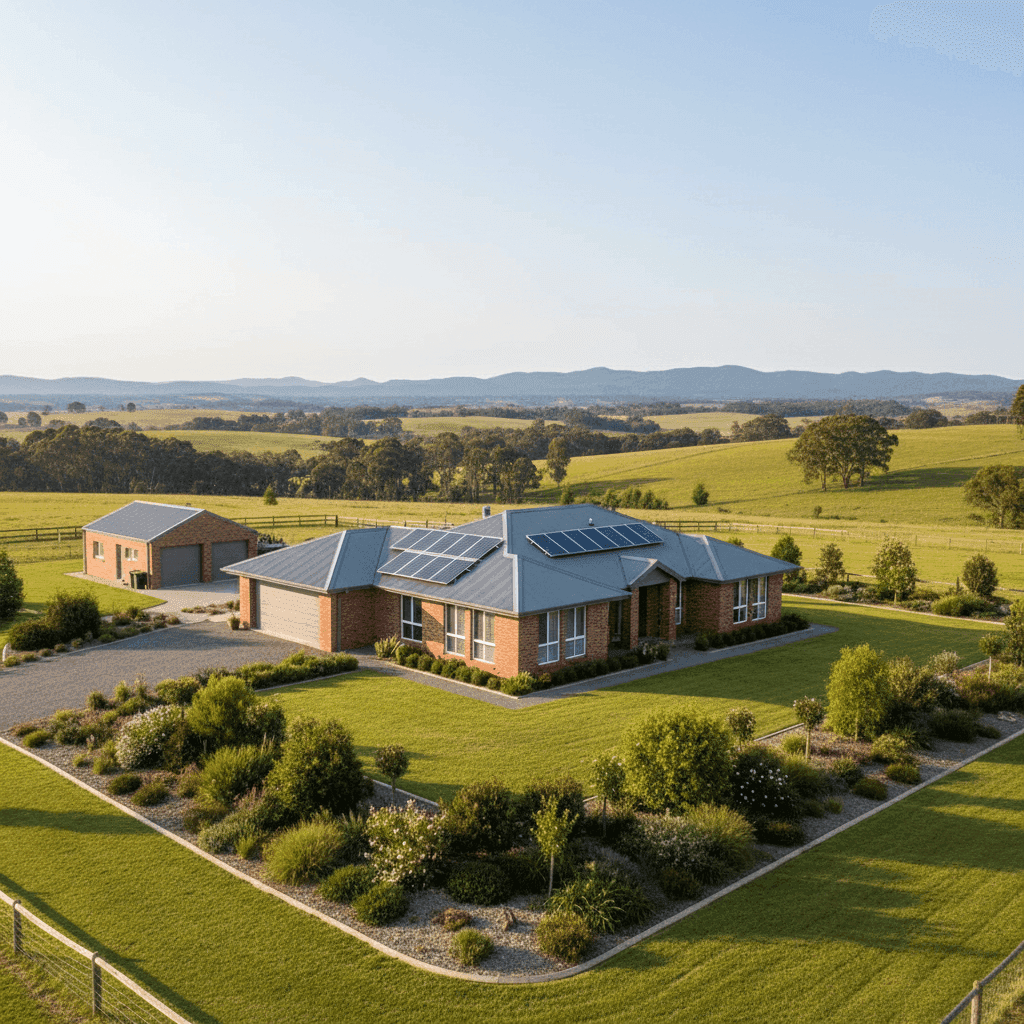
If you own a free standing home in Tarlo, NSW 2580, you're likely no stranger to the peace and quiet of the Southern Tablelands — but that doesn't mean your home insurance should be an afterthought. Whether you're reviewing your current policy or shopping around for the first time, understanding how your premium stacks up against local and national benchmarks is one of the smartest things you can do as a homeowner.
This article breaks down a real home and contents insurance quote for a four-bedroom, two-bathroom property in Tarlo, examining what's driving the price and how it compares to what other NSW and Australian homeowners are paying.
---
Is This Quote Fair?
The annual premium for this property came in at $2,980 per year (or $299/month), covering a building sum insured of $807,000 and contents valued at $110,000. Our pricing engine has rated this quote as CHEAP — below average for this type of property and cover level.
That's genuinely good news. With a building excess of $2,000 and a contents excess of $1,000, the policy carries moderate excess levels that help keep the premium competitive without leaving the homeowner dangerously underprotected in a claim scenario.
For a property of this size — 214 sqm on a slab foundation with brick veneer walls and a steel/Colorbond roof — a sub-$3,000 annual premium for combined home and contents cover is a solid result. Tarlo is a small rural locality, and premiums in quieter regional areas can sometimes surprise on the upside due to factors like limited insurer competition or elevated weather risk. In this case, the numbers tell a more favourable story.
---
How Tarlo Compares
While suburb-level data for Tarlo is limited given its small population, we can draw meaningful comparisons using state and national figures. Here's how this quote lines up:
| Benchmark | Premium |
|---|---|
| This Quote | $2,980/yr |
| NSW Average | $3,801/yr |
| NSW Median | $3,410/yr |
| National Average | $2,965/yr |
| National Median | $2,716/yr |
| Wingecarribee LGA Average | $3,002/yr |
A few things stand out here. This quote sits $821 below the NSW average and $430 below the NSW median — a meaningful saving on an annual basis. Compared to the Wingecarribee LGA average of $3,002, it's also slightly under, suggesting the quote is competitive even within the immediate local government area.
Interestingly, the premium is almost exactly in line with the national average of $2,965, which reflects how Tarlo's relatively low-risk profile (no cyclone zone, no flood data flagged) can make it more comparable to the broader Australian average than to the inflated NSW state figures, which are pulled upward by high-premium areas like coastal Sydney and flood-prone river towns.
You can explore more local data on the Tarlo insurance stats page, compare it against the NSW state overview, or see how it sits within the national picture.
---
Property Features That Affect Your Premium
Every home is different, and insurers price policies based on a detailed assessment of construction, location, and risk factors. Here's how the key features of this Tarlo property influence the premium:
Brick Veneer Walls & Colorbond Roof
Brick veneer is one of the most common wall types in Australian homes and is generally well-regarded by insurers — it's durable, fire-resistant, and widely understood in terms of repair costs. Paired with a steel/Colorbond roof, this combination is considered low to moderate risk. Colorbond roofing is particularly valued in regional areas for its resilience against hail and wind, and it tends to attract more favourable premiums than older tile or fibrous cement alternatives.
Slab Foundation
A concrete slab foundation is standard for homes of this era and construction type. It's structurally sound and doesn't carry the subsidence or termite-entry risks sometimes associated with raised timber stumps. Insurers typically view slab foundations positively.
Timber & Laminate Flooring
Flooring type can influence contents and building cover pricing. Timber and laminate floors are moderately priced to repair or replace compared to polished hardwood or high-end stone tiles, which keeps this component of the risk profile reasonable.
Solar Panels
This property has solar panels, which adds some complexity to the insurance picture. Solar systems are a capital asset — typically valued in the thousands — and need to be correctly accounted for in either the building sum insured or as a specified item. It's worth confirming with your insurer exactly how your panels are covered, particularly for damage caused by storms, hail, or electrical faults.
Granny Flat
The presence of a granny flat is a notable feature. Depending on the insurer, a secondary dwelling may or may not be automatically included under a standard home policy. If the granny flat is used for rental income, this can also affect your coverage eligibility. Make sure your policy explicitly covers the granny flat structure and, if applicable, any contents within it.
1991 Construction
Homes built in the early 1990s are generally well-constructed under the building codes of that era, though they may have ageing plumbing, electrical systems, or roofing components that could attract scrutiny at claim time. Keeping maintenance records and ensuring your sum insured reflects current rebuild costs — not just market value — is essential.
---
Tips for Homeowners in Tarlo
1. Review your building sum insured regularly At $807,000, the building sum insured on this policy is substantial — and rightly so. Construction costs have risen sharply across regional NSW in recent years. Use a building cost calculator annually to ensure your sum insured reflects the true cost of rebuilding your home from the ground up, not just its market value.
2. Clarify solar panel and granny flat coverage Don't assume these are automatically covered in full. Contact your insurer directly and ask for written confirmation of how solar panels and the secondary dwelling are treated under your policy. If they're excluded or underinsured, request an endorsement or consider a separate policy for the granny flat.
3. Consider your excess levels carefully A $2,000 building excess is on the higher side. While it helps reduce your annual premium, it means you'll need to cover the first $2,000 of any building claim out of pocket. If you have the savings buffer to absorb this, it's a reasonable trade-off — but if a large unexpected event would strain your finances, consider whether a lower excess (at a slightly higher premium) makes more sense.
4. Shop around at renewal time Even a below-average quote can be beaten. The insurance market shifts constantly, and loyalty doesn't always pay. Set a reminder to compare quotes at least 30 days before your renewal date each year — it takes minutes and could save you hundreds.
---
Compare Your Own Quote
Curious how your Tarlo home insurance stacks up? CoverClub makes it easy to benchmark your premium against real data from across NSW and Australia. Whether you're a first-time buyer or a long-time homeowner, getting a second opinion on your cover could be one of the best financial decisions you make this year. Get a quote today at CoverClub and see exactly where you stand.