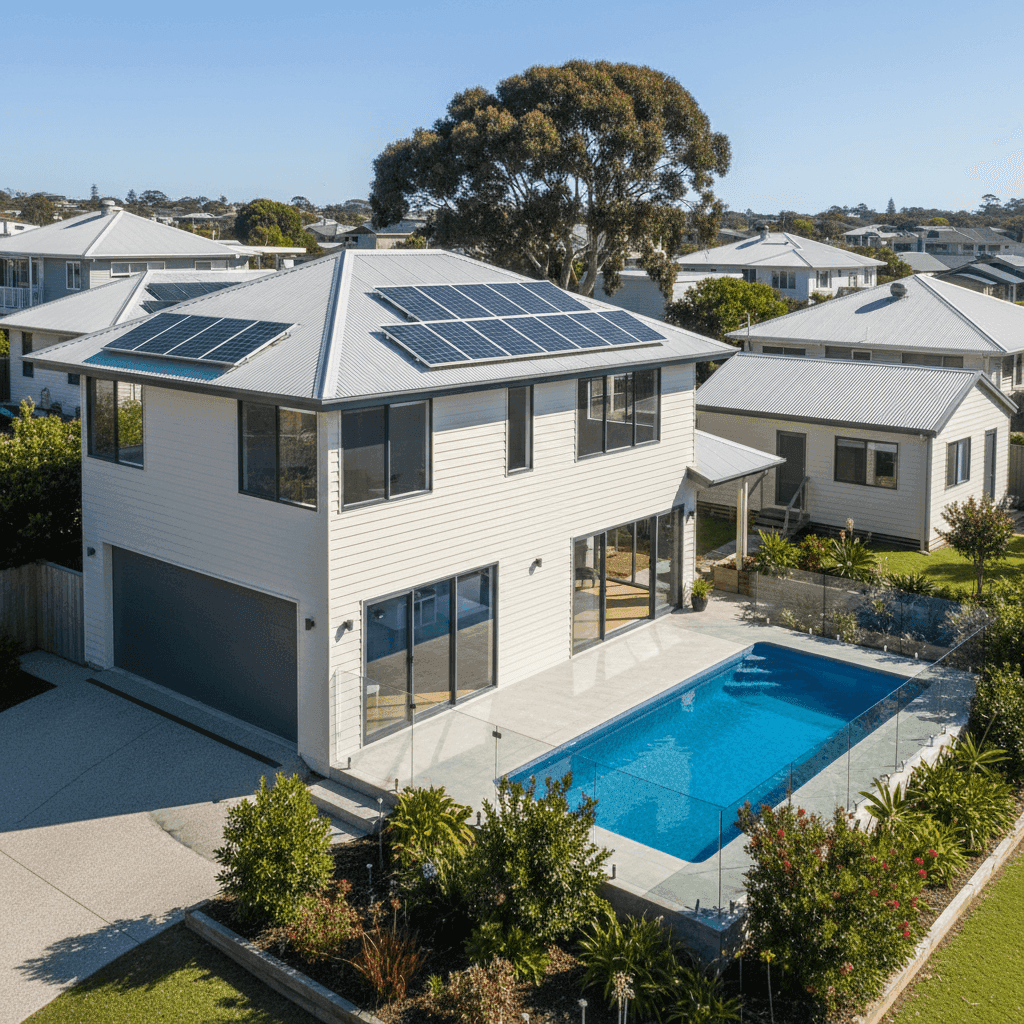
If you own a free standing home in Tathra, NSW 2550, you're living in one of the South Coast's most picturesque coastal communities — but like anywhere in Australia, making sure your home is properly insured is just as important as enjoying the sea breeze. This article breaks down a real building insurance quote for a five-bedroom property in Tathra, compares it against local and national benchmarks, and offers practical tips to help you get the best value cover.
---
Is This Quote Fair?
The annual premium for this quote comes in at $2,578 per year (or $275 per month), with a building sum insured of $1,203,000 and a building excess of $3,000. Our pricing analysis rates this as CHEAP — below the suburb average — which is genuinely good news for the homeowner.
To put that in perspective, the average building insurance premium across Tathra sits at $3,393 per year, with a median of $3,371. This quote lands well below the suburb's 25th percentile of $2,880 — meaning it's cheaper than at least 75% of comparable quotes we've seen in the area. That's a meaningful saving of over $800 annually compared to what many Tathra homeowners are paying.
For a relatively new property built in 2023 with a high sum insured, securing a below-average premium is a strong outcome. Of course, premiums vary depending on the insurer, the specific risk profile of the property, and the level of cover selected — but on the face of it, this quote represents solid value.
---
How Tathra Compares
Understanding where your premium sits relative to broader benchmarks helps you gauge whether you're being treated fairly by your insurer. Here's how Tathra stacks up:
| Benchmark | Premium |
|---|---|
| This Quote | $2,578/yr |
| Tathra Suburb Average | $3,393/yr |
| Tathra Suburb Median | $3,371/yr |
| Tathra 25th Percentile | $2,880/yr |
| Tathra 75th Percentile | $3,918/yr |
| NSW State Average | $9,528/yr |
| NSW State Median | $3,770/yr |
| National Average | $5,347/yr |
| National Median | $2,764/yr |
| Snowy Monaro LGA Average | $2,614/yr |
Based on 16 quotes collected for the Tathra suburb area.
A few things stand out here. The NSW state average of $9,528 is dramatically higher than what Tathra homeowners typically pay — this is largely driven by high-risk postcodes in flood-prone, cyclone-affected, or bushfire-vulnerable parts of the state, which skew the average upward significantly. The state median of $3,770 is a more representative figure, and this quote still beats it comfortably.
Compared to the national average of $5,347, this quote is roughly half the price — again reflecting that Tathra, while not without its risks, doesn't carry the extreme risk loading seen in parts of Queensland or Northern Australia. Interestingly, the national median of $2,764 is actually close to this quote, suggesting the premium is broadly in line with what a typical Australian homeowner pays for building cover.
The Snowy Monaro LGA average of $2,614 is the closest benchmark to this quote, suggesting that across the broader local government area, premiums tend to be competitive.
Explore more data for your area at the Tathra suburb stats page, or browse NSW state insurance statistics and national home insurance benchmarks.
---
Property Features That Affect Your Premium
Every property has a unique risk profile, and insurers weigh up a range of factors when calculating your premium. Here's how the key features of this Tathra home are likely influencing the cost of cover:
Hardiplank/Hardiflex External Walls Fibre cement cladding like Hardiplank is well-regarded by insurers for its durability and fire resistance. Unlike timber weatherboards, it doesn't rot or warp, and it performs well in coastal environments where salt air can accelerate deterioration in other materials. This is likely a positive factor for the premium.
Steel/Colorbond Roof Colorbond roofing is a popular choice in Australia for good reason — it's lightweight, durable, and holds up well in high-wind events. Insurers generally view steel roofing favourably compared to older materials like terracotta tiles, which can crack or dislodge. It's also fire-resistant, which matters in a region that has experienced bushfire threats in recent years (Tathra was affected by the 2018 bushfire).
Concrete Slab Foundation Slab foundations are considered low-risk by most insurers. They're structurally stable, less susceptible to subsidence, and don't carry the underfloor moisture risks associated with raised timber foundations.
Newly Built (2023) A property constructed in 2023 benefits from modern building codes, which include improved fire safety standards, structural engineering requirements, and weatherproofing. Newer homes typically attract lower premiums because the risk of unexpected structural failure is much lower than in older dwellings.
Swimming Pool Pools add value to a property but also introduce additional liability and maintenance considerations. Some insurers factor in pool-related risks, particularly around liability for accidents. It's worth confirming your policy covers pool-related incidents adequately.
Solar Panels Solar panels are increasingly common, and most building policies cover them as a fixed structure. However, it's worth checking whether your policy covers the panels for accidental damage, storm damage, and electrical faults — not all policies treat solar the same way.
Granny Flat The presence of a granny flat adds to the insurable value of the property and may influence how the sum insured is calculated. Ensure your policy explicitly covers the granny flat as part of the building, particularly if it's a separate structure on the same title.
Timber/Laminate Flooring While not a major premium driver, flooring type can affect claims costs. Timber and laminate flooring can be expensive to repair or replace after water damage events, so it's worth understanding your policy's water damage provisions.
---
Tips for Homeowners in Tathra
1. Review Your Sum Insured Annually With a sum insured of $1,203,000, it's important to ensure this figure accurately reflects the current cost to rebuild your home — not its market value. Construction costs have risen sharply in recent years, and being underinsured can leave you significantly out of pocket after a major claim. Use a building cost calculator or speak with a quantity surveyor to verify your figure each year.
2. Understand Your Bushfire Risk Tathra has a documented bushfire history, most notably the 2018 fire that destroyed dozens of homes. Check your property's Bushfire Attack Level (BAL) rating and confirm that your policy doesn't contain exclusions or limitations related to bushfire. Some insurers apply additional loadings or conditions in higher-risk zones.
3. Check Your Granny Flat and Solar Panel Coverage As noted above, both of these features require specific attention in your policy wording. Ask your insurer directly: is the granny flat covered as a separate structure? Are solar panels covered for storm, hail, and electrical damage? Getting clarity before you need to make a claim is far better than discovering gaps afterwards.
4. Consider Paying Annually This policy costs $2,578 per year or $275 per month. Paying monthly works out to $3,300 annually — a difference of $722. If cash flow allows, paying the annual premium upfront is a straightforward way to reduce your insurance costs without changing your cover at all.
---
Compare Your Options at CoverClub
Whether you're reviewing an existing policy or shopping for cover on a new property, it pays to compare. At CoverClub, you can get a home insurance quote in minutes and see how your premium stacks up against real data from your suburb. With transparent pricing benchmarks and no obligation to buy, it's the smarter way to make sure you're not overpaying for your home insurance.