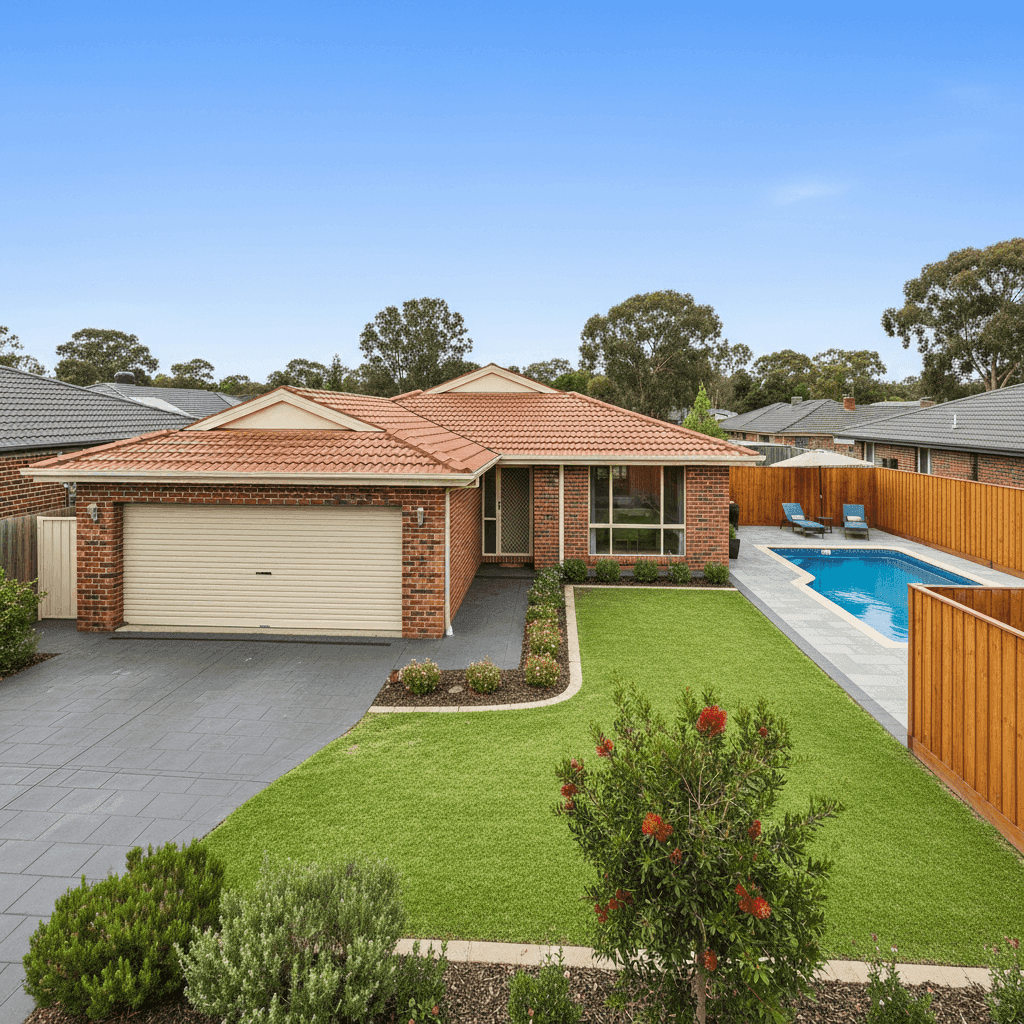
Taylors Lakes is a well-established residential suburb in Melbourne's north-west, sitting within the City of Brimbank and popular with families drawn to its quiet streets, parklands, and solid housing stock. For owners of a free standing home in this area, understanding what a fair home insurance premium looks like — and what drives the cost — can make a real difference at renewal time.
This article breaks down a recent home and contents insurance quote for a 3-bedroom, 2-bathroom free standing home in Taylors Lakes (postcode 3038), compares it against local, state, and national benchmarks, and offers practical tips to help you get the best value cover.
---
Is This Quote Fair?
The quoted annual premium of $1,491 (or roughly $148 per month) covers both building and contents, with a building sum insured of $500,000 and contents valued at $100,000. Both the building and contents excess sit at $1,000 — a standard figure for most Australian home policies.
Based on our pricing data, this quote is rated CHEAP — below average for the Taylors Lakes area. That's a genuinely positive result. The suburb average premium sits at $2,245 per year, meaning this quote comes in around $754 less than the typical price paid by homeowners in the same postcode. Even against the suburb's 25th percentile (the cheapest quarter of quotes) of $1,635 per year, this quote still undercuts that threshold — putting it among the most competitively priced options available in the area.
For a home and contents policy covering half a million dollars in building value plus $100,000 in contents, landing below the suburb's bottom quartile is a strong outcome worth noting.
---
How Taylors Lakes Compares
To put this quote in proper context, it helps to look at the broader pricing landscape. Here's how premiums stack up across different comparison points:
| Benchmark | Annual Premium |
|---|---|
| This Quote | $1,491 |
| Taylors Lakes 25th Percentile | $1,635 |
| Taylors Lakes Median | $2,156 |
| Taylors Lakes Average | $2,245 |
| Taylors Lakes 75th Percentile | $2,618 |
| Brimbank LGA Average | $1,707 |
| Victoria Average | $3,000 |
| Victoria Median | $2,718 |
| National Average | $5,347 |
| National Median | $2,764 |
(Based on a sample of 92 quotes in the Taylors Lakes area.)
A few things stand out here. First, Taylors Lakes itself is a relatively affordable suburb to insure — the suburb average of $2,245 is well below the Victorian state average of $3,000, which in turn is dramatically lower than the national average of $5,347. That national figure is heavily skewed by high-risk regions — cyclone-prone areas in Queensland and the Northern Territory, flood-affected zones, and bushfire corridors — none of which apply to Taylors Lakes.
The Brimbank LGA average of $1,707 also provides useful context: it's lower than the Taylors Lakes suburb average, suggesting that some neighbouring areas within the same local government area may carry slightly different risk profiles. Regardless, this quote sits below even the LGA average, reinforcing its strong value rating.
---
Property Features That Affect Your Premium
Insurers assess a wide range of property characteristics when calculating premiums. Here's how the features of this particular home likely influence its pricing:
Brick veneer construction is one of the most favourable wall types from an insurance perspective. It offers solid fire resistance and structural durability compared to weatherboard or cladding alternatives, and most insurers price it accordingly with lower risk loadings.
Tiled roof is similarly well-regarded. Tiles are durable, fire-resistant, and less susceptible to storm damage than some other roofing materials, contributing to a lower risk profile overall.
Slab foundation is standard for homes built in Victoria during the late 1980s and early 1990s, and it generally presents no elevated risk concerns for insurers.
Construction year: 1991 places this home in a period of consistent building standards. It's old enough to have some character but modern enough to meet the structural codes that insurers are comfortable with. Homes from this era typically don't attract age-related loadings the way very old dwellings might.
Swimming pool is worth flagging. Pools do add a degree of liability exposure and can slightly increase premiums due to the risk of water damage, equipment failure, or liability claims. However, pools are common in Melbourne's western suburbs, and most insurers price this risk as a modest loading rather than a significant one.
Ducted climate control is another feature that can nudge premiums slightly upward — ducted systems represent a higher-value fixed asset than split systems, and their replacement cost is factored into the building sum insured. That said, they're a standard feature in many Melbourne homes and don't typically cause major premium increases.
No solar panels means there's no additional complexity around system replacement costs or roof penetration risks — a minor but positive factor.
139 sqm building size is modest for a 3-bedroom home, which likely helps keep the building sum insured reasonable and the premium competitive.
---
Tips for Homeowners in Taylors Lakes
1. Review your building sum insured regularly Construction costs have risen significantly in recent years. A building sum insured of $500,000 for a 139 sqm home in Melbourne's west is worth double-checking against current rebuild cost estimates. Underinsurance is one of the most common — and costly — mistakes homeowners make. Use a building cost calculator or speak with a quantity surveyor if you're unsure.
2. Consider your excess level carefully Both the building and contents excess on this policy are set at $1,000. Opting for a higher excess (say, $2,000 or $2,500) can meaningfully reduce your annual premium, but only makes sense if you're confident you could absorb that cost out of pocket in the event of a claim. For homeowners with an emergency fund, this is often a smart trade-off.
3. Don't overlook contents cover $100,000 in contents cover sounds substantial, but it can disappear quickly when you add up furniture, appliances, electronics, clothing, jewellery, and white goods. Walk through each room and do a rough tally — many homeowners find they're underinsured on contents without realising it.
4. Shop the market at renewal Even if you're happy with your current insurer, premiums can shift significantly year to year. The fact that this quote came in well below the suburb average suggests real savings are available for those who compare. Make it a habit to get at least two or three quotes before renewing.
---
Ready to Compare Home Insurance in Taylors Lakes?
Whether you're a first-time buyer or a long-term homeowner looking to cut costs, comparing quotes is the single most effective way to ensure you're not overpaying. CoverClub makes it easy to see real quotes side by side, tailored to your property's specific features.
Get a home insurance quote for your Taylors Lakes property →