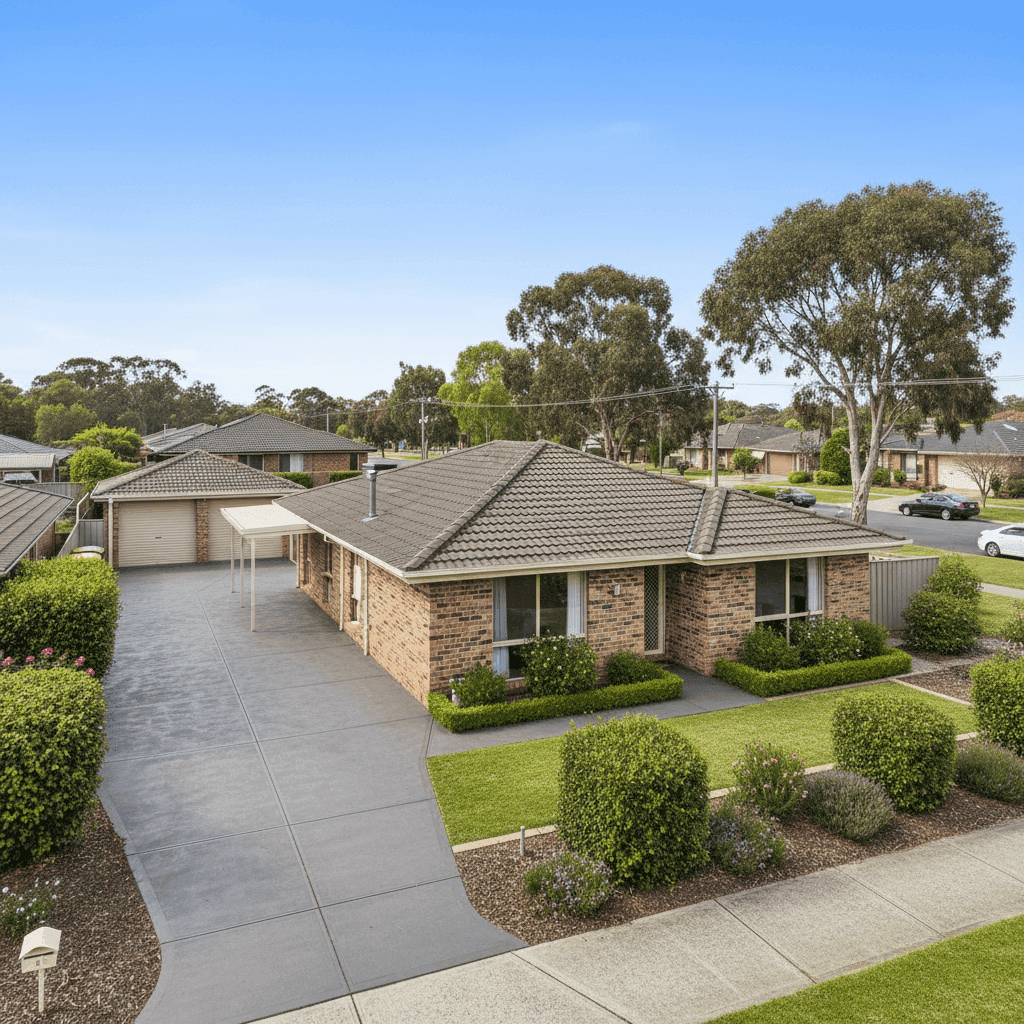
If you own a four-bedroom free standing home in Taylors Lakes, VIC 3038, you're likely curious about what a fair home and contents insurance premium looks like — and whether you're paying too much (or getting a great deal). This article breaks down a real insurance quote for a property in this north-western Melbourne suburb, benchmarks it against local, state, and national data, and offers practical tips to help you get the best value cover.
---
Is This Quote Fair?
The quote in question comes in at $1,616 per year (or $165 per month) for combined home and contents insurance, covering a building sum insured of $700,000 and $100,000 in contents — with a $2,000 excess on both building and contents claims.
Our price rating for this quote? Cheap — below average. That's genuinely good news for the homeowner.
To put it in perspective, the 25th percentile of quotes we've seen for Taylors Lakes sits at $1,810 per year, meaning this premium is even cheaper than the cheapest quarter of quotes in the suburb. The suburb average is $2,596/yr and the median is $2,294/yr — so this quote is sitting roughly $678 below the median and a full $980 below the suburb average. By any measure, this is a competitive result.
Of course, price alone doesn't tell the whole story. It's important to check that the policy's inclusions, exclusions, and excess structure suit your needs — but as a starting point, landing below the 25th percentile is a strong outcome.
---
How Taylors Lakes Compares
To understand just how well-priced this quote is, it helps to zoom out and look at the broader picture. Here's how Taylors Lakes stacks up against Victorian and national benchmarks:
| Benchmark | Average Premium | Median Premium |
|---|---|---|
| Taylors Lakes (3038) | $2,596/yr | $2,294/yr |
| Victoria (VIC) | $2,921/yr | $2,694/yr |
| Australia (National) | $2,965/yr | $2,716/yr |
| Brimbank LGA | $1,707/yr | — |
A few things stand out here. First, Taylors Lakes premiums are noticeably lower than the Victorian and national averages — a reflection of the suburb's relatively low natural disaster risk profile and stable suburban character. Second, the Brimbank LGA average of just $1,707/yr suggests that properties in this council area tend to attract more affordable premiums across the board, which aligns with the below-average quote we're analysing.
You can explore more local data on the Taylors Lakes suburb insurance stats page, compare it against all of Victoria, or see how it measures up against national home insurance benchmarks.
---
Property Features That Affect Your Premium
Every home is different, and insurers price risk based on a range of property-specific factors. Here's how the features of this particular home likely influence its premium:
Brick Veneer Walls & Tiled Roof
Brick veneer is one of the most common wall constructions in suburban Melbourne, and insurers generally view it favourably. It offers solid fire resistance and durability. Paired with a tiled roof — another low-risk material — this combination typically attracts more competitive premiums compared to homes with timber cladding or metal roofing.
Concrete Slab Foundation
A slab foundation is standard for homes built in the early 2000s and is considered structurally sound by most insurers. It reduces the risk of subsidence-related claims and is well-suited to Melbourne's clay-heavy soils when properly engineered.
Timber & Laminate Flooring
While timber and laminate flooring can be costly to replace after a water or fire event, the overall contents and building sums insured appear to account for this appropriately. Standard fittings quality across the home keeps replacement cost estimates grounded.
Built in 2001
At around 24 years old, this home is relatively modern by insurance standards. Homes built after the mid-1990s generally benefit from improved building codes, particularly around fire safety and structural integrity, which can translate to lower premiums.
Ducted Climate Control
Ducted heating and cooling systems are a notable inclusion — they add to the rebuild cost and can be expensive to replace. Ensuring your building sum insured of $700,000 adequately covers this (along with the granny flat — more on that below) is worth double-checking.
Granny Flat
This property includes a granny flat, which is a significant factor. A secondary dwelling adds to the total rebuild cost of the property, and it's essential to confirm with your insurer that the granny flat is explicitly covered under your policy. Some policies cover secondary structures automatically up to a certain limit; others require a separate endorsement. Always read the Product Disclosure Statement (PDS) carefully.
No Pool, No Solar Panels, No Cyclone Risk
The absence of a swimming pool and solar panels simplifies the risk profile and removes two common sources of additional premium loading. Being outside a designated cyclone risk area (as is the case for all of Melbourne) also means no cyclone-related surcharges apply.
---
Tips for Homeowners in Taylors Lakes
Whether you're reviewing your existing policy or shopping around for the first time, here are four practical steps to help you get the most out of your home insurance.
1. Verify Your Building Sum Insured Includes the Granny Flat
With a granny flat on the property, your $700,000 building sum insured needs to cover the full rebuild cost of both structures — not just the main home. Underinsurance is one of the most common and costly mistakes homeowners make. Use a professional building cost estimator or speak with your insurer to confirm the figure is adequate.
2. Review Your Contents Cover Annually
Contents values have a habit of creeping up over time as you acquire new furniture, appliances, and valuables. A $100,000 contents sum is reasonable for a four-bedroom home, but it's worth doing a room-by-room stocktake each year to make sure nothing significant is undervalued or missing from your cover.
3. Consider the Impact of Your Excess
Both the building and contents excess on this policy sit at $2,000. A higher excess generally lowers your premium, but it also means you'll pay more out of pocket if you need to make a claim. Think about what you could comfortably afford to cover yourself in the event of a loss, and adjust accordingly.
4. Compare Quotes at Renewal Time
Even if you're happy with your current insurer, it pays to compare at least once a year. The insurance market shifts, and a quote that was competitive last year may not be the best available today. Using a comparison tool like CoverClub makes it easy to benchmark your renewal quote against current market rates without the legwork.
---
Ready to Compare?
Whether this quote matches your property or you're looking to see what's available for your own home, CoverClub makes it simple to compare home and contents insurance options across Australia. Get a quote today and see how your premium stacks up against the suburb, state, and national averages — in minutes.