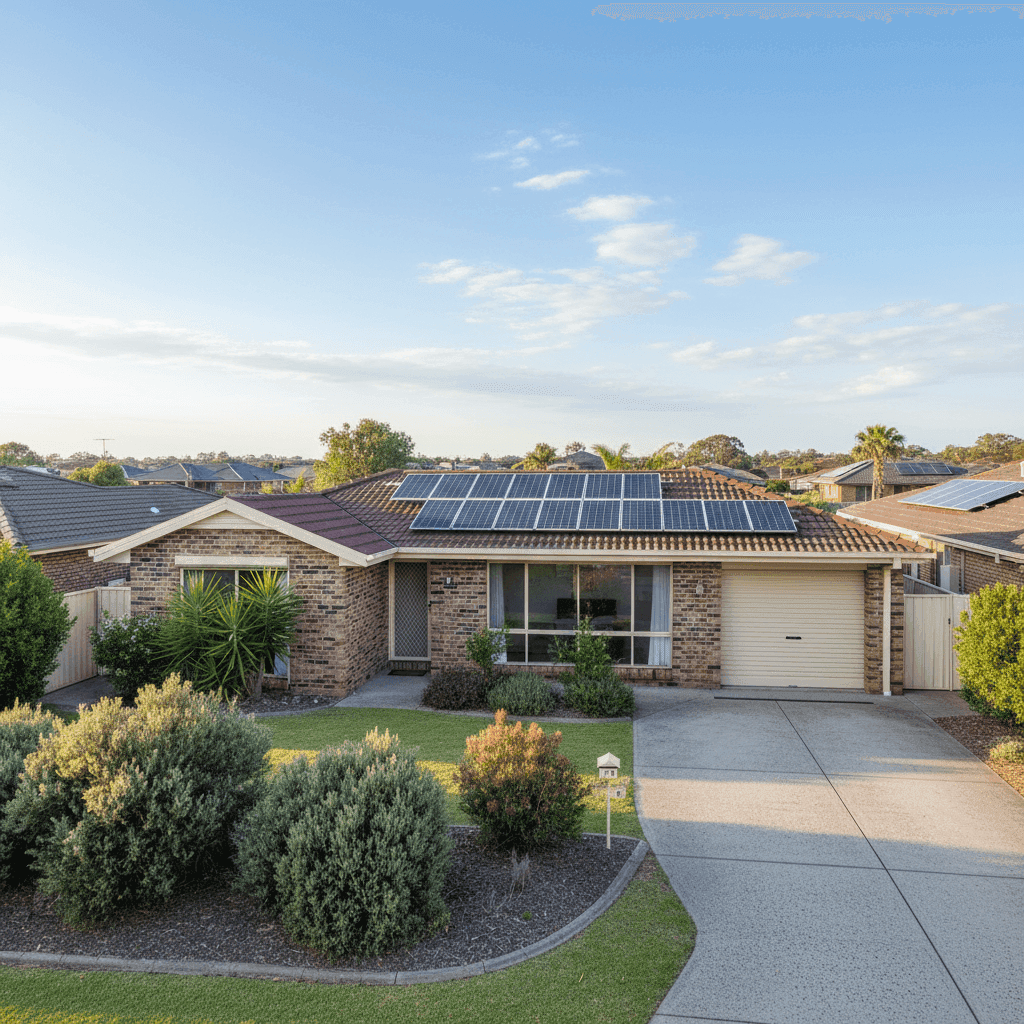
Tea Gardens is a peaceful coastal township on the Myall River in the Port Stephens region of New South Wales — a popular destination for retirees, holiday-home owners, and families drawn to its relaxed lifestyle and natural surrounds. But living the dream doesn't mean overpaying for home insurance. In this article, we analyse a real home and contents insurance quote for a three-bedroom, brick veneer free-standing home in Tea Gardens (postcode 2324) and put it under the microscope against local, state, and national benchmarks.
---
Is This Quote Fair?
The annual premium for this property came in at $2,793 per year (or $269/month), covering a building sum insured of $421,000 and contents valued at $30,000, each with a $1,000 excess.
Our pricing engine has rated this quote as Fair — Around Average, and the data backs that up. The suburb median premium for Tea Gardens sits at almost exactly the same figure — $2,792 per year — meaning this quote is right in the middle of the pack for the local area. That's not a bad result, but it also signals there may be room to do better.
The suburb average is slightly higher at $3,044/year, pulled upward by some significantly more expensive policies in the market. In fact, the spread of premiums in this postcode is quite wide — the cheapest quarter of policies (25th percentile) come in at around $1,453/year, while the most expensive quarter (75th percentile) can reach $4,056/year. That's a difference of over $2,600 per year for broadly similar properties, which underscores just how much value shopping around can deliver.
So while "Fair" is a reasonable outcome, it's worth remembering that roughly a quarter of homeowners in Tea Gardens are paying significantly less — and there's no obvious reason why you couldn't be one of them.
---
How Tea Gardens Compares
To put this quote in a broader context, let's look at how Tea Gardens stacks up against NSW state averages and national benchmarks.
| Benchmark | Average Premium | Median Premium |
|---|---|---|
| Tea Gardens (2324) | $3,044/yr | $2,792/yr |
| NSW State | $9,528/yr | $3,770/yr |
| National | $5,347/yr | $2,764/yr |
| LGA (Maitland) | $13,875/yr | — |
The NSW state average of $9,528 is dramatically higher than what Tea Gardens homeowners typically pay — though this is heavily skewed by high-risk and high-value properties across the state, particularly in flood-prone and bushfire-affected regions. The state median of $3,770 is a more meaningful comparison, and Tea Gardens still comes in well below that mark.
Nationally, the picture is similar. The national median of $2,764 is almost identical to the Tea Gardens median, suggesting this coastal suburb sits right in the mainstream of Australian home insurance pricing — neither unusually cheap nor alarmingly expensive.
One figure worth noting is the LGA (Maitland) average of $13,875/year. This is exceptionally high and likely reflects the significant flood risk that affects parts of the broader Maitland region, including areas along the Hunter River. Tea Gardens itself, being a coastal estuary town, has its own set of risk considerations, but clearly sits in a more favourable position than many of its LGA neighbours.
You can explore suburb-level data for Tea Gardens in more detail on CoverClub.
---
Property Features That Affect Your Premium
Every property is different, and insurers weigh up a range of characteristics when calculating your premium. Here's how the features of this particular home play into the pricing:
Brick Veneer Walls & Tiled Roof Brick veneer construction with a tiled roof is generally viewed favourably by insurers. These materials offer solid fire resistance and durability compared to lightweight cladding or metal roofing alternatives. All else being equal, this combination tends to support more competitive premiums.
Slab Foundation A concrete slab foundation is a straightforward, low-maintenance base that doesn't carry the same risks as older pier-and-beam or timber stump foundations. Insurers typically see this as a neutral-to-positive factor.
Construction Year: 1998 At around 26 years old, this home is relatively modern by Australian standards. It would have been built under building codes that introduced improved standards for cyclone strapping, termite management, and fire safety. This generally works in the homeowner's favour when it comes to risk assessment.
Solar Panels Solar panels are an increasingly common feature, but they do add some complexity to a home insurance policy. They increase the replacement value of the property and can be a source of claims if damaged by hail, storm, or fire. Homeowners should confirm with their insurer that solar panels are explicitly covered under their building policy — some policies include them automatically, while others require a specific endorsement.
No Pool, No Ducted Climate Control The absence of a pool removes a common liability and maintenance risk from the equation. Similarly, no ducted air conditioning means fewer mechanical systems that could fail or cause water damage — both factors that can quietly push premiums upward.
Standard Fittings With standard-quality fittings throughout, this home doesn't attract the premium loading that can come with high-end or bespoke fixtures. This keeps the sum insured at a reasonable level relative to the floor area of 139 sqm.
---
Tips for Homeowners in Tea Gardens
1. Review your building sum insured regularly Construction costs have risen sharply across Australia in recent years. A sum insured of $421,000 for a 139 sqm brick home in coastal NSW is worth reviewing annually to ensure it reflects current rebuild costs — not just the original purchase price. Underinsurance is one of the most common and costly mistakes homeowners make.
2. Confirm solar panel coverage explicitly Don't assume your solar system is covered. Contact your insurer and ask directly whether panels, inverters, and associated wiring are included under your building policy — and up to what value. Given the cost of a typical solar installation, this is a conversation worth having.
3. Shop the market at renewal time This quote sits at the median for Tea Gardens, which means roughly half the market is cheaper. Loyalty doesn't always pay in insurance — in fact, insurers often reserve their best rates for new customers. Set a reminder to compare quotes at least four weeks before your renewal date.
4. Consider increasing your excess to reduce your premium Both the building and contents excess on this policy sit at $1,000. If you have a financial buffer and rarely make small claims, opting for a higher excess (say, $1,500 or $2,000) could meaningfully reduce your annual premium. Just make sure the savings justify the increased out-of-pocket cost in the event of a claim.
---
Compare Your Options with CoverClub
Whether you're a long-time Tea Gardens local or a recent arrival, there's no reason to pay more than you need to for home and contents insurance. CoverClub makes it easy to compare quotes from multiple insurers in minutes, using your actual property details for a more accurate result. Get a quote today and see how your current premium stacks up — you might be surprised at what's available.