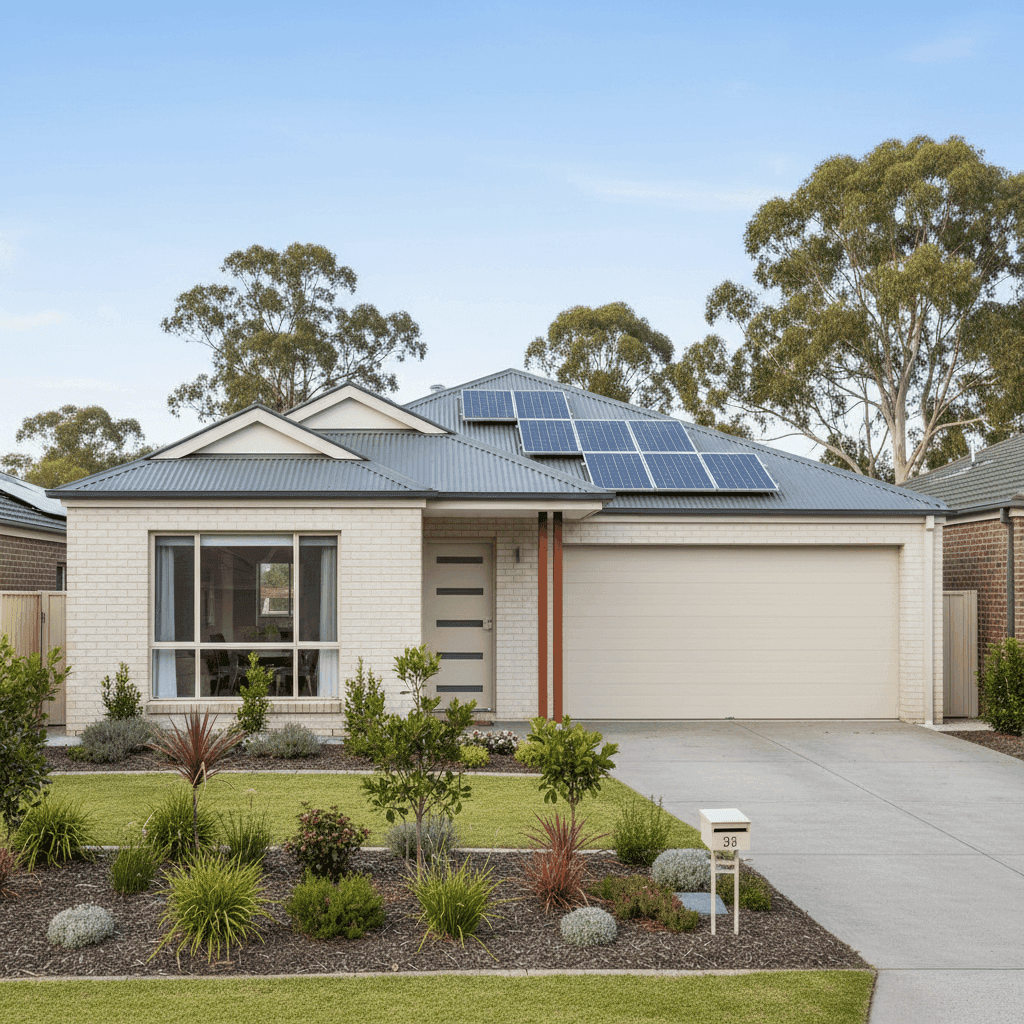
Tea Gardens is a relaxed coastal town on the shores of Port Stephens in New South Wales, popular with retirees, holiday-home owners, and families drawn to its quiet streets and waterfront lifestyle. It's also a suburb where home insurance costs can vary considerably — making it all the more important to understand what you're paying and why.
This article breaks down a real home and contents insurance quote for a four-bedroom, two-bathroom free standing home in Tea Gardens (postcode 2324), built in 2000 with brick veneer walls, a steel Colorbond roof, and a slab foundation. At $4,974 per year (or $477 per month), the quote covers a building sum insured of $950,000 and $150,000 in contents, each with a $1,000 excess. Let's unpack whether that's a fair price.
---
Is This Quote Fair?
Based on our pricing data, this quote is rated Expensive — above average for the Tea Gardens area.
The suburb average premium in Tea Gardens sits at $3,044 per year, with a median of $2,792. At $4,974, this quote comes in roughly 63% above the suburb average and nearly 78% above the median. That's a meaningful gap, and one worth interrogating before simply accepting the renewal or first-time offer.
That said, context matters. The suburb's 75th percentile premium is $4,056 — meaning around 25% of quotes in Tea Gardens already exceed that figure. At $4,974, this quote sits above even that upper quartile, placing it among the more expensive policies in the area. If your property has a high replacement value or above-average risk features, some elevation in price is expected — but there may still be room to shop around.
Compared to the broader NSW state average of $9,528 per year, this quote looks far more reasonable. NSW premiums are heavily skewed by high-risk flood and storm zones across the state, which pulls the average up significantly. The NSW median of $3,770 is a more useful benchmark — and this quote does sit above it.
At the national level, the average premium is $5,347 per year and the national median is $2,764. So while this quote is above the national median, it's actually slightly below the national average — a small silver lining.
---
How Tea Gardens Compares
Here's a quick snapshot of how this quote stacks up across different benchmarks:
| Benchmark | Premium |
|---|---|
| This Quote | $4,974/yr |
| Tea Gardens Suburb Average | $3,044/yr |
| Tea Gardens Suburb Median | $2,792/yr |
| Tea Gardens 25th Percentile | $1,453/yr |
| Tea Gardens 75th Percentile | $4,056/yr |
| NSW State Average | $9,528/yr |
| NSW State Median | $3,770/yr |
| National Average | $5,347/yr |
| National Median | $2,764/yr |
| LGA (Maitland) Average | $13,875/yr |
One figure that stands out is the Maitland LGA average of $13,875 — substantially higher than what Tea Gardens homeowners typically pay. This likely reflects flood-affected areas within the broader LGA (Maitland city itself has significant flood exposure), and it's a reminder that local geography within an LGA can vary enormously. Tea Gardens, being a coastal township rather than a river-prone inland area, benefits from a comparatively lower risk profile in that context.
Our suburb data is drawn from a sample of 113 quotes in the 2324 postcode, giving a reasonably solid basis for comparison. You can explore the full breakdown on our Tea Gardens insurance stats page.
---
Property Features That Affect Your Premium
Several characteristics of this property influence how insurers price the risk:
Brick Veneer Walls & Colorbond Roof Brick veneer is one of the most common wall types in Australian homes and is generally viewed favourably by insurers — it offers solid fire resistance compared to timber weatherboard. The steel Colorbond roof is similarly well-regarded: it's durable, low-maintenance, and performs well in high-wind events. Together, these materials typically attract more competitive premiums than lighter construction types.
Slab Foundation & Tiled Flooring A concrete slab foundation is standard for homes of this era and construction type. Combined with tiled flooring throughout, the property has good resistance to moisture damage — an important consideration in a coastal environment like Tea Gardens where humidity and occasional flooding can be concerns.
Solar Panels The presence of rooftop solar panels is worth noting. While solar systems add value to the home, they also add complexity to the building sum insured calculation. Insurers will typically expect solar panels to be included in the building coverage, and some may factor in the replacement cost when pricing the policy. Ensure your $950,000 sum insured adequately accounts for the system.
Ducted Climate Control Ducted air conditioning is a fixed building feature and should be included in your building sum insured. It's a relatively high-value item to replace, and its presence may contribute modestly to the overall premium.
High Building Sum Insured At $950,000, the building sum insured is the single largest driver of premium cost for this property. This figure should reflect the full cost to rebuild — not the market value of the home. For a 214 sqm home with standard fittings, it's worth periodically reviewing this figure with a quantity surveyor or using an online building calculator to ensure you're neither underinsured nor paying for more coverage than you need.
---
Tips for Homeowners in Tea Gardens
1. Shop around — don't auto-renew With this quote sitting above the suburb average and above the 75th percentile, comparing offers from multiple insurers could yield meaningful savings. Insurers price risk differently, and a quote that seems expensive with one provider may be far more competitive elsewhere. Get a fresh quote at CoverClub to see what else is available for your property.
2. Review your building sum insured annually Construction costs have risen sharply in recent years. If your sum insured hasn't been reviewed lately, you may be underinsured — or conversely, paying a premium on an inflated figure. Use a reputable building cost calculator or consult a quantity surveyor to get an accurate replacement cost estimate for your home.
3. Consider your excess settings Both the building and contents excess on this policy are set at $1,000. Opting for a higher excess — say $2,000 or $2,500 — can reduce your annual premium noticeably. If you're in a financial position to absorb a larger out-of-pocket cost in the event of a claim, increasing your excess is one of the most straightforward ways to lower your premium.
4. Check what's included for your solar panels and ducted system Make sure your policy explicitly covers your solar panels and ducted air conditioning under the building section. Some policies have sub-limits or exclusions for these items. It's worth reading the Product Disclosure Statement (PDS) carefully, or calling your insurer to confirm coverage before a claim arises.
---
Ready to Compare?
Whether you're reviewing an existing policy or shopping for cover for the first time, CoverClub makes it easy to see how your quote stacks up. Explore real premium data for Tea Gardens, NSW, and across Australia — then get a quote tailored to your property to find the right cover at the right price.