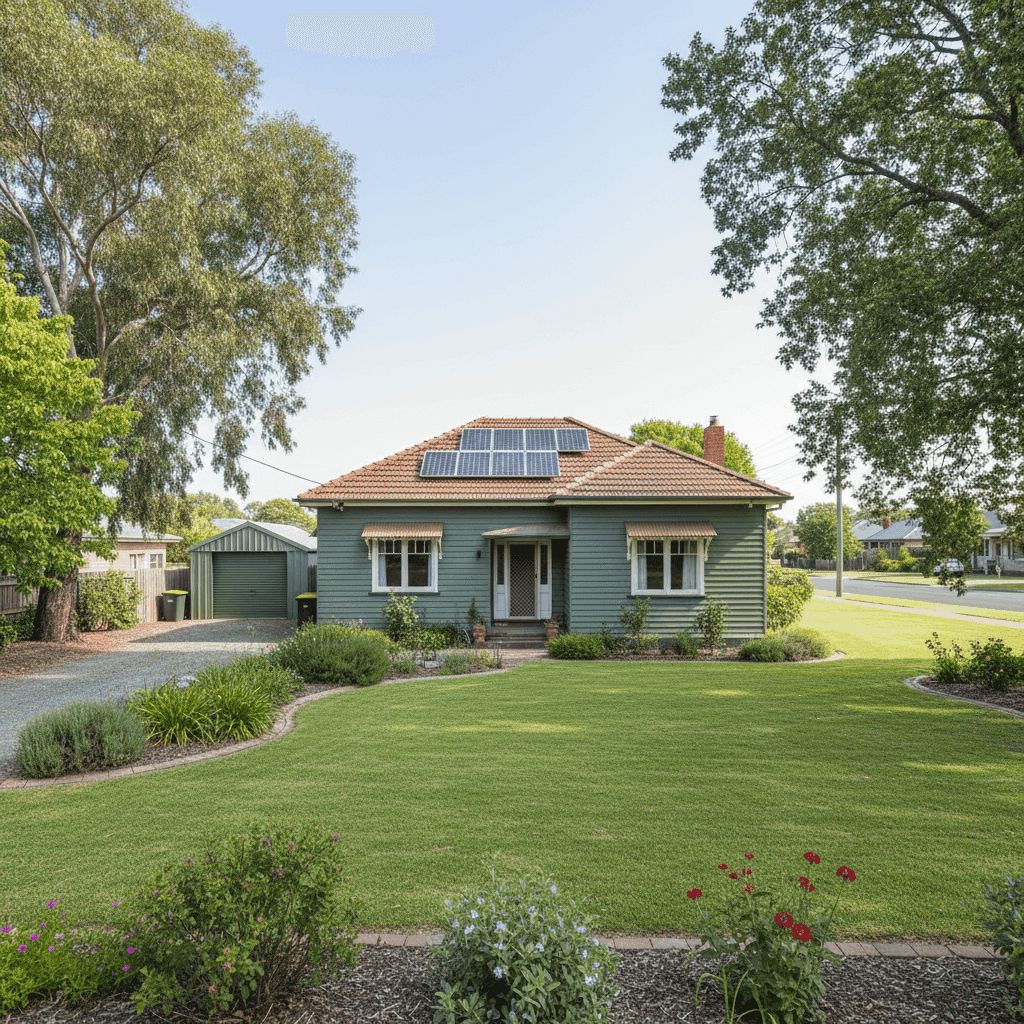
Terang is a quiet rural township in Victoria's Moyne Shire, nestled in the heart of the Western District about two hours west of Melbourne. Known for its wide streets, agricultural surrounds, and classic country architecture, it's home to many character properties — including older weatherboard homes that have stood for nearly a century. If you own a free standing home in Terang and you're trying to make sense of your insurance premium, this article breaks down exactly what's driving the cost and whether you're getting a fair deal.
---
Is This Quote Fair?
The quote in question sits at $1,792 per year (or $187/month) for combined home and contents cover on a 4-bedroom, 2-bathroom free standing home, with a building sum insured of $1,040,000 and contents valued at $80,000.
Our price rating for this quote is Expensive — above average for the Terang area.
To put that in perspective: the suburb average premium for comparable quotes in the 3264 postcode is $1,305/year, and the median sits at $1,282/year. This quote lands well above the 75th percentile for the suburb ($1,592/year), meaning it's priced higher than roughly three-quarters of similar quotes we've seen in the area.
That said, context matters. The building sum insured of $1,040,000 is a significant figure — and for a 244 sqm home built in 1930 with weatherboard construction, that level of coverage does carry real weight with insurers. The excess structure is also worth noting: a $3,000 building excess is on the higher end, which typically works to reduce a premium. The fact the quote is still above average despite a high excess suggests the property's characteristics are pushing the base rate up.
---
How Terang Compares
Understanding where your premium sits relative to broader benchmarks is a useful exercise. Here's how this quote stacks up:
| Benchmark | Premium |
|---|---|
| This quote | $1,792/yr |
| Terang (3264) suburb average | $1,305/yr |
| Terang (3264) suburb median | $1,282/yr |
| LGA average (Moyne Shire) | $2,351/yr |
| Victoria state average | $3,000/yr |
| Victoria state median | $2,718/yr |
| National average | $5,347/yr |
| National median | $2,764/yr |
Viewed through a wider lens, this quote is actually quite reasonable. It's significantly below the Victorian state average ($3,000/yr) and well under both the national average ($5,347/yr) and national median ($2,764/yr). Terang itself is a relatively affordable area to insure compared to higher-risk zones around Australia — particularly coastal or cyclone-prone regions.
You can explore detailed premium data for this postcode on our Terang suburb stats page, compare it against all of Victoria, or see how it measures up on the national insurance stats page.
---
Property Features That Affect Your Premium
Several characteristics of this particular property have a meaningful influence on what insurers charge. Here's what's likely at play:
🏚️ Age and Construction (1930, Weatherboard)
This is arguably the biggest factor. Homes built in the 1930s are charming, but they present real challenges for insurers. Weatherboard timber construction is more susceptible to fire spread, rot, and pest damage than brick veneer or double brick. Older homes also tend to have ageing electrical wiring, plumbing, and structural elements that increase the likelihood of a claim. Insurers price this risk accordingly.
🏠 Stump Foundation
A home on stumps (timber or concrete piers) introduces additional risk factors — particularly subsidence, movement, and the potential for underfloor damage from moisture or pests. This foundation type is common in older Victorian homes and can add a modest loading to premiums compared to slab-on-ground construction.
☀️ Solar Panels
This property has solar panels installed, which are typically included as part of the building sum insured. Panels add replacement value to the structure and, in some cases, can introduce electrical fault risks. Most insurers cover them under building insurance, but their presence can nudge the insured value — and therefore the premium — upward.
🏡 Building Size and Sum Insured
At 244 sqm with a building sum insured of $1,040,000, this is a well-covered property. The sum insured reflects full rebuild cost, not market value — and for a large, older home with period features, that figure is entirely plausible. A higher sum insured directly increases the premium.
🛋️ Contents Cover
The $80,000 contents value is relatively modest for a 4-bedroom home, which may actually help keep the overall premium in check. Contents cover for larger households can easily reach $150,000–$200,000 when furniture, appliances, clothing, and valuables are properly accounted for.
---
Tips for Homeowners in Terang
If you're looking to get better value on your home insurance, here are four practical steps worth considering:
- Review your sum insured regularly. Building costs fluctuate, and being underinsured is a serious risk — especially for older homes where like-for-like reconstruction can be expensive. Use a building cost calculator to make sure your sum insured reflects current rebuild costs, not what you paid for the property.
- Maintain your weatherboard exterior. Insurers reward properties that are well-maintained. Cracked or rotting weatherboards, peeling paint, or signs of pest activity can affect both your claim outcomes and your renewal premium. Regular upkeep is one of the best ways to manage your risk profile.
- Ask about excess options. This quote already carries a $3,000 building excess, which is fairly high. If you're comfortable with that trade-off, great — but it's worth asking insurers to model different excess levels so you understand the premium impact either way.
- Compare quotes before renewing. Loyalty doesn't always pay in insurance. Premiums can vary significantly between providers for the same property and level of cover. Even if your current insurer has treated you well, shopping around at renewal time is a simple way to ensure you're not overpaying.
---
Find a Better Deal with CoverClub
Whether this quote feels right for your situation or you think there's room to do better, the smartest move is to compare. CoverClub makes it easy to see what multiple insurers would charge for your specific property — no obligation, no hassle. Get a home insurance quote today and find out if you could be paying less for the same level of protection.