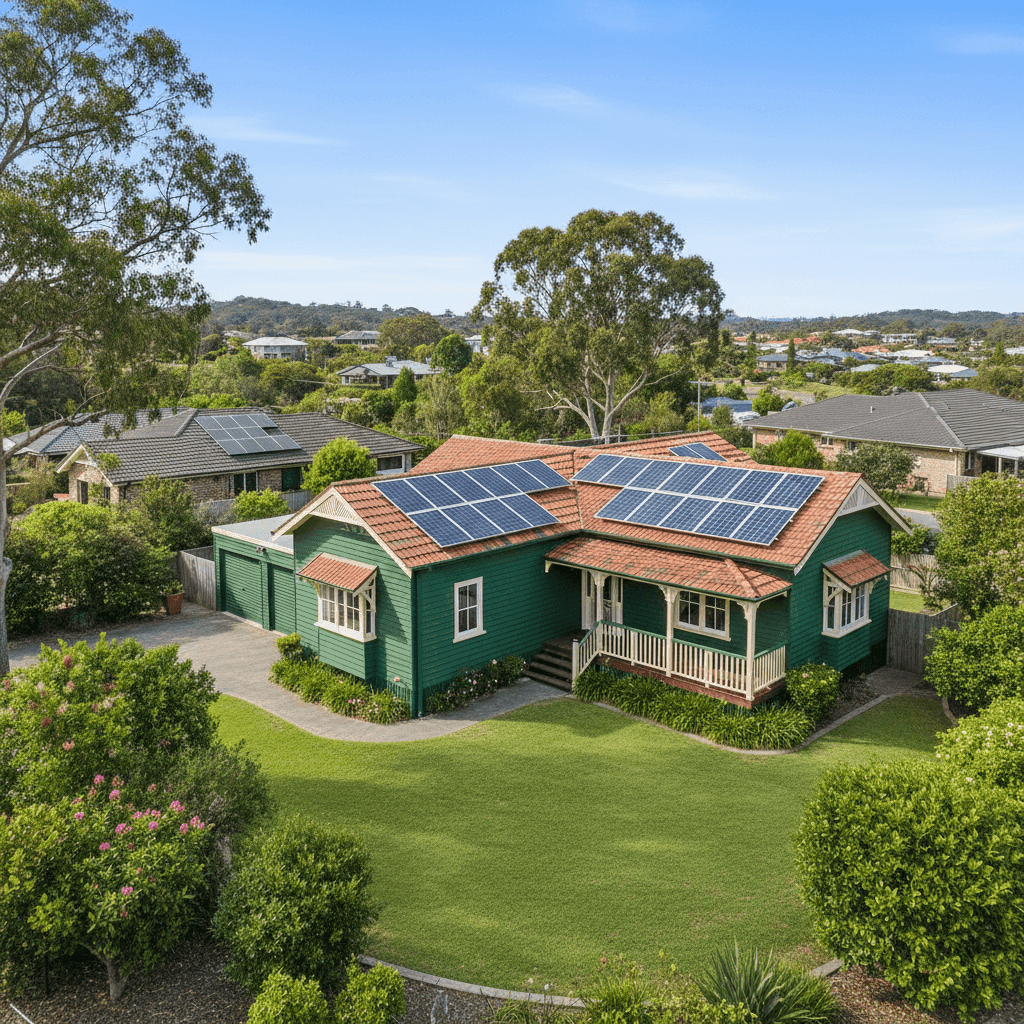
Terranora is a leafy, semi-rural suburb nestled in the Tweed region of far northern New South Wales, just a short drive from the Queensland border. It's a popular choice for families seeking space and a relaxed lifestyle without straying too far from the Gold Coast's amenities. But like any homeowner in regional NSW, understanding what you're paying for — and whether your insurer is giving you a fair deal — is essential. This article breaks down a recent building insurance quote for a four-bedroom, free-standing home in Terranora, and puts the numbers in context so you can make a more informed decision.
---
Is This Quote Fair?
The quote in question comes in at $3,940 per year (or $378/month) for building-only cover on a 214 sqm weatherboard home, with a $600,000 sum insured and a $5,000 building excess.
Our price rating for this quote is EXPENSIVE — Above Average.
To understand why, it helps to look at what other homeowners in the same postcode are paying. Based on 29 quotes collected for Terranora (NSW 2486), the suburb average sits at $3,506/yr and the median at $3,388/yr. This quote lands above both benchmarks — and just below the 75th percentile of $3,908/yr, meaning it's pricier than roughly three-quarters of comparable quotes in the area.
That said, "expensive" is relative. Compared to the broader NSW state average of $9,528/yr (which is heavily skewed by high-value and high-risk properties across the state), this quote looks more reasonable. However, the NSW median — a better measure of what a typical homeowner pays — is $3,770/yr, which actually puts this quote slightly below the state median. That's a small silver lining.
The bottom line: this quote is on the higher end for Terranora specifically, but not dramatically out of step with broader NSW pricing. There is, however, room to shop around.
---
How Terranora Compares
Putting the numbers side by side paints a clearer picture:
| Benchmark | Premium |
|---|---|
| This Quote | $3,940/yr |
| Terranora Suburb Average | $3,506/yr |
| Terranora Suburb Median | $3,388/yr |
| Terranora 25th Percentile | $2,739/yr |
| Terranora 75th Percentile | $3,908/yr |
| NSW State Average | $9,528/yr |
| NSW State Median | $3,770/yr |
| National Average | $5,347/yr |
| National Median | $2,764/yr |
| Tweed LGA Average | $26,089/yr |
A few things stand out here. First, the Tweed LGA average of $26,089/yr is extraordinarily high — this is almost certainly driven by coastal and flood-prone properties within the broader Tweed local government area, which includes suburbs at far greater risk than Terranora. This figure shouldn't be used as a personal benchmark, but it does illustrate how dramatically risk can vary within a single LGA.
Second, the national average of $5,347/yr is higher than this quote, but the national median of $2,764/yr is considerably lower. This gap between mean and median at a national level reflects the outsized influence of high-risk and high-value properties in cyclone zones, flood plains, and major cities. Terranora doesn't face those extremes, which is why its local pricing is more moderate.
For homeowners in Terranora, the most relevant comparison is the suburb's own 25th percentile — $2,739/yr. If you're paying significantly more than that, it's worth getting a few more quotes.
---
Property Features That Affect Your Premium
Several characteristics of this particular property have a meaningful influence on what insurers charge.
Weatherboard timber construction is one of the most significant factors. Weatherboard homes — especially those built in 1952 — are considered higher risk by insurers due to their susceptibility to fire, rot, and general wear over time. Compared to brick veneer or double-brick homes, timber-framed and clad properties typically attract higher premiums, and this is almost certainly contributing to the above-average cost here.
Age of construction (1952) adds another layer of complexity. Older homes may have ageing electrical wiring, plumbing, and structural elements that increase the likelihood of a claim. Insurers factor this into their pricing, and a 70+ year old home will generally cost more to insure than a modern build of similar size.
Tiled roof is actually a positive from an insurance perspective. Tiles are more fire-resistant and durable than Colorbond or corrugated iron in many weather conditions, which can help moderate premiums slightly.
Solar panels add modest replacement value to the building and can slightly increase premiums, though many insurers now include them as a standard part of building cover.
Ducted climate control is a higher-value fixture that contributes to the overall replacement cost of the home, supporting the $600,000 sum insured. It's worth ensuring this system is explicitly covered under your policy.
Slab foundation is generally considered low-risk and shouldn't be a negative factor in pricing.
No pool and no cyclone risk are both premium-friendly features. Pools add liability and structural risk, while cyclone-rated areas in northern Queensland can push premiums dramatically higher. Terranora sits just outside the cyclone risk zone, which keeps costs more manageable.
---
Tips for Homeowners in Terranora
1. Review your sum insured carefully A $600,000 sum insured for a 214 sqm weatherboard home is on the higher end, but given construction costs in regional NSW and the age of the property, it may well be justified. Use a building cost calculator to verify you're not over- or under-insured — both carry real risks.
2. Consider a higher excess to reduce your premium The $5,000 building excess on this policy is already quite high, which may have helped keep the premium from being even higher. If cash flow allows, some insurers offer further discounts for excess levels above $5,000 — worth asking about.
3. Shop around — especially for weatherboard homes Insurers price timber construction very differently. Some are more comfortable with older weatherboard homes and price accordingly, while others apply significant loadings. Getting three or more quotes can reveal meaningful savings.
4. Maintain your home proactively For a 1952-built weatherboard property, regular maintenance — repainting, checking for rot, updating electrical switchboards — not only protects your home but can also support your case when making a claim. Some insurers may also offer discounts for homes with updated wiring or plumbing.
---
Compare Your Options with CoverClub
Whether you're renewing your policy or buying cover for the first time, it pays to compare. CoverClub makes it easy to see what homeowners across Terranora and the rest of Australia are actually paying — so you can walk into any negotiation with confidence. Get a building insurance quote today and find out if you could be paying less for the same level of protection.