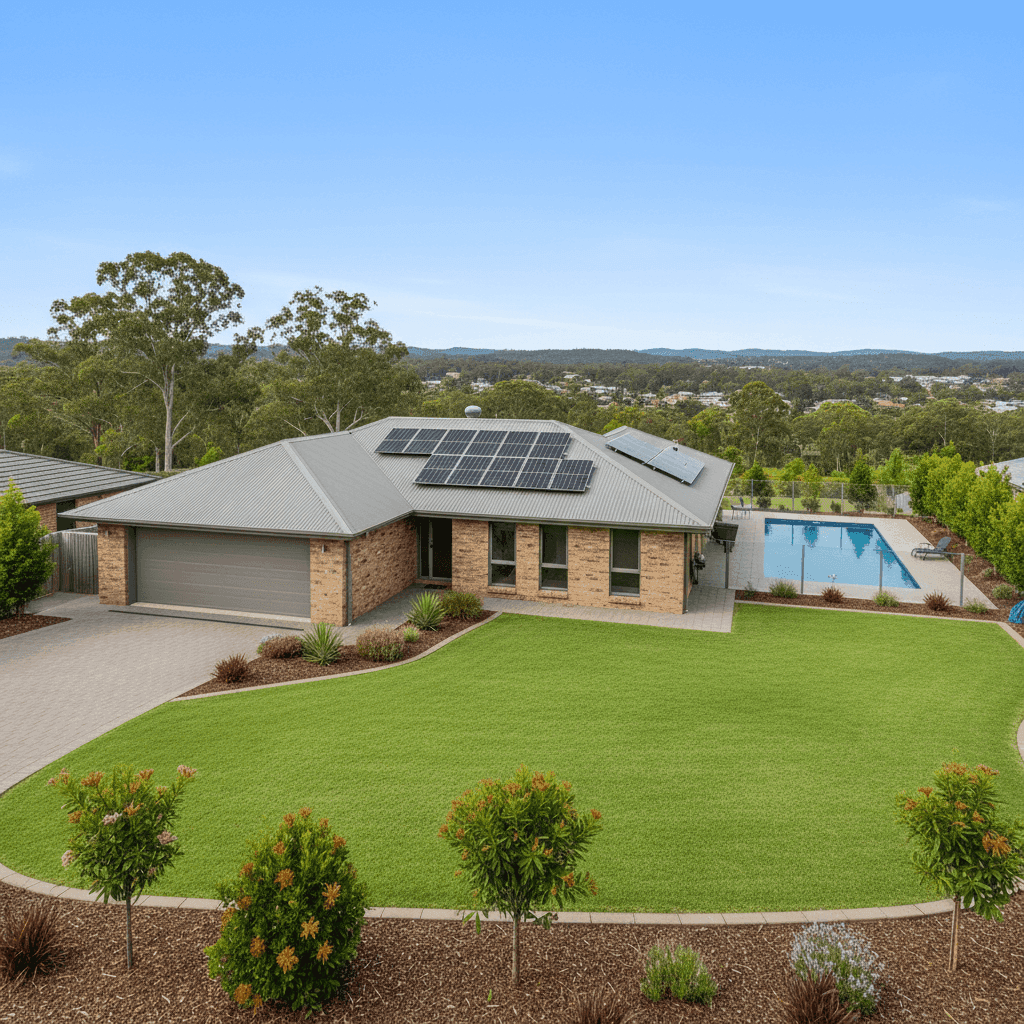
Terranora is a sought-after residential suburb in the Tweed region of northern New South Wales, sitting just minutes from the Queensland border and the Gold Coast hinterland. It's a popular choice for families drawn to its leafy streets, elevated blocks, and relaxed lifestyle — but as with any desirable location, insuring a home here comes with its own set of considerations. This article breaks down a real home and contents insurance quote for a four-bedroom free standing home in Terranora, examines how it stacks up against local, state, and national benchmarks, and offers practical guidance for homeowners looking to get the best value on their cover.
---
Is This Quote Fair?
The quote in question comes in at $6,014 per year (or $576/month) for combined home and contents insurance, covering a building sum insured of $1,100,000 and contents valued at $250,000. Both the building and contents excess are set at $1,000.
Based on available market data, this premium is rated Expensive — above average for the area. That's a meaningful finding worth unpacking, because "expensive" doesn't necessarily mean wrong — it depends heavily on the property's characteristics and the level of cover being sought.
The $1.1 million building sum insured is notably high, reflecting a well-appointed 214 sqm home with above-average fittings. Add in a swimming pool, solar panels, and ducted climate control, and insurers are looking at a property that would cost significantly more to rebuild than a basic comparable dwelling. The $250,000 contents value also sits on the higher end, consistent with the above-average fittings quality. These factors legitimately push the premium upward — but the size of the gap above the suburb average still warrants scrutiny and comparison shopping.
---
How Terranora Compares
Here's how this quote sits relative to broader pricing data:
| Benchmark | Premium |
|---|---|
| This quote | $6,014/yr |
| Terranora suburb average | $3,506/yr |
| Terranora suburb median | $3,388/yr |
| Terranora 75th percentile | $3,908/yr |
| NSW state average | $9,528/yr |
| NSW state median | $3,770/yr |
| National average | $5,347/yr |
| National median | $2,764/yr |
| Tweed LGA average | $26,089/yr |
A few things stand out here. First, the quote exceeds the Terranora suburb average of $3,506/yr by a considerable margin — sitting well above even the 75th percentile of $3,908. This suggests the premium is in the upper tier for the postcode, though much of that gap is likely attributable to the higher-than-average sum insured and property features.
Second, when compared to the NSW state average of $9,528/yr, this quote looks considerably more reasonable. The NSW average is skewed upward by high-risk coastal and flood-prone areas across the state, so the median of $3,770 is a more useful reference point — and this quote sits above that too.
Against national benchmarks, the $6,014 premium is above the national average of $5,347 and well above the national median of $2,764, again reinforcing the "expensive" rating in relative terms.
Perhaps most striking is the Tweed LGA average of $26,089 — a figure dramatically higher than this quote. This reflects the significant flood and storm risk exposure that affects many parts of the Tweed region. Terranora's elevated position likely insulates it from some of that risk, which helps explain why this quote is far below the LGA average despite being above the suburb norm.
---
Property Features That Affect Your Premium
Several characteristics of this property have a direct bearing on the premium calculated:
Brick veneer construction with a Colorbond roof — This is generally considered a favourable combination by insurers. Brick veneer offers solid fire resistance, while steel Colorbond roofing is durable, lightweight, and performs well in high-wind conditions. Both materials can contribute to a more competitive premium compared to, say, weatherboard or tile.
Slab foundation — Concrete slab foundations are standard in this era of construction (the home was built in 1999) and are generally viewed neutrally by insurers. They don't carry the elevated risk associated with older pier-and-beam or suspended timber foundations.
Swimming pool — A pool adds to both the replacement cost of the property and the liability exposure, both of which contribute to a higher premium. Insurers factor in the cost of pool fencing, filtration equipment, and associated structures.
Solar panels — Rooftop solar systems increase the insured value of the building and introduce specific risks (including fire and storm damage to panels), which insurers price accordingly. With a growing number of Australian homes carrying solar, many policies now include explicit solar cover — but it's worth confirming the extent of that cover in your policy documents.
Ducted climate control — Ducted air conditioning systems are expensive to repair or replace and are typically factored into the building sum insured. A system servicing a 214 sqm home can represent tens of thousands of dollars in replacement cost.
Above-average fittings quality — This is one of the more significant premium drivers. Kitchens, bathrooms, and finishes of above-average quality cost substantially more to reinstate after a loss, and insurers reflect this in their pricing.
No cyclone risk — Unlike parts of Queensland just across the border, Terranora is not classified as a cyclone risk area. This is a meaningful premium advantage, as cyclone cover can add significantly to costs in affected zones.
---
Tips for Homeowners in Terranora
1. Review your building sum insured carefully At $1.1 million, the building sum insured here is substantial. It's important this figure accurately reflects the full cost of rebuilding — not the market value of the property. Use a quantity surveyor or an online rebuild cost calculator to validate the number. Being over-insured means you're paying more than necessary; being under-insured can leave you seriously exposed at claim time.
2. Compare multiple quotes before renewing Given this premium sits above the suburb's 75th percentile, it's worth getting competing quotes before accepting a renewal. Insurers price risk differently, and the same property can attract meaningfully different premiums across providers. Use CoverClub to compare quotes and see what the broader market is offering.
3. Ask about discounts for security and safety features Many insurers offer discounts for properties with monitored alarms, deadbolts, and other security measures. If your home has these features, make sure they're declared in your application — you may be leaving savings on the table.
4. Consider your contents cover separately A $250,000 contents sum is significant. Take the time to do a proper home inventory to confirm this figure is accurate. Overestimating contents value is a common way Australians end up paying more than they need to, while underestimating can result in a shortfall when it matters most.
---
Compare Your Home Insurance Today
Whether you're reviewing an existing policy or shopping for cover for the first time, comparing quotes is the single most effective way to ensure you're not overpaying. CoverClub makes it easy to see how your premium stacks up and find competitive options tailored to your property. Get a home insurance quote now and take the guesswork out of protecting one of your most valuable assets.