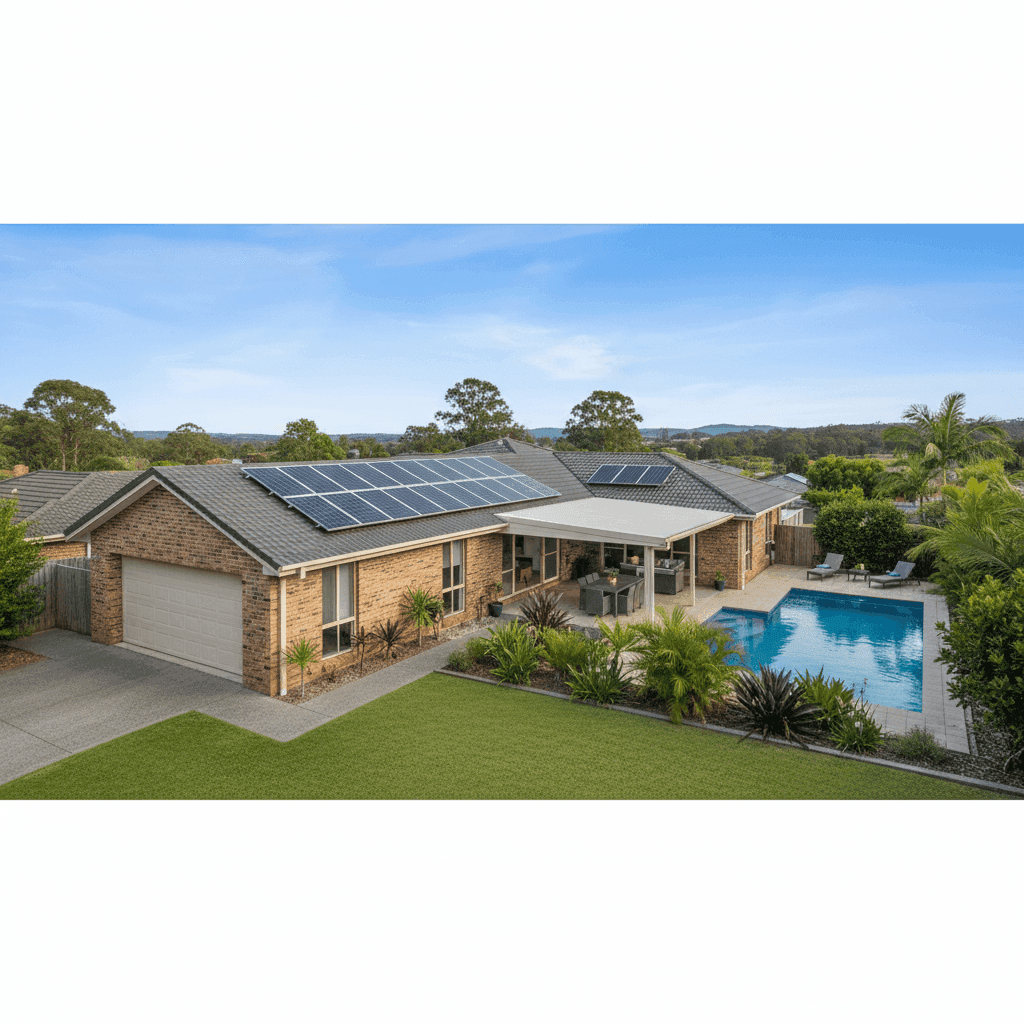
Terranora is a leafy, elevated suburb tucked into the Tweed region of northern New South Wales, sitting just minutes from the Queensland border and the coastal lifestyle of the Gold Coast hinterland. It's a sought-after address — and like any desirable location, insuring a home here comes with its own set of considerations. This article breaks down a real home and contents insurance quote for a four-bedroom free-standing home in Terranora, compares it against local, state and national benchmarks, and offers practical tips to help homeowners get the best value from their cover.
---
Is This Quote Fair?
The annual premium for this property came in at $3,095 per year (or around $297 per month), covering both building and contents with a building sum insured of $610,000 and contents valued at $66,000. Both the building and contents excess are set at $1,000.
Our price rating for this quote is FAIR — Around Average, which is a reasonable outcome for a well-built, modern home in this part of NSW.
To put that in context: the suburb average for Terranora sits at $3,506 per year, and the median is $3,388. This quote lands below both of those figures, which means the homeowner is paying less than most of their neighbours for comparable cover. It falls between the 25th percentile ($2,739/yr) and the 75th percentile ($3,908/yr) — solidly in the middle of the market based on 29 quotes sampled for the Terranora area.
In short: this isn't a bargain-basement price, but it's not inflated either. For a 214 sqm brick veneer home built in 2014 with a pool, solar panels and ducted climate control, paying just under $3,100 per year represents reasonable value.
---
How Terranora Compares
One of the most striking things about home insurance pricing in Australia is how dramatically it varies by location — and the Tweed LGA is a vivid illustration of that.
| Benchmark | Annual Premium |
|---|---|
| This Quote | $3,095 |
| Terranora Suburb Average | $3,506 |
| Terranora Suburb Median | $3,388 |
| NSW State Average | $9,528 |
| NSW State Median | $3,770 |
| National Average | $5,347 |
| National Median | $2,764 |
| Tweed LGA Average | $26,089 |
The NSW state average of $9,528 per year is heavily skewed by high-risk coastal and flood-prone areas across the state — which is why the median of $3,770 is a more useful comparison point. This quote sits below the NSW median, which is a positive sign.
At the national level, the average premium of $5,347 is again pulled upward by catastrophe-prone regions in Queensland, Western Australia and parts of coastal NSW. The national median of $2,764 is slightly lower than this quote, which reflects the fact that many Australian homes are in lower-risk areas or are insured for lower replacement values.
The most eye-catching figure, however, is the Tweed LGA average of $26,089 per year. This extraordinarily high number is driven by properties in flood-affected and cyclone-adjacent areas within the broader Tweed local government area. Terranora itself is not classified as a cyclone risk area, and this property's elevated position and construction quality likely contribute to its comparatively modest premium. It's a good reminder that LGA-level averages can be misleading — suburb-level data, like the Terranora-specific stats on CoverClub, tells a much more accurate story.
---
Property Features That Affect Your Premium
Several characteristics of this property play a meaningful role in how insurers price the risk — some working in the homeowner's favour, others adding to the cost.
Brick veneer construction and tiled roof are generally viewed favourably by insurers. Brick veneer offers solid fire resistance and structural durability, while tiled roofs are considered more resilient than Colorbond or corrugated iron in many risk assessments. Together, these features tend to attract lower premiums compared to timber-framed or clad homes.
Slab foundation is another positive signal. Homes on concrete slabs are less susceptible to certain types of subsidence and pest-related structural damage, which reduces insurer risk.
Built in 2014, this home benefits from being constructed under modern Australian building codes, which include improved standards for wind resistance, waterproofing and energy efficiency. Newer homes generally cost less to insure than older stock.
Swimming pool adds to the replacement cost of the property and introduces some liability considerations, which can nudge premiums upward slightly. Pools also require their own maintenance to ensure safety compliance, which insurers may factor into their assessments.
Solar panels are an increasingly common feature in new homes but can add meaningful cost to a building sum insured — panels themselves are expensive to replace, and roof-mounted systems can complicate repairs after storm or hail damage. It's worth confirming with your insurer that solar panels are explicitly covered under your policy.
Ducted climate control is a high-value fixture that contributes to the overall building replacement cost. At 214 sqm, this is a substantial home, and the $610,000 building sum insured reflects the cost of rebuilding a well-appointed property of this size in today's construction market.
---
Tips for Homeowners in Terranora
1. Review your building sum insured annually Construction costs in Australia have risen significantly over the past few years. If your sum insured hasn't kept pace with current rebuild costs — factoring in materials, labour and site preparation — you could be underinsured. Use a building cost calculator or ask your insurer to review your coverage amount each year.
2. Confirm solar panel coverage explicitly Not all home insurance policies automatically cover solar panel systems as part of the building. Check your Product Disclosure Statement (PDS) to confirm panels are included, and make sure the insured value accounts for the full replacement cost of your system, including inverters and mounting hardware.
3. Maintain your pool to protect your liability cover A pool is a wonderful asset, but it also carries legal obligations around fencing and safety compliance under NSW law. Keeping your pool area compliant not only protects your family — it also ensures you won't face complications when making a claim related to the pool area.
4. Compare quotes before your renewal date Even a "fair" premium can potentially be improved. Insurance pricing varies significantly between providers, and loyalty doesn't always pay. Set a reminder to compare quotes at least 30 days before your renewal date so you have time to switch if a better deal is available.
---
Ready to Compare Home Insurance in Terranora?
Whether you're renewing your existing policy or insuring a new property, it pays to see what the market has to offer. CoverClub makes it easy to compare home and contents insurance quotes tailored to your specific property and location. Get a quote today and find out if you could be paying less — or getting more — for your cover.