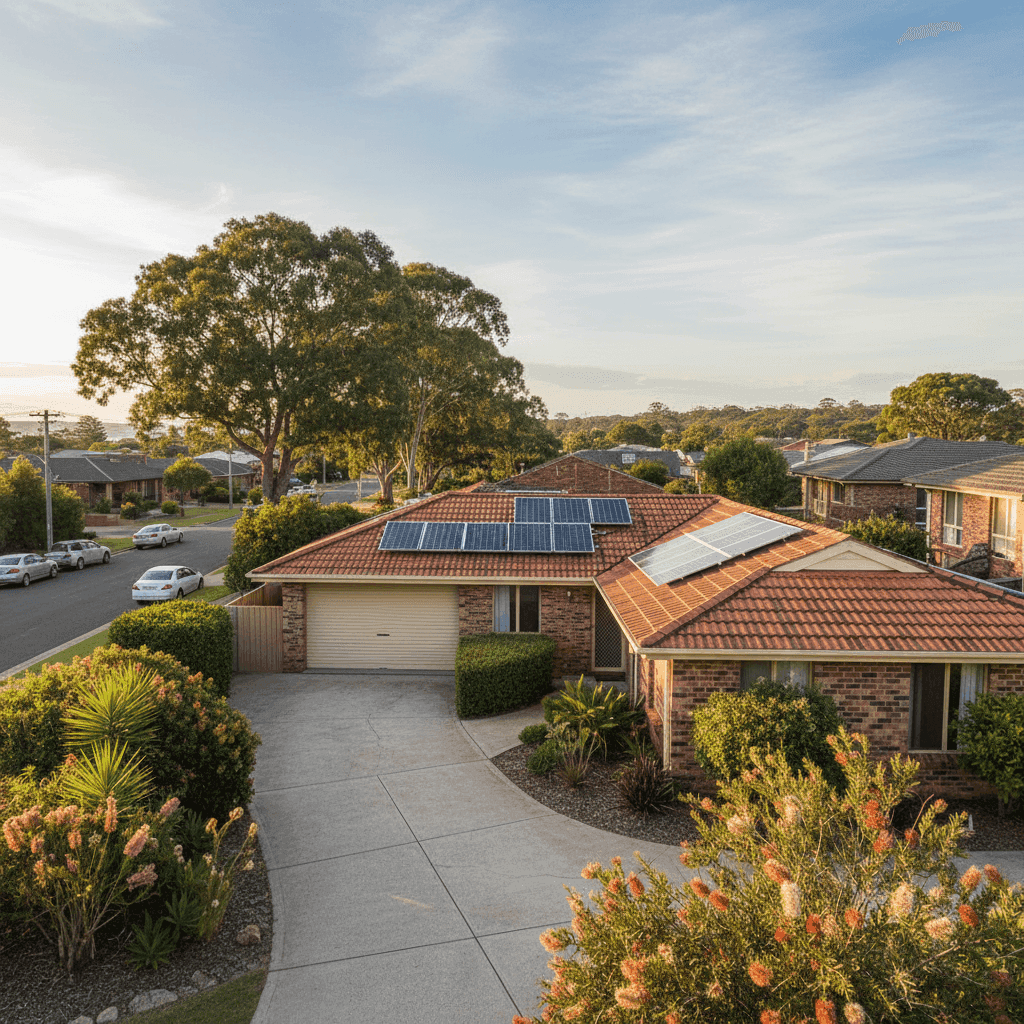
Terrigal is one of the Central Coast's most sought-after coastal suburbs — a place where relaxed beachside living meets strong property values. If you own a free standing home here, protecting it with the right insurance is essential. This article breaks down a real home and contents insurance quote for a 4-bedroom, 2-bathroom brick veneer home in Terrigal (NSW 2260), and puts the numbers into context so you can judge whether the price stacks up.
---
Is This Quote Fair?
The quote in question comes in at $5,574 per year (or $534/month) for combined home and contents cover, with a building sum insured of $1,232,000 and contents valued at $188,000. Both the building and contents excess are set at $500.
Our pricing analysis rates this quote as Expensive — above average for the area.
To understand why, it helps to look at what other homeowners in Terrigal are paying. Based on a sample of 40 quotes from the suburb, the average annual premium sits at $3,822, with a median of $3,753. That means this quote is roughly $1,752 above the suburb average — a meaningful gap that's worth investigating before you sign on the dotted line.
That said, "expensive" doesn't automatically mean "wrong." A higher sum insured naturally drives up the premium, and at $1,232,000 for the building alone, this policy is covering a significant asset. If comparable homes in the area are insured for less, that could explain part of the difference. It's still worth shopping around to see whether another insurer can offer the same level of cover at a more competitive price.
---
How Terrigal Compares
Understanding where Terrigal sits in the broader insurance landscape gives valuable perspective. Here's how the numbers stack up:
| Benchmark | Annual Premium |
|---|---|
| This quote | $5,574 |
| Terrigal suburb average | $3,822 |
| Terrigal suburb median | $3,753 |
| Terrigal 25th percentile | $3,062 |
| Terrigal 75th percentile | $4,711 |
| NSW state average | $9,528 |
| NSW state median | $3,770 |
| National average | $5,347 |
| National median | $2,764 |
| Central Coast LGA average | $8,387 |
A few things stand out here. First, the NSW state average of $9,528 looks alarming — but the median of $3,770 tells a more grounded story. Averages in insurance data are frequently skewed by high-risk or high-value outliers, so the median is often the more useful comparison point. Against the NSW median, this quote is sitting notably higher.
Interestingly, this quote is actually close to the national average of $5,347 — suggesting it's not wildly out of step with what Australians pay overall, even if it's above the local norm for Terrigal.
You can explore more local pricing data at the Terrigal suburb stats page, or broaden your view with NSW state insurance statistics and national home insurance benchmarks.
---
Property Features That Affect Your Premium
Every home is different, and insurers price policies based on a detailed picture of the property. Here's how the features of this particular home are likely influencing the premium:
Brick Veneer Walls & Tiled Roof Brick veneer is generally viewed favourably by insurers — it's durable, fire-resistant, and widely used in Australian residential construction. Combined with a tiled roof, this home sits in a relatively low-risk construction category. These materials are less susceptible to storm damage than, say, weatherboard or Colorbond, which can work in the homeowner's favour at renewal time.
Slab Foundation A concrete slab foundation is standard for homes of this era and is generally considered structurally sound. It also reduces the risk of subsidence-related claims compared to older stumped or piled foundations.
Construction Year: 1995 At around 30 years old, this home is mature but not old. It was built under modern building codes, which means it's likely to meet contemporary structural standards. However, ageing plumbing, electrical systems, and roofing can become factors as the home gets older — something worth keeping an eye on.
Solar Panels This property has solar panels installed, which adds replacement value that needs to be reflected in the sum insured. Solar systems can cost thousands to repair or replace after a storm or fire, so it's important to confirm they're explicitly covered under the policy — not all standard policies include them automatically.
Ducted Climate Control Ducted air conditioning is a significant fixed asset. Like solar panels, it contributes to the overall replacement cost of the home and should be factored into the building sum insured. Under-insuring these systems is a common mistake.
No Pool, Standard Fittings The absence of a pool removes one liability and maintenance risk from the equation. Standard-quality fittings (rather than high-end or custom finishes) also keep the rebuild cost more predictable, which can help keep premiums in check.
Location: Terrigal, NSW Terrigal's coastal position is a double-edged sword. The lifestyle appeal is undeniable, but proximity to the ocean can expose properties to salt air corrosion, storm surge risk, and elevated wind events. Insurers factor in geographic risk when pricing coastal properties, which may be contributing to the above-average premium here.
---
Tips for Homeowners in Terrigal
1. Review your sum insured carefully A building sum insured of $1,232,000 is substantial. Make sure this figure reflects the actual cost to rebuild — not the market value of the land and property. Overcooking the sum insured is a common way homeowners end up paying more than necessary. Use a building cost estimator or speak to a quantity surveyor if you're unsure.
2. Confirm solar panels are covered Ask your insurer directly whether your solar panel system is included in the building cover, and for how much. Some policies treat them as an optional extra or have sub-limits. Given the cost of modern solar installations, a gap in cover here could be costly.
3. Shop around at renewal time Loyalty doesn't always pay in insurance. Premiums can vary significantly between providers for the same property and level of cover. Use a comparison service like CoverClub to benchmark your renewal quote before accepting it.
4. Consider your excess level Both the building and contents excess are set at $500 in this policy. Opting for a higher excess — say $1,000 or $2,500 — can meaningfully reduce your annual premium. If you have a solid emergency fund and are unlikely to make small claims, this trade-off is often worth considering.
---
Find a Better Deal with CoverClub
Whether this quote is the right fit or not, it pays to compare. CoverClub makes it easy for Australian homeowners to benchmark their insurance costs and find competitive quotes tailored to their property. Get a home insurance quote today and see how much you could save.