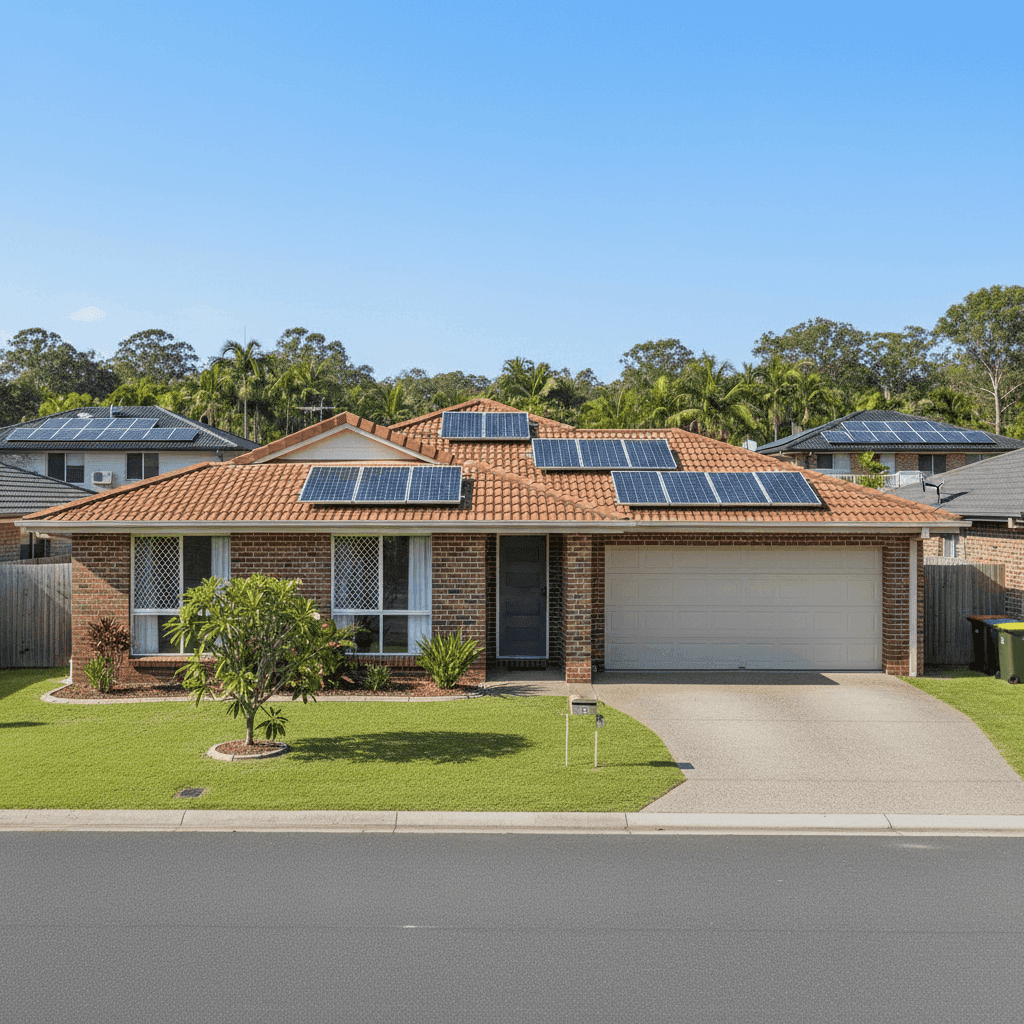
Tewantin is a well-established riverside suburb sitting at the heart of the Noosa Shire on Queensland's Sunshine Coast. Known for its relaxed lifestyle, proximity to the Noosa River, and easy access to national parkland, it's a popular destination for families and sea-changers alike. If you own a free standing home here, understanding what you should be paying for home and contents insurance — and why — can save you a meaningful amount each year.
This article breaks down a recent home and contents insurance quote for a 3-bedroom, 1-bathroom free standing home in Tewantin, comparing it against local, state, and national benchmarks to help you make a more informed decision.
---
Is This Quote Fair?
The quote in question comes in at $2,514 per year (or $241/month) for combined home and contents cover, with a building sum insured of $600,000 and contents valued at $110,000. Both the building and contents excess are set at $500.
Our pricing engine rates this quote as Fair — Around Average, which is a reasonable outcome for a property in this part of Queensland. It's not the cheapest cover available, but it's not excessive either. Given the Noosa LGA's notably elevated insurance costs (more on that below), landing near the suburb median is actually a solid result.
To put it in perspective: the suburb median premium in Tewantin is $3,597/yr, meaning this quote sits comfortably below the midpoint for the area. That's a positive sign. However, it does sit above the suburb's 25th percentile of $2,273/yr, which means roughly a quarter of comparable properties are insured for less. If you're motivated to reduce your premium, there may be room to negotiate or shop around.
---
How Tewantin Compares
One of the most striking things about Tewantin's insurance landscape is the wide spread between average and median premiums — a clear indicator that a small number of very high-risk or high-value properties are pulling the average up significantly.
| Benchmark | Premium |
|---|---|
| This quote | $2,514/yr |
| Tewantin suburb median | $3,597/yr |
| Tewantin suburb average | $31,865/yr |
| Noosa LGA average | $18,770/yr |
| QLD state median | $3,903/yr |
| QLD state average | $9,129/yr |
| National median | $2,764/yr |
| National average | $5,347/yr |
You can explore the full breakdown of Tewantin suburb insurance statistics, compare it to Queensland-wide data, or view national home insurance benchmarks to see how your own situation stacks up.
The Noosa LGA average of $18,770/yr is strikingly high — nearly seven times this quote — which reflects the presence of high-value coastal and waterfront properties across the broader shire. Tewantin itself has a more moderate risk profile than some neighbouring coastal pockets, which helps keep premiums more manageable for standard residential properties.
Compared to the national median of $2,764/yr, this quote is only marginally cheaper, suggesting it's broadly in line with what Australians across the country are paying for similar cover.
---
Property Features That Affect Your Premium
Several characteristics of this property influence how insurers assess and price the risk.
Brick veneer construction is generally viewed favourably by insurers. While not as robust as full brick, brick veneer offers good fire resistance and durability compared to lightweight cladding alternatives, which can translate to more competitive premiums.
Tiled roofing is another positive. Tiles are considered a lower-risk roofing material than Colorbond or corrugated iron in some scenarios, and are well-suited to Queensland's climate — though they do require periodic maintenance to prevent cracking or water ingress.
Slab foundation is the standard for homes of this era and construction type, and poses no particular concern for insurers in this location.
Solar panels are worth noting. While they add value to the property, they also represent an additional asset that may need to be factored into your building sum insured. Make sure your policy explicitly covers solar panels for damage from storms, hail, or electrical faults — not all standard policies do without an endorsement.
The 1992 construction year places this home in a period when building standards were solid but pre-date some of the more stringent cyclone and wind-resistance codes introduced in later decades. While Tewantin is not classified as a cyclone risk area, older homes can still attract slightly higher premiums due to the age of plumbing, electrical systems, and roofing.
At 130 sqm, this is a modestly sized home, and the $600,000 building sum insured reflects a rebuild cost rather than market value — a distinction that's important to get right. Underinsurance is a common problem in Australia, so it's worth periodically reviewing your sum insured against current construction costs in the area.
---
Tips for Homeowners in Tewantin
1. Review your building sum insured annually. Construction costs across Queensland have risen significantly in recent years. If your sum insured hasn't kept pace, you could face a shortfall at claim time. Use a building replacement cost calculator or speak with a local builder to get a realistic estimate.
2. Check your solar panel coverage. If your policy doesn't explicitly include solar panels, ask your insurer whether they're covered under the building section and under what circumstances. Storm damage, panel failure, and inverter issues are common claims that can catch homeowners off guard.
3. Consider bundling building and contents. This quote already combines both, which typically attracts a discount compared to holding separate policies. If you're currently insuring building and contents with different providers, consolidating could reduce your overall premium.
4. Shop around at renewal time. Even a "Fair" rating means there may be better value available. Insurers reprice their books regularly, and loyalty doesn't always pay. Use a comparison platform like CoverClub to benchmark your renewal quote against the market before you auto-renew.
---
Compare Your Own Quote
Whether you're renewing your existing policy or insuring a new purchase, it pays to know where your premium sits relative to the market. CoverClub makes it easy to get a home and contents insurance quote tailored to your property and compare it against real data from your suburb and state.
Get a quote for your Tewantin home today and see how your premium stacks up in seconds.