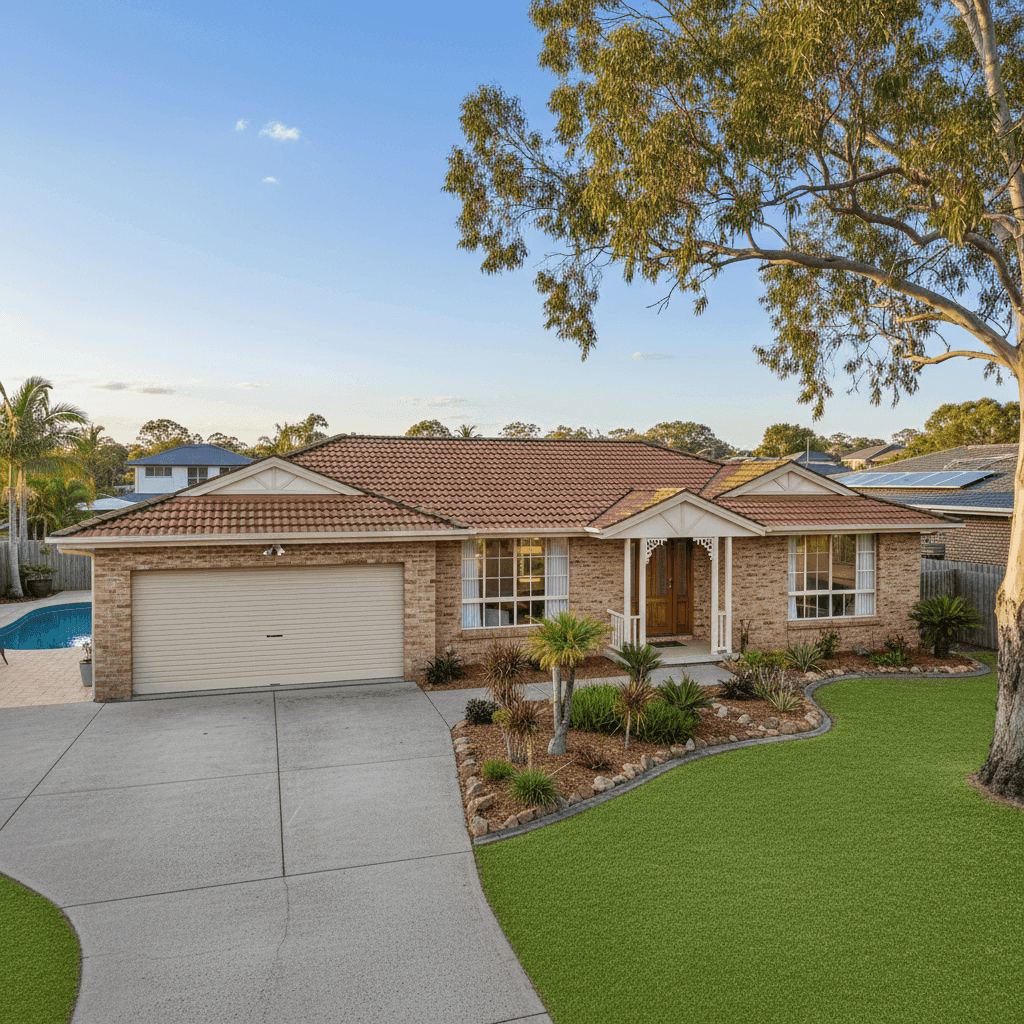
If you own a free standing home in Tewantin, QLD 4565, you're likely no stranger to the challenge of finding home insurance that's both comprehensive and competitively priced. Sitting on the Noosa River in one of Queensland's most sought-after lifestyle corridors, Tewantin is a desirable suburb — but desirability comes with its own insurance complexities. This article breaks down a real home and contents insurance quote for a four-bedroom property in the area, benchmarks it against local, state, and national data, and offers practical guidance for homeowners looking to get the best value cover.
---
Is This Quote Fair?
The quote in question covers a four-bedroom, two-bathroom free standing home with a building sum insured of $637,000 and contents valued at $144,000. The annual premium comes in at $2,604 (or roughly $250/month), with a $1,000 excess applied to both building and contents claims.
Our pricing analysis rates this quote as Fair — Around Average, which is actually a positive result in the context of the Noosa local government area. Given the suburb's elevated risk profile and the relatively high property values in the region, landing near the average without tipping into the upper quartile is a reasonable outcome for a property of this size and specification.
That said, "fair" doesn't mean you can't do better. Understanding what's driving your premium is the first step toward potentially reducing it.
---
How Tewantin Compares
The pricing data paints an interesting picture for Tewantin and the surrounding 4565 postcode. With a suburb average premium of $31,865/year and a median of $3,597/year, there's an enormous spread between what different homeowners are paying. That wide gap — and the sky-high average — is largely driven by outlier properties with extreme risk factors pushing the mean upward.
At $2,604/year, this quote sits just below the suburb's 25th percentile of $2,273, placing it in the more affordable half of the local market. That's a meaningful data point: the majority of comparable Tewantin properties are paying more.
Zooming out to the state level, Queensland's average home insurance premium is $9,129/year, with a median of $3,903/year. The state average is heavily influenced by high-risk cyclone and flood zones across North Queensland, which inflates the number considerably. Even so, this quote sits well below the QLD median — a good sign.
At the national level, the average annual premium across Australia is $5,347, with a median of $2,764. This quote is very close to the national median, suggesting it's broadly in line with what Australians pay on average — despite Tewantin being in a higher-cost region within the Noosa LGA (where the LGA average sits at $18,770/year).
| Benchmark | Average | Median |
|---|---|---|
| Tewantin (4565) | $31,865/yr | $3,597/yr |
| Queensland | $9,129/yr | $3,903/yr |
| National | $5,347/yr | $2,764/yr |
| Noosa LGA | $18,770/yr | — |
---
Property Features That Affect Your Premium
Several characteristics of this property work in its favour from an insurance pricing perspective — and a few are worth keeping an eye on.
Brick veneer construction is generally viewed favourably by insurers. It offers solid structural integrity and reasonable fire resistance, making it less costly to insure than timber-framed homes with weatherboard cladding. Combined with a tiled roof, the property sits in a lower-risk construction category that most Australian insurers reward with more competitive premiums.
The slab foundation is another positive. Slab-on-ground construction is common in Queensland and is generally considered stable and low-maintenance, reducing the likelihood of subsidence or structural movement claims.
Tiled flooring throughout is both practical and insurance-friendly — tiles are durable, resistant to water damage, and far easier to repair or replace after a flood or leak than carpet or engineered timber.
The ducted climate control system is worth noting. These systems are a valued asset but can be expensive to repair or replace, so it's important to confirm they're adequately covered under either your building or contents policy — depending on how they're classified by your insurer.
The swimming pool adds some complexity. Pools can increase liability exposure and may require specific mention in your policy. Make sure your insurer is aware of the pool, and check whether it's covered under the building sum insured or requires a separate item.
At 214 sqm and built in 1996, this is a well-established mid-sized home. Properties from the mid-1990s can sometimes trigger questions around building standards and materials (some 1990s homes used products that are now considered higher-risk), so it's worth confirming your building sum insured accurately reflects current replacement costs, not just market value.
---
Tips for Homeowners in Tewantin
1. Double-check your building sum insured With construction costs rising sharply across Queensland, many homeowners are underinsured without realising it. The $637,000 building sum insured on this quote should reflect the full cost to rebuild — not the market sale price. Use a building cost calculator or ask a quantity surveyor to validate the figure, particularly for a 214 sqm home with standard fittings.
2. Review your pool and outdoor area cover Pools, decking, and outdoor structures are sometimes excluded or capped under standard building policies. Read the Product Disclosure Statement (PDS) carefully to confirm what's included — and what's not — for your outdoor entertaining areas and pool equipment.
3. Consider your excess strategically Both the building and contents excess on this quote are set at $1,000. A higher excess generally reduces your premium, while a lower excess means less out-of-pocket cost at claim time. Think about your financial buffer and how often you'd realistically make a claim before adjusting this figure.
4. Shop around at renewal time Insurers regularly adjust their pricing models, and loyalty doesn't always pay. Even if your current quote is rated "fair," comparing it against alternatives at renewal could reveal meaningfully cheaper options — especially as your property ages and risk profiles shift. Platforms like CoverClub make this comparison straightforward.
---
Ready to Compare?
Whether you're reviewing your existing policy or insuring a property for the first time, it pays to see what's available across the market. Get a home insurance quote at CoverClub and benchmark your premium against real data from your suburb, your state, and across Australia — so you can make a confident, informed decision.