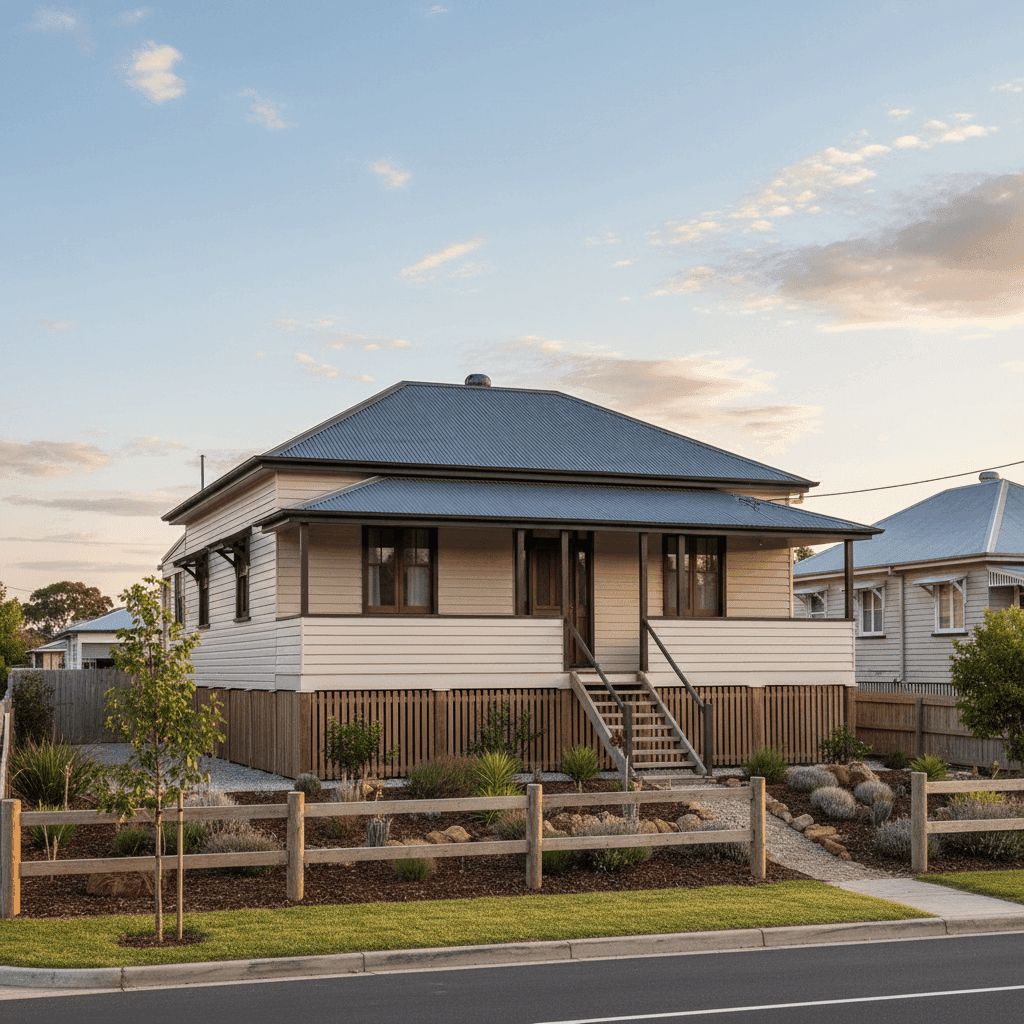
If you own a home in Texas, QLD 4385, you're part of a tight-knit rural community in the New England region of southern Queensland — and like many homeowners in the area, you're probably wondering whether your home insurance premium is competitive. This article breaks down a real home and contents insurance quote for a three-bedroom, two-bathroom free standing home in Texas, comparing it against local, state, and national benchmarks to help you make a more informed decision.
---
Is This Quote Fair?
The quote in question comes in at $2,225 per year (or $218/month) for combined home and contents cover, with a building sum insured of $351,000 and contents valued at $50,000. The building excess is $1,000 and the contents excess is $500.
Our price rating for this quote is FAIR — Around Average, and the data backs that up. The suburb average premium for Texas QLD sits at $2,224 per year, meaning this quote lands almost exactly on the local benchmark — just $1 above it. It also falls comfortably within the interquartile range of $1,995 to $2,410, suggesting it's a reasonable market rate rather than an outlier in either direction.
That said, "fair" doesn't necessarily mean "the best available." There's still meaningful room between this quote and the 25th percentile of $1,995 — a potential saving of around $230 per year if a more competitive insurer were found for the same property. It's worth exploring whether a different provider could offer equivalent cover at a lower price point.
---
How Texas Compares to the Rest of Queensland and Australia
One of the most striking things about this quote is just how favourably Texas QLD compares to broader benchmarks. Take a look:
| Benchmark | Average Premium |
|---|---|
| Texas QLD (suburb average) | $2,224/yr |
| LGA – Inverell | $2,224/yr |
| Queensland (state average) | $9,129/yr |
| Queensland (state median) | $3,903/yr |
| National average | $5,347/yr |
| National median | $2,764/yr |
Queensland's state average of $9,129 is heavily skewed by high-risk coastal and cyclone-prone areas in the north — places like Cairns, Townsville, and the Whitsundays, where premiums can be extraordinarily high. The median of $3,903 is a more realistic picture of what most Queenslanders pay, and even against that figure, Texas comes out well ahead.
Compared to the national average of $5,347 and the Queensland state average, Texas homeowners are getting a significantly better deal. The suburb's location in a non-cyclone zone, away from flood-prone coastlines, plays a large part in keeping premiums relatively contained.
You can explore more localised data on the Texas QLD 4385 insurance stats page to see how quotes in your suburb have been trending.
---
Property Features That Affect Your Premium
Every home is different, and insurers assess a wide range of property characteristics when calculating your premium. Here's how the features of this particular property are likely influencing the quote:
Weatherboard timber walls are one of the more significant risk factors for older homes. Timber is more susceptible to fire, termite damage, and general wear compared to brick veneer or double brick construction. Insurers typically apply a loading to weatherboard homes, particularly those built before modern building codes came into effect.
Construction year (1967) means this home is nearly 60 years old. Older homes often carry higher premiums due to the increased likelihood of ageing electrical wiring, plumbing issues, and structural wear. Insurers may also factor in the cost of bringing repairs up to current building standards — known as "betterment" — when calculating the sum insured.
Steel/Colorbond roofing is actually a positive from an insurance perspective. Colorbond is durable, resistant to ember attack, and widely regarded as a low-maintenance roofing material. It's far less of a risk factor than older terracotta tiles or corrugated iron in poor condition.
Stump foundations are common in older Queensland homes and can introduce some risk around subsidence and movement, particularly in areas with reactive soils. However, stumps are generally well understood by insurers operating in regional QLD and are unlikely to cause a significant premium loading on their own.
Timber and laminate flooring is relatively standard and doesn't typically influence premiums dramatically, though it can affect contents and building repair costs after an event like flooding or a burst pipe.
Ducted climate control is worth noting as a higher-value fixed inclusion in the building sum insured. Systems like these can be expensive to repair or replace, and they're generally captured under the building component of your policy rather than contents.
The $351,000 building sum insured and $50,000 contents are the key drivers of the overall premium. It's important to make sure your building sum insured reflects the actual cost to rebuild — not the market value of the property — and that your contents figure accurately accounts for everything inside your home.
---
Tips for Homeowners in Texas QLD
1. Review your building sum insured regularly Construction costs have risen significantly across regional Queensland in recent years. If your sum insured hasn't been updated to reflect current rebuild costs, you could be underinsured — meaning you'd receive a reduced payout in the event of a total loss. Use a building cost calculator or speak to a local builder to get a current estimate.
2. Consider raising your excess to lower your premium The building excess on this quote is $1,000 and the contents excess is $500. If you have a solid emergency fund and are unlikely to make small claims, opting for a higher excess could meaningfully reduce your annual premium. Some insurers offer significant discounts for excesses of $2,000 or more.
3. Ask about discounts for security and safety features Even without a pool or solar panels, features like smoke alarms, deadbolts, security screens, and monitored alarm systems can attract discounts with some insurers. It's worth asking each provider what safety-related discounts they offer.
4. Compare quotes at renewal — every year Insurers don't always reward loyalty with competitive pricing. Premiums can shift significantly from year to year, and the gap between the cheapest and most expensive quotes for the same property can be hundreds of dollars. Making it a habit to compare at renewal is one of the simplest ways to avoid overpaying.
---
Compare Home Insurance Quotes for Your Texas Property
Whether you're reviewing your current policy or shopping for the first time, CoverClub makes it easy to compare home and contents insurance quotes tailored to your property. Our data shows that premiums in Texas QLD are already more affordable than much of the state — but there's still a spread in the market, and the right quote for your home could save you hundreds. Get a quote today at CoverClub and see how your premium stacks up.