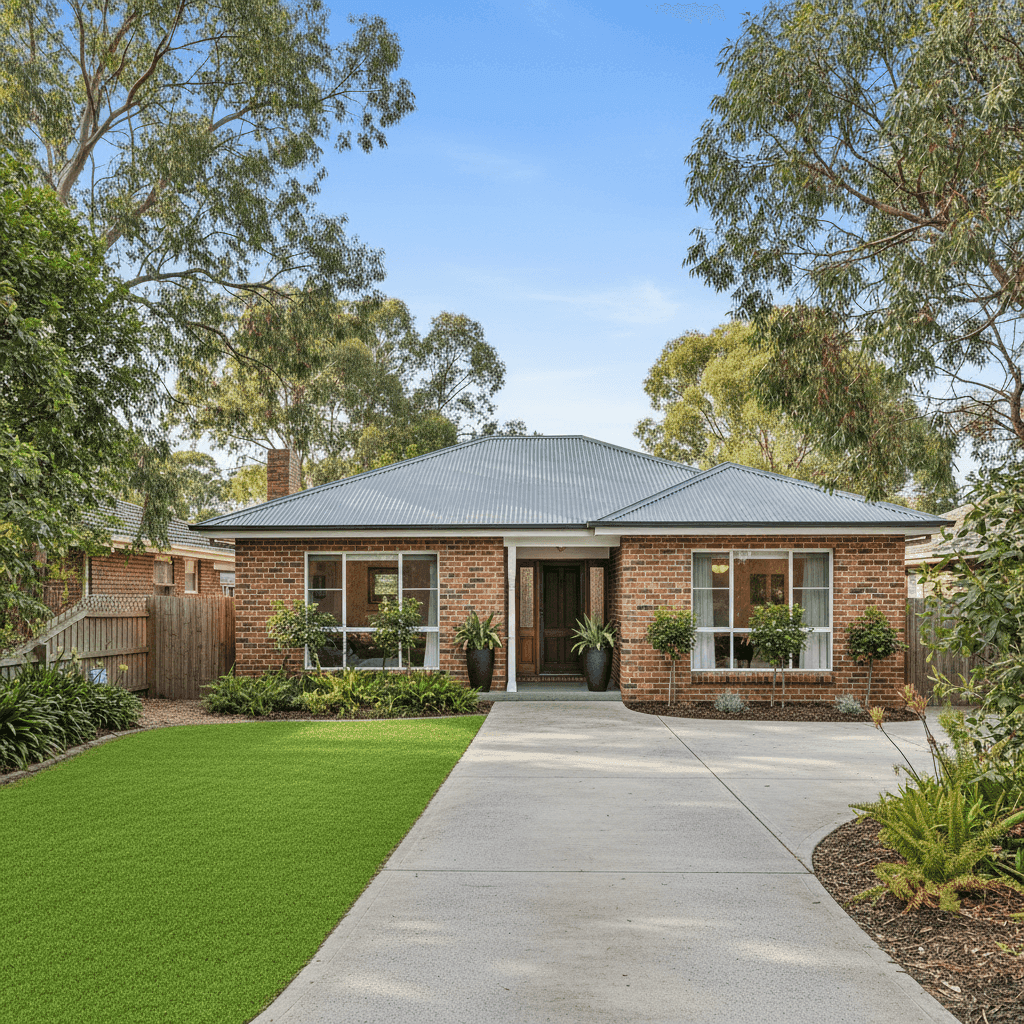
If you own a free standing home in The Basin, VIC 3154, you're likely already aware that home insurance is one of those non-negotiable household expenses — but what you pay can vary enormously depending on your property, your insurer, and where you live. This article breaks down a real home and contents insurance quote for a four-bedroom property in The Basin, comparing it against local, state, and national benchmarks to help you understand whether you're getting a fair deal.
---
Is This Quote Fair?
The quote in question comes in at $1,811 per year (or approximately $177 per month) for combined home and contents cover, with a $600,000 building sum insured and $100,000 in contents cover. Both the building and contents excess sit at $500.
Our price rating for this quote is CHEAP — below average — and the data backs that up convincingly.
The suburb average premium in The Basin is $3,142 per year, meaning this quote is roughly 42% below what most homeowners in the area are paying. Even the 25th percentile — the cheapest quarter of quotes we've seen locally — sits at $2,132 per year, still well above this figure. Put simply, if this quote were offered to you, it would represent genuinely strong value by any reasonable measure.
At the state level, the Victorian average home insurance premium is around $3,000 per year, with a median of $2,718. This quote undercuts both figures significantly. And when you zoom out to the national picture, where the average premium is $5,347 per year (driven up by high-risk regions like Far North Queensland and cyclone-prone coastal areas), the value becomes even more apparent.
---
How The Basin Compares
The Basin sits within the City of Knox local government area in Melbourne's outer east — a leafy, hilly suburb that backs onto the Dandenong Ranges. It's a desirable area, but one that comes with its own risk profile, particularly around bushfire exposure given its proximity to the Ranges.
Here's how the premiums stack up:
| Benchmark | Annual Premium |
|---|---|
| This Quote | $1,811 |
| The Basin Suburb Average | $3,142 |
| The Basin Suburb Median | $3,420 |
| The Basin 25th Percentile | $2,132 |
| The Basin 75th Percentile | $3,745 |
| Knox LGA Average | $1,913 |
| VIC State Average | $3,000 |
| VIC State Median | $2,718 |
| National Average | $5,347 |
| National Median | $2,764 |
You can explore the full local data on the The Basin suburb stats page.
Interestingly, the Knox LGA average of $1,913 is notably lower than the suburb-level average for The Basin specifically — suggesting that pricing within the postcode may reflect bushfire exposure more acutely than the broader LGA. This quote, at $1,811, actually sits just below even the Knox LGA average, making it a standout result.
It's worth noting that the suburb sample size is relatively small (5 quotes), so averages can shift as more data comes in. That said, the consistency across multiple benchmarks confirms this is a competitively priced policy.
---
Property Features That Affect Your Premium
Every insurer assesses risk differently, but certain property characteristics consistently influence what you'll pay. Here's how the features of this particular home are likely playing into the premium:
Brick Veneer Walls Brick veneer is one of the most common external wall materials in Australian suburban homes, and insurers generally view it favourably. It offers solid fire resistance compared to timber weatherboard, which is especially relevant for a suburb on the fringe of the Dandenong Ranges.
Steel / Colorbond Roof A Colorbond steel roof is considered low-maintenance and durable, with good resistance to ember attack — a key consideration in bushfire-prone areas. This is likely a positive factor in the risk assessment.
Stump Foundation Homes on stumps (also called raised or pier foundations) are common in hillier parts of Melbourne's east. While they can be more vulnerable to certain types of damage, they also allow for better airflow and can reduce moisture-related issues. Insurers assess this on a case-by-case basis.
Construction Year: 2001 A home built in 2001 benefits from building codes that were already relatively modern, without being old enough to carry the maintenance concerns of pre-1980s construction. This is a neutral-to-positive factor.
Above Average Fittings The "above average" fittings quality noted for this property suggests higher-end fixtures, finishes, and appliances — which is reflected in the $600,000 building sum insured. Ensuring your sum insured accurately reflects rebuild costs (not market value) is critical to avoiding underinsurance.
Ducted Climate Control The presence of ducted heating and cooling adds to the replacement value of the home and is correctly factored into the contents and building sums insured.
No Pool, No Solar The absence of a pool removes a significant liability risk factor, and no solar panels means one less complex system to insure or replace.
---
Tips for Homeowners in The Basin
1. Check Your Bushfire Risk Rating The Basin is classified in a bushfire-prone area under Victorian planning regulations. Make sure your insurer is aware of your property's specific Bushfire Attack Level (BAL) rating, and confirm that your policy covers bushfire damage — most standard policies do, but exclusions and sub-limits can vary.
2. Don't Underinsure Your Building With above average fittings and a 139 sqm home, the $600,000 sum insured may seem high — but rebuild costs in Victoria have risen sharply in recent years due to labour and materials inflation. Use a building cost calculator or speak to a quantity surveyor to validate your sum insured annually.
3. Review Your Contents Cover $100,000 in contents cover is a reasonable starting point for a four-bedroom home with above average fittings, but it's easy to underestimate. Go room by room and tally up electronics, furniture, appliances, clothing, and valuables. Many homeowners are surprised how quickly the total climbs.
4. Compare at Renewal Time Even if you're happy with your current premium, insurers regularly adjust their pricing models. What was competitive last year may not be this year — and vice versa. Setting a reminder to compare quotes at renewal is one of the simplest ways to keep your costs in check.
---
Compare Your Home Insurance Quote Today
Whether you're a long-time resident of The Basin or you've recently purchased in the area, it pays to know where your premium stands relative to the market. CoverClub makes it easy to see real quote data for your suburb and get competing offers in minutes.
Get a home insurance quote at CoverClub and find out if you're paying a fair price — or if there's a better deal waiting for you.