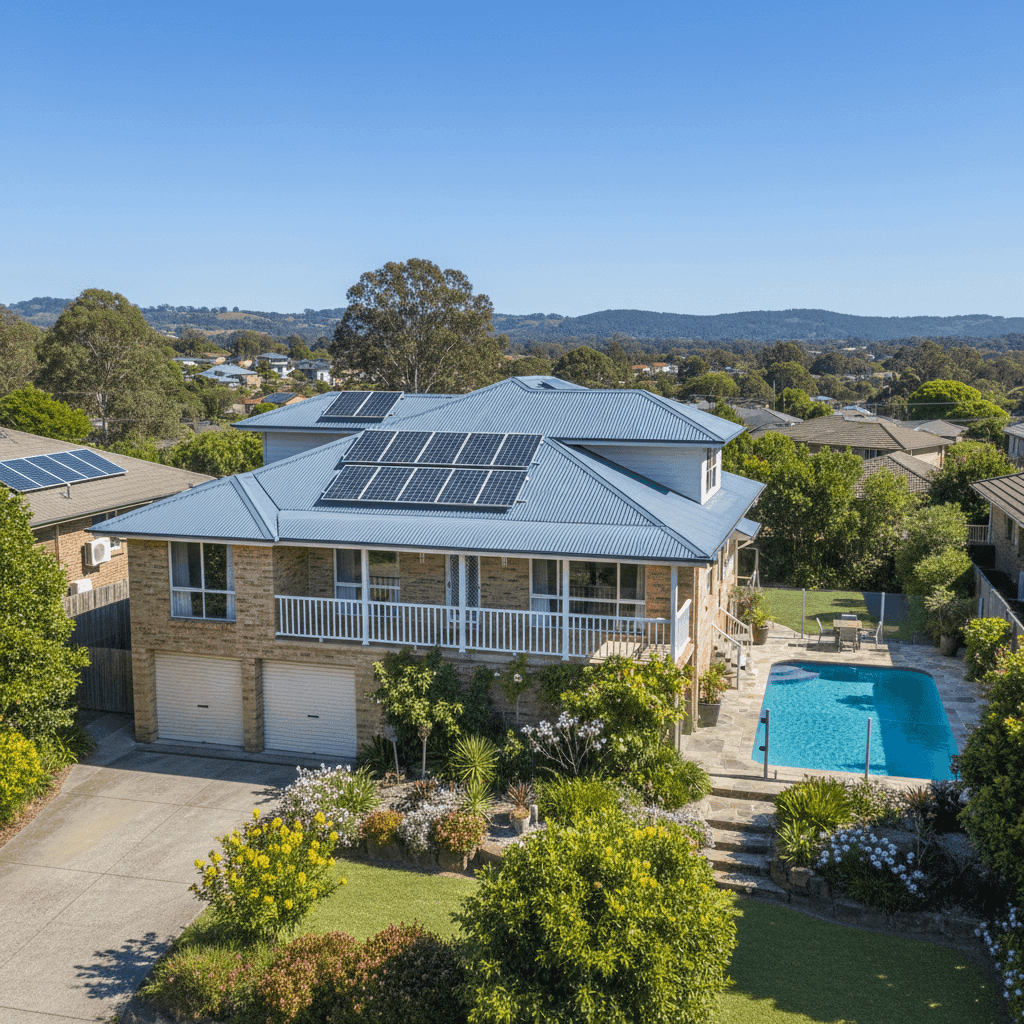
If you own a free standing home in The Gap, QLD 4061, you've probably wondered whether you're paying a fair price for home and contents insurance. The Gap is a leafy, hilly suburb in Brisbane's western corridor — popular with families and known for its bushland surrounds and relatively modern housing stock. In this article, we break down a real insurance quote for a four-bedroom, two-bathroom brick veneer home in the suburb, and compare it against local, state, and national benchmarks so you can judge for yourself.
---
Is This Quote Fair?
The quote in question sits at $2,643 per year (or $246/month) for combined home and contents cover, with a building sum insured of $1,098,000 and contents valued at $50,000. Both the building and contents excess are set at $2,000.
Our pricing analysis rates this quote as FAIR — around average. That's a reasonable outcome for a well-built, relatively modern property. The home was constructed in 2008, which means it benefits from more contemporary building standards compared to older dwellings, and its brick veneer walls with a Colorbond steel roof are among the more insurer-friendly construction types available in Queensland.
A "fair" rating doesn't mean you can't do better — it simply means the premium sits in a competitive range relative to comparable properties in the area. It's always worth shopping around, but you're not being significantly overcharged here.
---
How The Gap Compares
To put this quote in context, here's how it stacks up against suburb, state, and national averages:
| Benchmark | Premium |
|---|---|
| This quote | $2,643/yr |
| The Gap suburb average | $2,626/yr |
| The Gap suburb median | $2,418/yr |
| The Gap 25th percentile | $1,900/yr |
| The Gap 75th percentile | $3,303/yr |
| Brisbane LGA average | $4,485/yr |
| QLD state average | $4,547/yr |
| QLD state median | $3,931/yr |
| National average | $2,965/yr |
| National median | $2,716/yr |
(Based on 59 quotes collected for postcode 4061.)
A few things stand out here. First, The Gap is notably cheaper than the Queensland state average of $4,547/yr — a difference of nearly $1,900 per year. This is largely because QLD premiums are heavily skewed upward by high-risk coastal and cyclone-prone regions in North Queensland, which push the state figures well above what inner-Brisbane suburbs typically pay.
Second, this quote is also below the national average of $2,965/yr, which is a positive sign. Compared to national benchmarks, homeowners in The Gap are getting a relatively competitive deal.
The quote lands just above the suburb average of $2,626/yr — essentially right in line with what most comparable properties in the postcode are paying. Given the higher-than-average building sum insured of $1,098,000, this is actually quite competitive pricing.
---
Property Features That Affect Your Premium
Several characteristics of this particular property influence where the premium lands. Here's what matters most:
Brick Veneer Walls & Colorbond Roof Brick veneer is one of the most common and insurer-preferred wall types in Australia. It offers solid fire resistance and durability. Paired with a steel Colorbond roof — which is lightweight, corrosion-resistant, and performs well in storms — this combination generally attracts more competitive premiums than, say, weatherboard or fibrous cement construction.
Slab Foundation & Tiled Flooring A concrete slab foundation is standard for homes of this era and presents minimal risk of subsidence or moisture-related structural issues. Tiled flooring throughout is also a positive signal to insurers — tiles are durable, easy to replace, and not susceptible to water damage in the same way timber or carpet can be.
Swimming Pool A pool adds liability exposure and increases the overall replacement cost of the property, which can nudge premiums upward. It's important to ensure your building sum insured accounts for pool fencing, pumps, and related infrastructure.
Solar Panels Solar panels are increasingly common across Brisbane's suburbs, but they do add to the insured value of the home. Make sure your policy explicitly covers solar panels — some standard policies treat them as part of the building, while others may require separate endorsement.
Ducted Climate Control Ducted air conditioning is a significant fixed asset. At replacement costs of $10,000–$25,000 or more for a full system, it's essential this is captured in your building sum insured. Underinsurance is a real risk when high-value fixtures like these aren't properly accounted for.
No Cyclone Risk Unlike many Queensland postcodes, The Gap is not classified as a cyclone risk area. This is a meaningful factor — cyclone premiums in North Queensland can add hundreds or even thousands of dollars to annual costs. Being in a non-cyclone zone is one reason The Gap sits well below the QLD state average.
Construction Year: 2008 Homes built after 1990 generally comply with more stringent building codes, particularly around wind and storm resistance. A 2008 build is relatively modern and should benefit from these standards when insurers assess risk.
---
Tips for Homeowners in The Gap
1. Review your building sum insured annually With a sum insured of $1,098,000 on a 235 sqm home, you're working with approximately $4,672/sqm — which is within a reasonable range for a well-fitted Brisbane home. However, construction costs have risen sharply in recent years. Review your sum insured each year at renewal, and consider using a building cost calculator to verify you're not underinsured. Don't forget to factor in the pool, solar system, and ducted air con.
2. Consider raising your excess to reduce your premium Both the building and contents excess on this policy are set at $2,000. If you have sufficient savings to cover a higher excess in the event of a claim, increasing this could meaningfully reduce your annual premium. Many insurers offer tiered excess options — it's worth modelling the trade-off.
3. Bundle your home and contents cover This quote already combines home and contents insurance, which is generally the smarter approach. Bundling with the same insurer typically attracts a discount and simplifies the claims process — particularly useful when damage affects both the structure and your belongings simultaneously.
4. Don't overlook bushfire risk The Gap borders bushland reserves, and while it's not a flood-prone or cyclone-affected area, bushfire exposure is a genuine consideration. Confirm your policy covers bushfire damage and check whether your insurer applies any specific conditions or exclusions given the suburb's proximity to natural vegetation. Maintaining a defensible space around your property can also reduce risk.
---
Compare Your Options with CoverClub
Whether you're renewing an existing policy or shopping for the first time, it pays to compare. CoverClub makes it easy to see real quotes from multiple insurers side by side, benchmarked against what other homeowners in your suburb are actually paying. Get a home insurance quote today and find out whether your current cover stacks up.