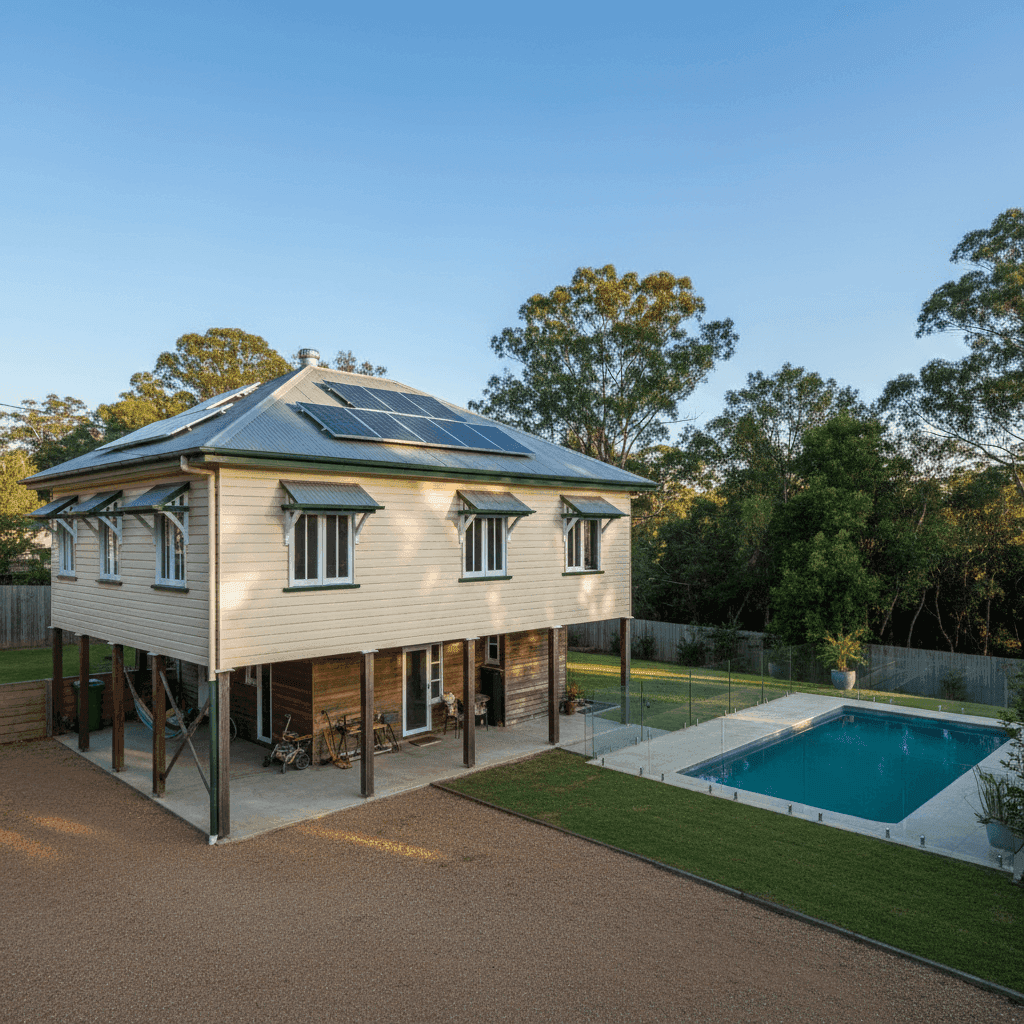
Home insurance costs in Brisbane's leafy western suburbs can vary significantly depending on your property's size, age, construction, and specific risk profile. This article takes a close look at a recent home and contents insurance quote for a five-bedroom free standing home in The Gap, QLD 4061 — a popular, hilly suburb roughly 12 kilometres from the Brisbane CBD — and breaks down exactly what's driving the premium and whether it represents fair value.
---
Is This Quote Fair?
The quote in question comes in at $4,330 per year (or $408/month), covering a building sum insured of $1,312,000 and $50,000 worth of contents, with a $1,000 excess on both building and contents claims.
Our price rating for this quote is EXPENSIVE — Above Average.
To put that in context, The Gap's suburb average premium sits at $3,092/yr, with a median of $3,073/yr. This quote lands above the 75th percentile for the suburb ($3,943/yr), meaning it's pricier than roughly three-quarters of comparable quotes we've seen in the area. That's a meaningful gap — about 40% above the suburb median.
That said, "expensive" doesn't automatically mean "wrong." A 315 sqm home with a $1.31 million building sum insured is a substantial asset. Larger, more complex properties naturally attract higher premiums, and several features of this particular home — discussed below — contribute to the elevated cost.
---
How The Gap Compares
Understanding where The Gap sits within the broader insurance landscape helps put this quote in perspective.
| Benchmark | Premium |
|---|---|
| This quote | $4,330/yr |
| The Gap suburb average | $3,092/yr |
| The Gap suburb median | $3,073/yr |
| QLD state average | $9,129/yr |
| QLD state median | $3,903/yr |
| National average | $5,347/yr |
| National median | $2,764/yr |
| Brisbane LGA average | $16,277/yr |
A few things stand out here. First, Queensland's state average of $9,129/yr is dramatically higher than the suburb average in The Gap — a reflection of the state's exposure to cyclones, flooding, and severe weather events in coastal and far-north regions. The Gap, being inland and in a non-cyclone zone, benefits from a comparatively benign risk profile.
Second, the national average of $5,347/yr is actually higher than this quote, which offers some reassurance. Relative to what Australians pay on average, $4,330/yr is below the national benchmark — even if it's above the local suburb average.
The Brisbane LGA average of $16,277/yr is heavily skewed by high-value properties and flood-affected areas across the broader council region, so it's less useful as a direct comparison here.
For a deeper dive into local pricing trends, visit the The Gap suburb stats page.
---
Property Features That Affect Your Premium
Several characteristics of this property have a direct bearing on the insurance premium. Here's what insurers are likely factoring in:
Weatherboard Timber Walls
Weatherboard timber construction is common in older Queensland homes and carries a higher fire risk rating than brick or rendered masonry. Timber is also more susceptible to rot, termite damage, and storm damage, which can push premiums upward compared to brick-veneer equivalents.
Elevated/Pole Foundation
This home is elevated by at least one metre on a pole or stump foundation — a classic Queenslander design feature. While elevation can actually reduce flood risk (a genuine advantage in Brisbane), poles and stumps introduce their own complexities. Insurers consider the cost of repairing or replacing the subfloor structure, and elevated homes can be more vulnerable to high-wind events.
Steel/Colorbond Roof
Colorbond roofing is generally well-regarded by insurers — it's durable, fire-resistant, and handles Queensland's harsh UV and heat well. This is unlikely to be a negative premium driver.
Large Building Size & High Sum Insured
At 315 sqm and a rebuild value of $1,312,000, this is a large, high-value home. The sum insured is the single biggest driver of building premium — the more it costs to rebuild, the more you pay to insure it. Getting the sum insured right is critical: too low and you risk being underinsured; too high and you're overpaying.
Pool, Solar Panels & Ducted Climate Control
Each of these adds to the replacement cost of the property and can increase liability exposure (particularly the pool). Ducted air conditioning systems are expensive to replace, and solar panel arrays add to the overall rebuild cost. Insurers typically factor these into the building sum insured calculation.
Construction Year: 1991
A home built in 1991 is over 30 years old. Older properties can attract slightly higher premiums due to ageing wiring, plumbing, and structural components that may be more costly to repair or replace to current building standards.
---
Tips for Homeowners in The Gap
If you're a homeowner in The Gap looking to manage your insurance costs without compromising on cover, here are four practical steps worth taking:
- Review your sum insured annually. Building costs have risen sharply in recent years. Make sure your sum insured reflects current construction costs — not what you paid for the home or what it was worth a few years ago. Use a building cost calculator or ask your insurer how they arrive at their recommended figure.
- Shop around and compare quotes. Premiums for the same property can vary by hundreds — sometimes thousands — of dollars between insurers. The Gap's 25th percentile is $2,276/yr, which shows there are competitive options available in this suburb. Don't auto-renew without checking alternatives.
- Consider increasing your excess. Opting for a higher voluntary excess (say, $2,000 instead of $1,000) can meaningfully reduce your annual premium. This works well if you have a solid emergency fund and are unlikely to make small claims.
- Document your contents carefully. With $50,000 in contents cover, it's worth maintaining an up-to-date home inventory — photos, receipts, and serial numbers for valuables. This makes claims faster and ensures you're not over- or under-insured on the contents side.
---
Compare Your Options at CoverClub
Whether this quote is the right fit depends on your full coverage needs, your insurer's policy terms, and what else is available in the market. The best way to find out is to compare. At CoverClub, you can enter your property details and see how your quote stacks up against real data from homeowners in your suburb and across Australia — helping you make a more informed decision about one of your most important financial protections.