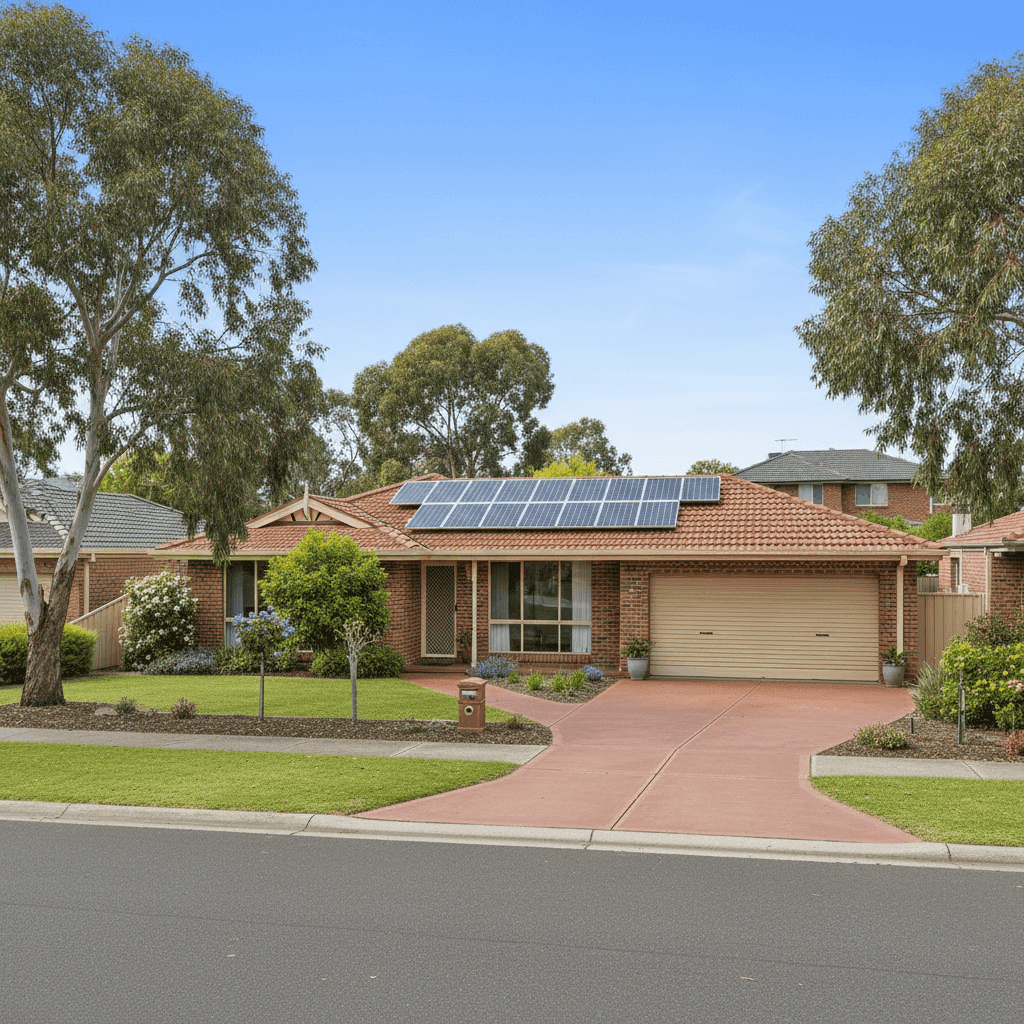
If you own a free standing home in The Honeysuckles, VIC 3851, you're probably curious about what your neighbours are paying for home insurance — and whether your own premium is competitive. This article breaks down a real home and contents insurance quote for a five-bedroom property in The Honeysuckles, compares it against Victorian and national benchmarks, and offers practical advice to help you get the best value cover.
---
Is This Quote Fair?
The short answer: yes — and then some. The quote analysed here came in at $2,020 per year (or $208 per month) for combined home and contents cover, with a building sum insured of $634,000 and contents valued at $50,000. Our price rating system classifies this as CHEAP — below average — meaning this premium is genuinely competitive relative to what most Australian homeowners are paying.
To put that in perspective, the Victorian state average sits at $3,000 per year, with a state median of $2,718. That means this quote is roughly $980 below the state average and nearly $700 below the state median. Against the national average of $5,347 per year (national median: $2,764), the savings are even more striking — this homeowner is paying less than 38 cents for every dollar the average Australian spends on home insurance.
Of course, premiums vary based on dozens of factors, but this quote represents genuinely strong value. Whether you're reviewing your current policy or shopping for the first time, it's a useful benchmark.
---
How The Honeysuckles Compares
Suburb-level data for The Honeysuckles (postcode 3851) isn't yet available in our database, but the broader regional picture tells an interesting story. You can explore available Victoria insurance stats and national home insurance data to see how your area stacks up.
What we do know is that the Wellington LGA average premium is $4,409 per year — significantly higher than the quote under review. This regional figure likely reflects a mix of property types, ages, and risk profiles across a large and geographically diverse local government area that stretches from coastal communities to rural hinterland.
| Benchmark | Annual Premium |
|---|---|
| This Quote | $2,020 |
| VIC State Average | $3,000 |
| VIC State Median | $2,718 |
| Wellington LGA Average | $4,409 |
| National Average | $5,347 |
| National Median | $2,764 |
The Honeysuckles sits within a coastal and semi-rural corridor in Gippsland, and properties in this area can attract variable premiums depending on proximity to water, bushfire exposure, and local claims history. The fact that this particular quote lands well below both state and LGA averages suggests the specific property's risk profile is relatively favourable. Check out The Honeysuckles suburb stats as more local data becomes available.
---
Property Features That Affect Your Premium
Several characteristics of this property work in the homeowner's favour when it comes to insurance pricing.
Brick veneer construction is generally well-regarded by insurers. While not as robust as full double brick, brick veneer offers solid fire resistance and durability compared to weatherboard or lightweight cladding — both of which can attract higher premiums.
Tiled roofing is another positive signal. Tiles are durable, fire-resistant, and long-lasting. Compared to Colorbond or corrugated iron (which can be prone to hail damage claims), tiles tend to attract more favourable underwriting treatment in many parts of Victoria.
The slab foundation is a standard and stable choice, and combined with timber and laminate flooring, it presents a fairly typical risk profile for a home of this era.
Speaking of era — this home was built in 1970, making it over 50 years old. Older homes can sometimes attract higher premiums due to ageing wiring, plumbing, and roofing. It's worth ensuring your policy covers gradual deterioration exclusions, and that your sum insured accurately reflects the cost to rebuild, not just the market value.
The presence of solar panels is worth noting. Solar systems add replacement value to a property and can be a source of claims if panels are damaged by storms or hail. Some insurers include solar panels automatically under building cover; others require them to be specifically listed. Always confirm this with your insurer.
With no pool and no ducted climate control, two common sources of claims and premium loading are absent here — another likely contributor to the competitive price.
The building excess of $4,000 is on the higher side, which typically results in a lower annual premium. The contents excess of $1,000 is more standard. It's worth considering whether you're comfortable covering the first $4,000 of any building claim out of pocket — for some homeowners, a lower excess with a slightly higher premium is the better trade-off.
---
Tips for Homeowners in The Honeysuckles
1. Review your sum insured regularly At $634,000, the building sum insured needs to reflect the true cost of rebuilding your home from scratch — not its market value. Construction costs have risen sharply in recent years, and underinsurance remains one of the most common issues Australian homeowners face at claim time. Use a building cost calculator or speak with a local builder to sense-check your figure annually.
2. Confirm solar panel coverage With solar panels on the roof, check your policy documents carefully to confirm they are explicitly covered under your building insurance. Ask your insurer whether storm damage, hail, and accidental breakage are included — and whether there's a sub-limit that applies.
3. Consider your excess carefully A $4,000 building excess is a meaningful out-of-pocket cost if something goes wrong. If you'd struggle to cover that amount quickly, it may be worth requesting a quote with a lower excess to compare the premium difference. Sometimes the annual saving from a high excess doesn't justify the financial exposure.
4. Stay across bushfire and flood risk updates Gippsland properties can be subject to changing risk classifications as climate data is updated. Check with your insurer and the VIC state insurance stats page periodically to understand whether your risk profile has changed, and ensure your cover reflects any updated hazard ratings in your area.
---
Compare Your Quote at CoverClub
Whether you're renewing your policy or buying cover for the first time, it pays to compare. CoverClub makes it easy to see what homeowners across Victoria and Australia are paying — and to find out whether your current premium is truly competitive. Get a home insurance quote today and see how your property stacks up.