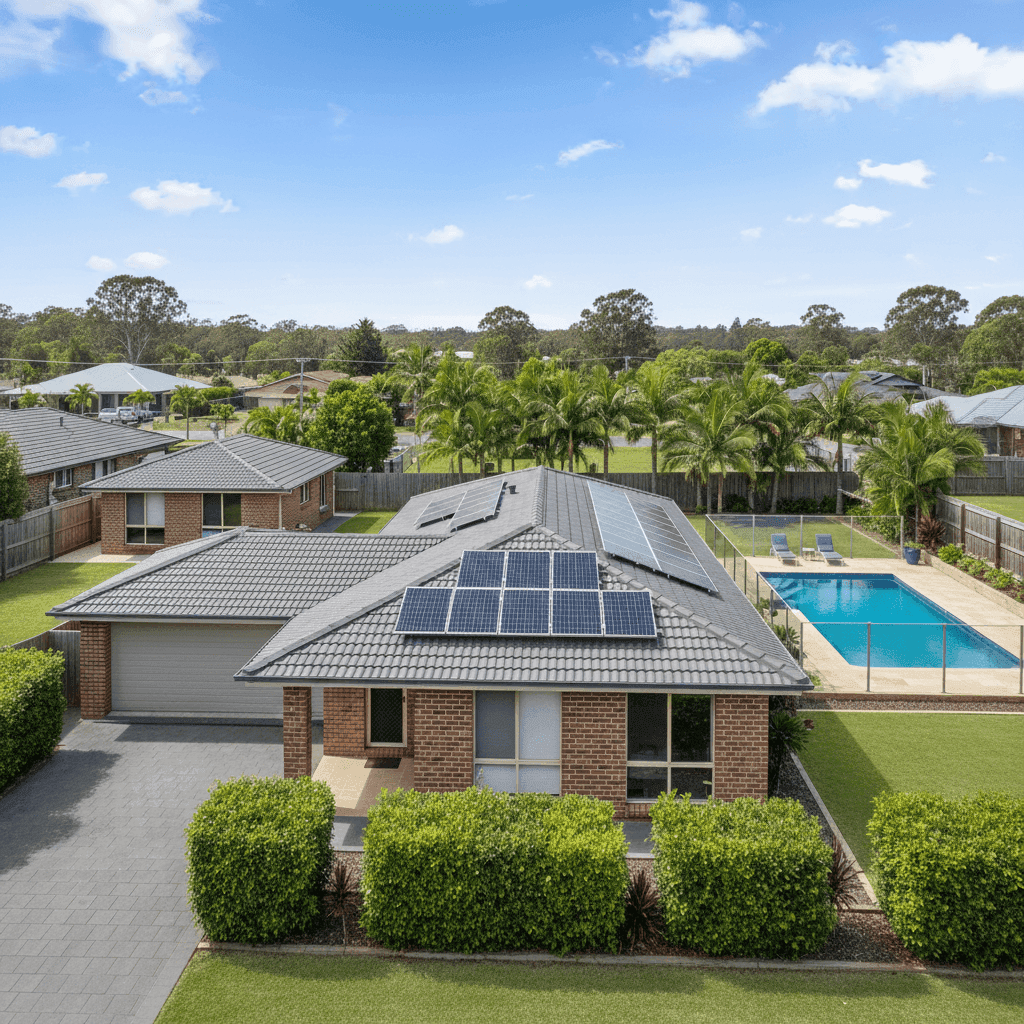
If you own a free standing home in Thornlands, QLD 4164, you're likely no stranger to the challenge of finding the right home insurance at a reasonable price. Thornlands sits within the Redland City Council area on Brisbane's bayside, and like much of South East Queensland, property owners here face a unique mix of risk factors — from storm seasons to the general cost pressures of insuring established homes. This article breaks down a recent home and contents insurance quote for a four-bedroom, three-bathroom brick veneer home in the suburb, and helps you understand whether the price stacks up.
---
Is This Quote Fair?
The quote in question comes to $2,222 per year (or $228/month) for combined home and contents cover, with a building sum insured of $727,000 and contents valued at $100,000. The building excess sits at $3,000, with a lower $500 excess on contents.
Our price rating for this quote is FAIR — Around Average, and the data backs that up. Based on 60 quotes collected for Thornlands (postcode 4164), the suburb average premium is $2,654/year and the median sits at $2,544/year. At $2,222, this quote comes in below both the suburb average and median, which is a solid result.
To put it in percentile terms: the 25th percentile for the suburb is $1,607/year and the 75th percentile is $3,557/year. This quote falls comfortably in the lower-middle range — not the cheapest available, but well within what most Thornlands homeowners are paying. For a property of this size and complexity (more on that below), landing below the suburb median is a reasonable outcome.
---
How Thornlands Compares
Zooming out tells an even more interesting story. Queensland is one of the most expensive states in the country for home insurance, largely driven by cyclone risk in northern regions and flood-prone areas across the state. The Queensland state average premium is a striking $9,129/year, though the median — a better measure given the skew from high-risk properties — is $3,903/year. Against either figure, this Thornlands quote looks very competitive.
At the national level, the Australian average home insurance premium is $5,347/year, with a national median of $2,764/year. Again, the $2,222 quote sits below the national median, which is an encouraging sign for the homeowner.
Closer to home, the Redland LGA average is $3,178/year — still $956 more than this quote. It's worth noting that LGA averages can be pulled upward by higher-risk or higher-value properties in surrounding suburbs, so a below-average result within the LGA is worth acknowledging.
| Benchmark | Premium |
|---|---|
| This Quote | $2,222/yr |
| Thornlands Suburb Average | $2,654/yr |
| Thornlands Suburb Median | $2,544/yr |
| Redland LGA Average | $3,178/yr |
| QLD State Median | $3,903/yr |
| National Median | $2,764/yr |
---
Property Features That Affect Your Premium
Several characteristics of this property play a meaningful role in how insurers price the risk. Here's what stands out:
Brick veneer construction with a tiled roof is generally viewed favourably by insurers. Brick veneer offers good structural resilience and fire resistance compared to lightweight cladding, while tiled roofs — though heavier — are durable and widely understood by assessors. This combination tends to attract more competitive premiums than, say, weatherboard walls or metal roofing in some contexts.
Slab foundation is standard for Queensland homes of this era and is generally a neutral factor for insurers, though it can be relevant in flood assessments (slab homes sit lower to the ground than those on stilts or stumps).
Built in 1988, the property is now approaching 40 years old. Older homes can attract higher premiums due to the cost of replicating period features or replacing ageing systems (plumbing, wiring, roofing materials). At 214 sqm, this is a generously sized home, and the $727,000 building sum insured reflects a realistic rebuild cost for a property of this scale and finish.
The swimming pool and granny flat are two features that meaningfully add to insured risk — and therefore to premium costs. Pools introduce liability considerations and can be expensive to repair or replace following storm or hail damage. A granny flat adds additional structures that need to be covered under the building sum insured. Homeowners with these features should ensure their policy explicitly covers both.
Solar panels are another consideration. Panels are typically covered as a fixture of the building, but it's worth confirming with your insurer whether damage to panels (including from hail, which is not uncommon in South East Queensland) is covered, and whether there are any sub-limits that apply.
Standard fittings quality means the rebuild cost calculation is relatively straightforward — no high-end custom joinery or imported stone benchtops to account for — which helps keep the sum insured, and the premium, grounded.
---
Tips for Homeowners in Thornlands
1. Review your building sum insured regularly. Construction costs in Queensland have risen significantly in recent years. A sum insured set a few years ago may no longer reflect the true cost of rebuilding your home. Use a professional quantity surveyor or an online calculator to validate your figure annually — being underinsured can be costly when you need to claim.
2. Confirm coverage for your pool and granny flat. Not all policies automatically extend full cover to additional structures or outdoor features. Read your Product Disclosure Statement (PDS) carefully and ask your insurer directly whether your pool equipment, fencing, and granny flat are included within your building sum insured — or whether they require separate cover.
3. Check your solar panel cover. Ask your insurer whether your solar panels are covered for hail, storm, and accidental damage, and whether there's a sub-limit. Some policies cap solar panel cover at a fixed dollar amount that may not reflect the replacement cost of a modern system.
4. Consider your excess strategy. The building excess on this quote is $3,000 — which is on the higher side. A higher excess typically lowers your annual premium, but it means more out-of-pocket cost at claim time. If you're in a position to absorb a larger excess, this can be a smart way to reduce premiums; if not, it may be worth comparing quotes with a lower excess to understand the trade-off.
---
Compare Your Options at CoverClub
Whether you're reviewing your current policy or shopping for the first time, it pays to compare. CoverClub makes it easy to see how your quote stacks up against real data from your suburb and across Australia. Get a home insurance quote today and find out if you're getting a fair deal — or if there's a better option waiting for you.