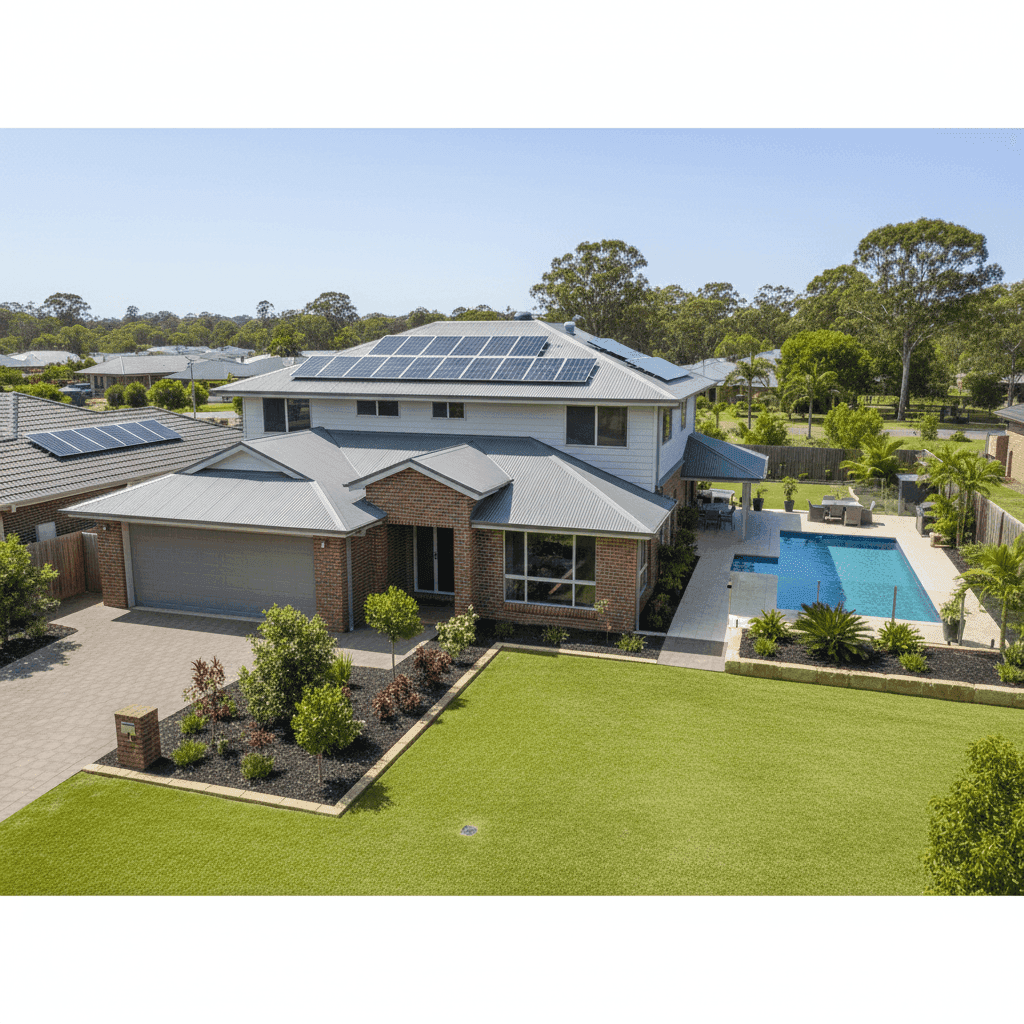
Thornlands is a well-established suburb in the Redland City area of South East Queensland, sitting on the eastern fringe of Brisbane's bayside corridor. It's a popular choice for families seeking larger homes with outdoor living space — and a five-bedroom, free-standing home here is a solid example of what the area has to offer. If you've recently received a home and contents insurance quote for a property like this, you might be wondering whether you're getting a fair deal. Let's break it down.
---
Is This Quote Fair?
The quote in question comes in at $3,707 per year (or $332/month) for a combined home and contents policy — covering a building sum insured of $859,000 and contents valued at $400,000, each with a $5,000 excess.
Our rating for this quote is Expensive (Above Average).
To put that in context: the average premium paid by homeowners in Thornlands (postcode 4164) is $2,654/yr, and the median sits at $2,544/yr. This quote lands above the suburb's 75th percentile of $3,557/yr, meaning it's pricier than roughly three-quarters of comparable quotes in the area.
That said, "expensive" doesn't automatically mean "wrong." The higher sum insured ($859,000 for the building alone) and substantial contents cover ($400,000) will naturally push a premium upward. Larger, well-appointed homes cost more to rebuild and more to replace — and insurers price accordingly. The question to ask is whether the coverage level is appropriate for the property, and whether the insurer offering this price is the most competitive for these specific features.
---
How Thornlands Compares
It's useful to zoom out and look at where Thornlands sits in the broader insurance landscape.
| Benchmark | Premium |
|---|---|
| This quote | $3,707/yr |
| Thornlands suburb average | $2,654/yr |
| Thornlands suburb median | $2,544/yr |
| Thornlands 25th percentile | $1,607/yr |
| Thornlands 75th percentile | $3,557/yr |
| LGA (Redland) average | $3,178/yr |
| QLD state average | $9,129/yr |
| QLD state median | $3,903/yr |
| National average | $5,347/yr |
| National median | $2,764/yr |
Based on 60 quotes sampled for the Thornlands area.
A few things stand out here. First, Thornlands is actually quite affordable compared to the broader Queensland market. The QLD state average of $9,129/yr is dramatically higher — a reflection of the extreme premiums paid in cyclone-prone and flood-affected regions of North Queensland. Thornlands, by contrast, is not classified as a cyclone risk area, which is a significant cost advantage.
Compared to the national average of $5,347/yr, this quote is also below the mark — so while it's above the local suburb average, it's tracking reasonably against the wider Australian picture, particularly given the size and value of the property being insured.
You can explore the full data for this postcode at the Thornlands suburb stats page.
---
Property Features That Affect Your Premium
Several characteristics of this property will directly influence what insurers charge. Here's how each one plays into the pricing:
Brick Veneer Walls & Colorbond Roof Brick veneer is a well-regarded construction type in the insurance world — it's durable, fire-resistant, and widely understood by insurers. Combined with a steel Colorbond roof, this home is built with materials that are both resilient and relatively straightforward to repair or replace. These factors generally attract more favourable pricing compared to, say, weatherboard cladding or older tiled roofs.
Concrete Slab Foundation A slab foundation is standard for a home of this era in South East Queensland and carries no particular risk loading. It's a neutral factor in most insurer assessments.
Timber & Laminate Flooring Flooring type matters more than many homeowners realise. Timber and laminate floors can be costly to replace after water damage or flooding, which may contribute slightly to higher contents and building valuations.
Above Average Fittings This is a meaningful factor. Above-average fittings — think stone benchtops, quality cabinetry, premium fixtures — increase the cost to rebuild to an equivalent standard. Insurers will factor this into the building sum insured, and it's one reason why the $859,000 building cover is appropriate rather than excessive for a 277 sqm home of this quality.
Swimming Pool Pools add liability and replacement cost considerations to a policy. Most insurers include pool cover under the building section, but it's worth confirming exactly what's covered — including fencing, pumps, and filtration equipment.
Solar Panels Solar systems are increasingly common in Queensland, and most insurers now include them as part of the building cover. However, coverage terms vary — some policies cover panels for accidental damage and storm, while others have exclusions. It's worth reading the Product Disclosure Statement (PDS) carefully.
Ducted Climate Control A ducted air conditioning system is a significant fixed asset and adds to the rebuild cost. At 277 sqm, a full ducted system represents a meaningful portion of the building's value.
---
Tips for Homeowners in Thornlands
1. Review your sum insured annually Construction costs in South East Queensland have risen sharply in recent years. A building sum insured set a few years ago may no longer reflect the true cost to rebuild — leaving you underinsured when you need it most. Use a building cost calculator or speak to a quantity surveyor to validate your figure.
2. Don't overlook your pool and solar cover Confirm with your insurer exactly what's included for your pool equipment and solar panels. Some policies treat these as standard inclusions; others require endorsements or have sub-limits. A gap here could be costly after a storm or hail event.
3. Compare quotes — even mid-policy Many homeowners set and forget their insurance. But the market is competitive, and premiums can vary significantly between insurers for the same property. Getting a fresh quote at CoverClub takes minutes and could reveal meaningful savings, even if you ultimately decide to stay with your current provider.
4. Consider your excess carefully This policy carries a $5,000 excess on both building and contents. A higher excess typically reduces your premium, but make sure it's an amount you could comfortably cover out of pocket in the event of a claim. For smaller claims, a $5,000 excess may mean you're effectively self-insuring — factor that into your decision.
---
Compare Your Options with CoverClub
Whether this quote feels right or you suspect there's a better deal out there, the smartest move is to compare. CoverClub makes it easy to see how your home insurance premium stacks up against real quotes from across Australia. Enter your address at CoverClub to get started — it only takes a few minutes and could save you hundreds.