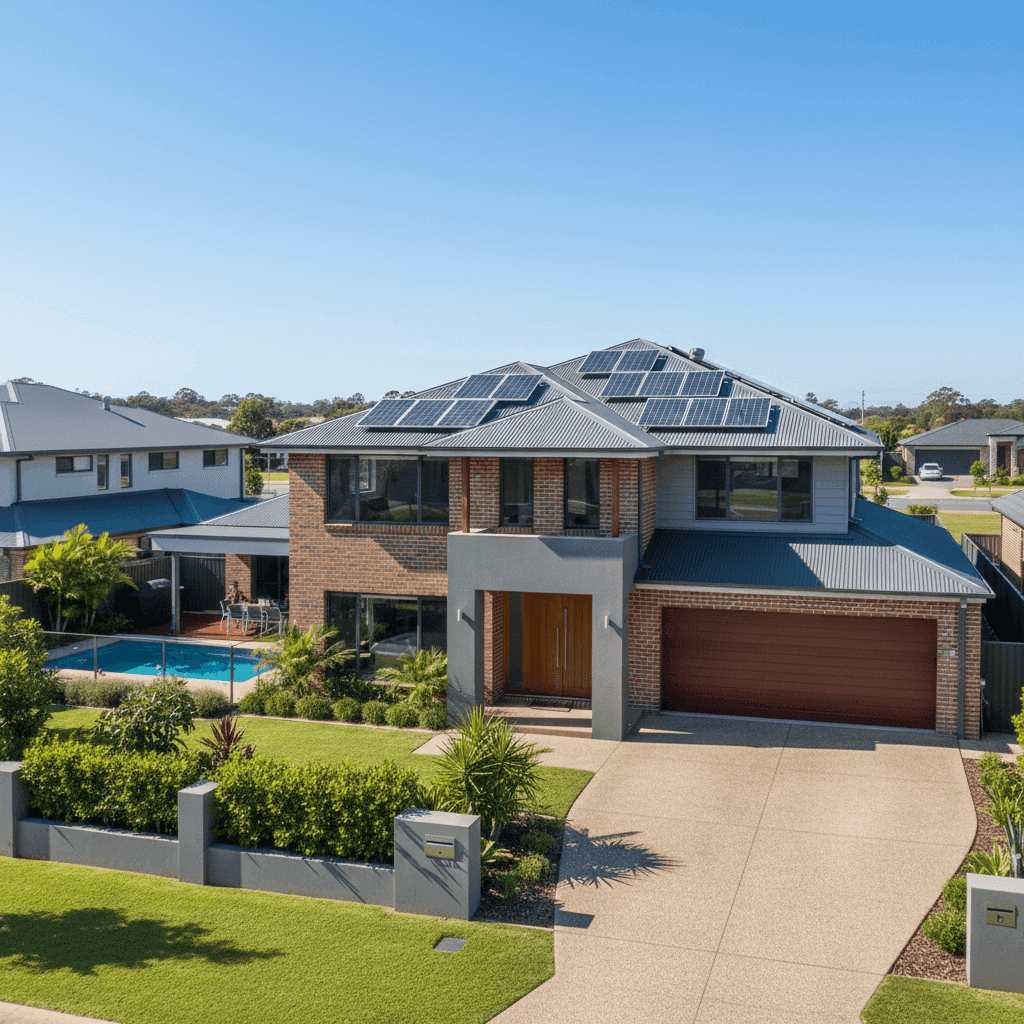
If you own a free standing home in Thornlands, QLD 4164, you've probably wondered whether you're paying too much — or too little — for home insurance. Thornlands is a well-established residential suburb in the Redland City Council area, sitting on the eastern fringe of Brisbane. It's a popular choice for families, and larger homes with pools and solar panels are common on these streets. This article breaks down a real home and contents insurance quote for a five-bedroom property in the suburb, compares it against local, state, and national benchmarks, and offers practical tips to help you get the best value cover.
---
Is This Quote Fair?
The quote in question comes in at $2,472 per year (or $237 per month) for a combined home and contents policy. This covers a building sum insured of $652,000 and contents valued at $20,000, with a $1,000 excess on both building and contents.
Our price rating for this quote is FAIR — Around Average, and the numbers back that up. Compared to the Thornlands suburb average of $2,654/yr, this quote sits about $182 below the local mean — a modest but meaningful saving. Against the suburb median of $2,544/yr, it's also slightly more competitive, landing just beneath the midpoint of what most Thornlands homeowners are paying.
In plain terms: this isn't a bargain-basement price, but it's not overpriced either. The homeowner is getting a solid level of cover at a rate that's broadly in line with — and marginally better than — what their neighbours are paying.
---
How Thornlands Compares
To put this quote in proper context, it helps to zoom out and look at the broader picture.
| Benchmark | Premium |
|---|---|
| This Quote | $2,472/yr |
| Thornlands Suburb Average | $2,654/yr |
| Thornlands Suburb Median | $2,544/yr |
| Thornlands 25th Percentile | $1,607/yr |
| Thornlands 75th Percentile | $3,557/yr |
| Redland LGA Average | $3,178/yr |
| QLD State Average | $9,129/yr |
| QLD State Median | $3,903/yr |
| National Average | $5,347/yr |
| National Median | $2,764/yr |
A few things stand out here. First, the Queensland state average of $9,129/yr looks eye-watering — but this figure is heavily skewed by high-risk coastal and cyclone-prone areas in Far North Queensland, where premiums can run into the tens of thousands. The state median of $3,903/yr is a more representative number, and even against that, this Thornlands quote looks competitive.
Compared to the national average of $5,347/yr, the quote is well below par, which reflects the fact that Thornlands sits in a relatively lower-risk zone. The national median of $2,764/yr is actually a touch above this quote, which again confirms the "fair" rating is well-earned.
The Redland LGA average of $3,178/yr is also worth noting — this quote comes in roughly $700 below the broader LGA average, which is a meaningful difference over the life of a policy.
The suburb sample used for this analysis is based on 60 quotes from Thornlands, giving a statistically reasonable picture of what local homeowners are paying. You can explore the full data on the Thornlands insurance stats page.
---
Property Features That Affect Your Premium
Insurance isn't priced in a vacuum — every detail of your property feeds into the final number. Here's how the features of this particular home play into the premium.
Brick Veneer Walls & Colorbond Roof Brick veneer is generally viewed favourably by insurers. It's durable, fire-resistant, and less susceptible to storm damage than timber weatherboard. Paired with a steel Colorbond roof — which handles Queensland's heat, rain, and hail well — this construction profile typically attracts a more competitive premium than older or less robust materials.
Slab Foundation A concrete slab foundation is standard for homes of this era and is generally considered low-risk by insurers. It reduces the likelihood of subsidence-related claims and is well-suited to Queensland's soil conditions.
Timber & Laminate Flooring Flooring type can influence contents and building claims. Timber and laminate floors can be more susceptible to water damage than tiles, which may be a minor factor in premium calculations — though with standard fittings quality, this is unlikely to have a significant impact here.
Swimming Pool Pools add both value and liability risk to a property. Most home insurance policies cover the pool structure under the building sum insured, but it's worth confirming your policy explicitly covers pool equipment, fencing, and any liability associated with the pool.
Solar Panels Solar panels are increasingly common on Queensland rooftops, and insurers are getting better at pricing them in. They're typically covered under the building sum insured, but it's important to check whether your policy covers damage from storms, hail, or electrical faults — all realistic risks in South East Queensland.
No Cyclone Risk Thornlands is not classified as a cyclone risk area, which is a significant premium advantage. Properties in cyclone zones (particularly in Far North QLD) can face dramatically higher premiums due to the additional structural risk. This is one reason the Thornlands quote looks so reasonable against the state average.
Building Size: 277 sqm At 277 square metres, this is a substantial family home. The $652,000 building sum insured works out to roughly $2,354 per square metre — a reasonable rebuild cost estimate for a brick veneer home of this age and specification, though homeowners should periodically review this figure to ensure it keeps pace with rising construction costs.
---
Tips for Homeowners in Thornlands
1. Review Your Building Sum Insured Annually Construction costs in Queensland have risen sharply in recent years. A sum insured that was accurate in 2022 may no longer reflect the true cost of rebuilding your home today. Use a building replacement cost calculator or speak with a quantity surveyor to make sure you're not underinsured.
2. Don't Overlook Your Contents Value A contents value of $20,000 is on the lower end for a five-bedroom home. Take stock of your furniture, appliances, electronics, clothing, and valuables — many homeowners are surprised to find their contents are worth significantly more than they initially estimated. Underinsuring contents can leave you seriously out of pocket after a claim.
3. Check What's Covered for Your Pool and Solar Pools and solar panels are meaningful assets. Before renewal, confirm with your insurer exactly what's covered — including pool pumps and filtration systems, inverters, and any liability scenarios related to pool access. Not all policies treat these features the same way.
4. Compare at Renewal, Not Just When You First Buy Insurance markets shift, and the quote that was competitive last year may not be the best available today. Shopping around at renewal — rather than simply auto-renewing — is one of the easiest ways to avoid paying more than you need to.
---
Ready to Compare?
Whether you're reviewing your current policy or shopping for cover on a new property, comparing quotes is the smartest first step. Get a home insurance quote at CoverClub and see how your premium stacks up against what other Thornlands homeowners are paying. It takes just a few minutes and could save you hundreds.