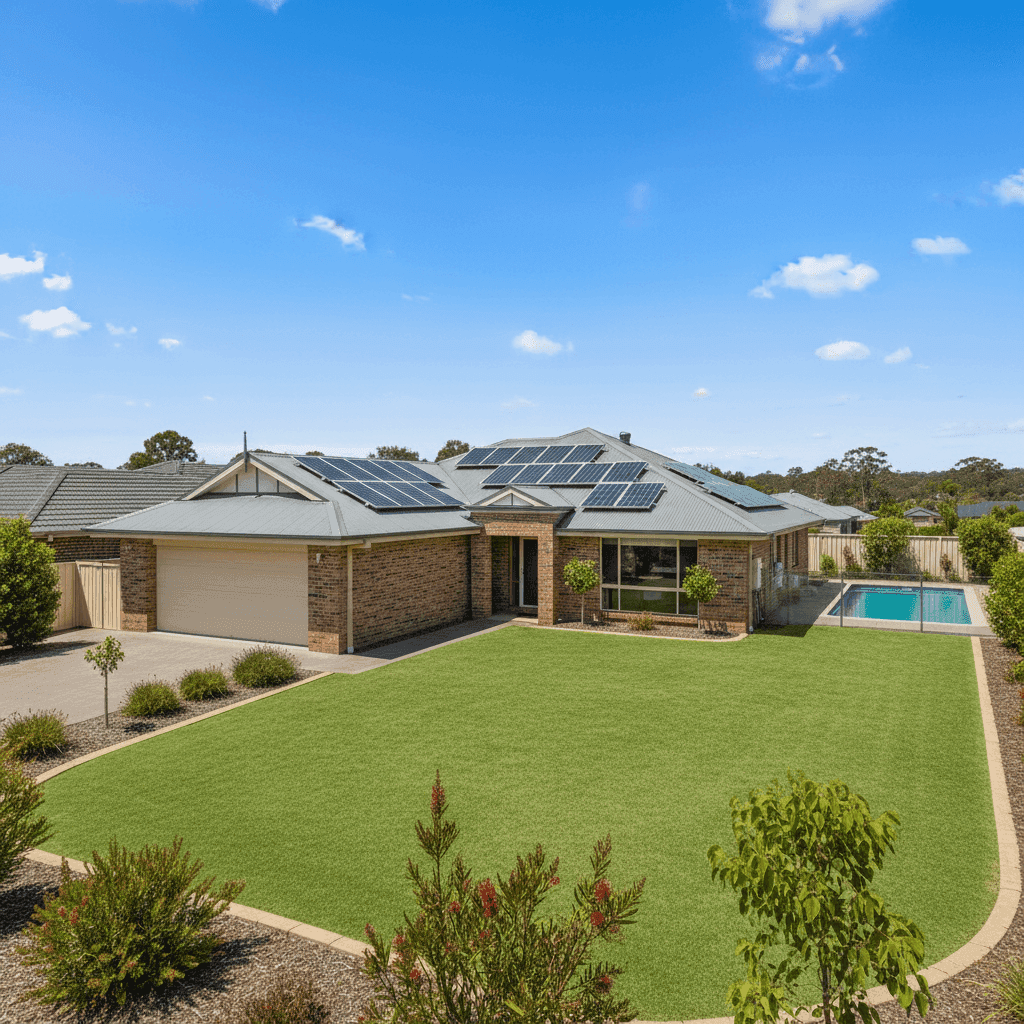
Thornlands is a well-established residential suburb in the Redland City area of South East Queensland, sitting on the shores of Moreton Bay. It's a popular choice for families thanks to its leafy streets, proximity to the bay, and easy access to Cleveland and Brisbane. For owners of a larger free standing home here — particularly one with a pool, solar panels, and ducted climate control — understanding what drives your home insurance premium is essential. This article breaks down a recent quote of $4,161 per year for a 6-bedroom, 2-bathroom brick veneer home in Thornlands, and puts it in context against local, state, and national benchmarks.
---
Is This Quote Fair?
The short answer: this quote is rated expensive — sitting above the suburb average, though it's not entirely without justification given the property's size and features.
At $4,161 per year (or $399/month), this premium is notably higher than what most Thornlands homeowners are paying. The suburb average for Thornlands sits at $2,654/year, with a median of $2,544/year. That means this quote is roughly 57% above the suburb average — a significant gap worth scrutinising before accepting.
That said, context matters. This is a large home — 420 sqm with six bedrooms — and the sum insured for the building is set at $1,400,000, which is on the higher end and directly influences the premium. The contents cover of $85,000 adds further to the cost. The building and contents excesses are both set at $1,000, which is fairly standard and not a factor pulling the price up.
Before renewing or accepting this quote, it's worth shopping around. A difference of over $1,500 per year compared to the suburb average is meaningful money.
---
How Thornlands Compares
To put this premium in proper perspective, here's how Thornlands stacks up against broader benchmarks:
| Benchmark | Annual Premium |
|---|---|
| This Quote | $4,161 |
| Thornlands Suburb Average | $2,654 |
| Thornlands Suburb Median | $2,544 |
| Thornlands 25th Percentile | $1,607 |
| Thornlands 75th Percentile | $3,557 |
| Redland LGA Average | $3,178 |
| QLD State Average | $9,129 |
| QLD State Median | $3,903 |
| National Average | $5,347 |
| National Median | $2,764 |
A few things stand out here. Queensland's state average of $9,129 is extraordinarily high — largely skewed by cyclone-prone regions in Far North Queensland, where premiums can be eye-watering. Thornlands is not in a designated cyclone risk area, which is a genuine advantage and helps explain why local premiums are considerably lower than the state average.
The Redland LGA average of $3,178 is a more useful local comparison. This quote sits about $983 above that figure, again pointing to the large building sum insured as the likely driver.
Nationally, the median of $2,764 is actually close to the Thornlands suburb median, suggesting that Thornlands — in normal circumstances — is reasonably priced for home insurance by Australian standards. This quote, however, lands above both.
---
Property Features That Affect Your Premium
Several characteristics of this property have a direct bearing on what insurers charge. Here's what's at play:
Building size and sum insured: At 420 sqm, this is a substantial home. Insurers calculate building cover based on the cost to rebuild — not the market value — and a larger home means higher rebuild costs. A sum insured of $1,400,000 reflects this, but it's worth checking whether that figure is accurately estimated using a building cost calculator. Over-insuring can inflate premiums unnecessarily, while under-insuring creates a dangerous gap at claim time.
Brick veneer construction: Brick veneer walls are generally viewed favourably by insurers. They offer solid fire resistance and durability, which can contribute to more competitive premiums compared to timber-framed homes with weatherboard cladding.
Steel/Colorbond roof: Colorbond roofing is widely used across Queensland and is considered a lower-risk roofing material. It's durable, resistant to fire and pests, and performs well in severe weather — all positives from an underwriting perspective.
Concrete slab foundation: A slab foundation is considered stable and low-risk, reducing exposure to subsidence or underfloor moisture damage compared to raised or suspended floor systems.
Swimming pool: Pools add to the insurable value of a property and can also introduce liability considerations. Some insurers factor pool ownership into their risk assessment, particularly around public liability cover within home policies.
Solar panels: Solar panel systems are an increasingly common feature in Queensland, and most home insurers will cover them as part of the building. However, it's important to confirm that your policy explicitly includes solar panels and their associated components (inverters, wiring) in the building sum insured.
Ducted climate control: Ducted air conditioning systems are a significant fixed asset and form part of the building's value. Their inclusion in the rebuild cost is appropriate and contributes to the higher sum insured.
Vinyl flooring: Vinyl is a practical and cost-effective flooring choice that is straightforward to replace after a claim. It's generally considered a neutral factor by insurers.
---
Tips for Homeowners in Thornlands
1. Verify your sum insured using a rebuild cost estimator A building sum insured of $1,400,000 may be accurate for a 420 sqm home, but it's worth double-checking using a reputable construction cost estimator (such as the Cordell Sum Sure calculator). Getting this figure right — neither too high nor too low — ensures you're not overpaying on premiums while still being fully protected.
2. Compare multiple quotes before renewing With this premium sitting above the suburb average, there's a clear incentive to shop around. Insurers price risk differently, and the same property can attract premiums that vary by hundreds — or even thousands — of dollars. Get a comparison quote at CoverClub to see what other insurers are offering for your specific property.
3. Confirm your solar panels and pool are correctly listed Make sure your policy documents explicitly cover your solar panel system and pool as part of the building. Some standard policies may have exclusions or sublimits for these features. It's a quick check that can save significant headaches at claim time.
4. Review your contents cover amount $85,000 in contents cover is a reasonable starting point for a six-bedroom home, but it's easy for this figure to become outdated as you accumulate furniture, appliances, and valuables. Do a room-by-room review annually to ensure your contents sum is still accurate — both under- and over-insuring have real consequences.
---
Compare Your Options with CoverClub
Whether you're reviewing an existing policy or shopping for the first time, CoverClub makes it easy to see how your premium stacks up. Our suburb and state data gives you real benchmarks — not guesswork — so you can negotiate or switch with confidence. Check the latest Thornlands insurance stats or get a personalised quote today to make sure you're getting the right cover at the right price.