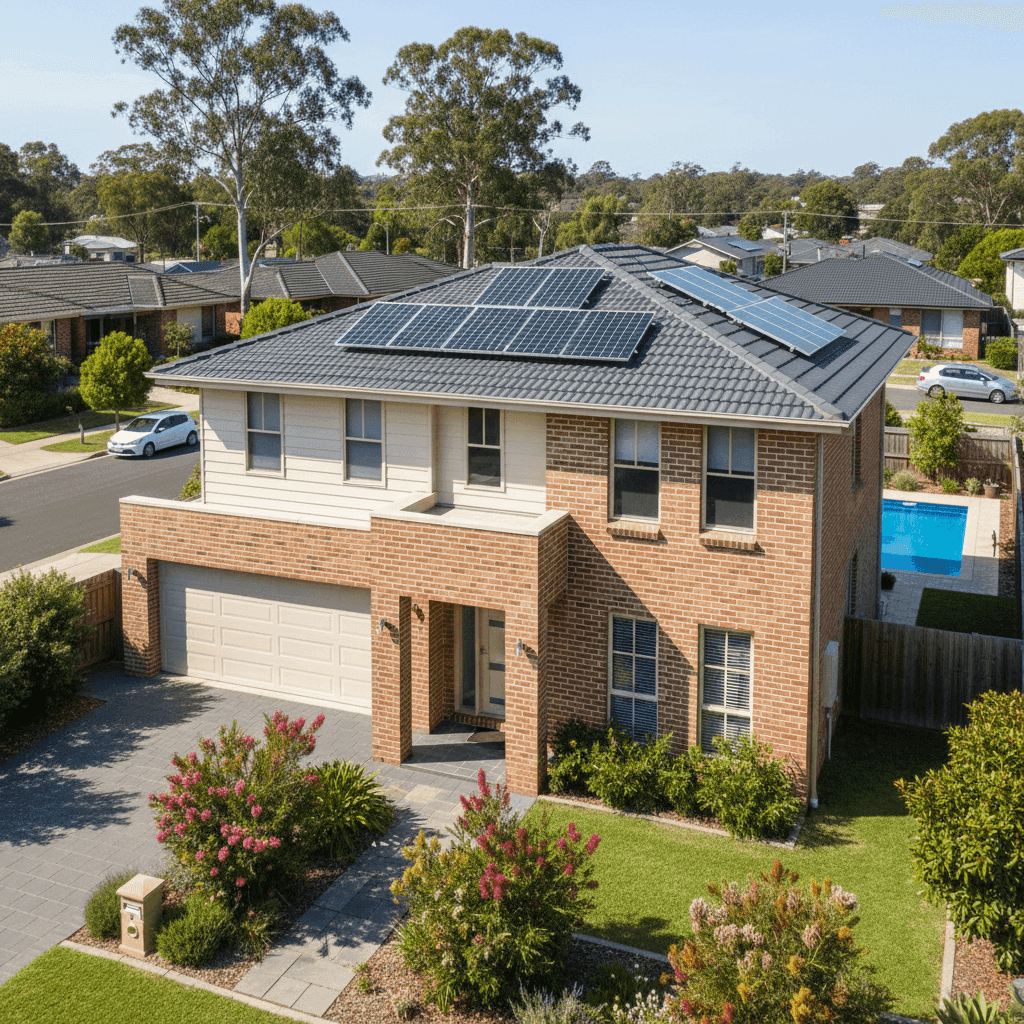
If you own a free standing home in Thornton, NSW 2322, you've probably wondered whether you're paying too much — or too little — for home insurance. Thornton is a well-established suburb in the Hunter Valley region, sitting within the Cessnock Local Government Area and offering a mix of family homes, green spaces, and easy access to Maitland and Newcastle. In this article, we break down a real home insurance quote for a four-bedroom, two-bathroom brick veneer home in the area, and put it into context against local, state, and national benchmarks.
---
Is This Quote Fair?
The quote in question comes in at $1,658 per year (or $162/month) for combined home and contents cover, with a building sum insured of $568,000 and contents valued at $60,000. Both the building and contents carry a $5,000 excess.
Our price rating for this quote? Cheap — below average. That's genuinely good news for the homeowner.
To put it plainly: this premium sits well below what most Thornton residents are paying. Based on 43 quotes collected for the Thornton area, the suburb average sits at $2,756/year and the median at $2,710/year. That means this quote is saving the homeowner roughly $1,098 per year compared to the typical Thornton premium — a meaningful difference that compounds over time.
Even at the 25th percentile (meaning only 25% of quotes are cheaper), the suburb benchmark is $2,216/year — still significantly higher than this quote. In other words, this is a standout result.
---
How Thornton Compares
It's worth zooming out to understand where Thornton sits in the broader insurance landscape.
| Benchmark | Average Premium | Median Premium |
|---|---|---|
| Thornton (NSW 2322) | $2,756/yr | $2,710/yr |
| Cessnock LGA | $2,462/yr | — |
| New South Wales | $9,528/yr | $3,770/yr |
| National | $5,347/yr | $2,764/yr |
A few things stand out here. First, New South Wales as a whole has a strikingly high average premium of $9,528/year — though this is heavily skewed by high-risk and high-value properties across the state, which is why the median of $3,770 is a more useful reference point. Thornton's median of $2,710 sits comfortably below the NSW median, suggesting it's a relatively affordable area to insure.
Compared to national figures, Thornton also fares well. The national median is $2,764/year — almost identical to Thornton's local median — which tells us this suburb is broadly in line with the Australian average, without the premium spikes seen in flood-prone, cyclone-affected, or high-bushfire-risk regions.
For homeowners in the Cessnock LGA, the average is $2,462/year, which is slightly below the Thornton suburb average — possibly reflecting a mix of property types and risk profiles across the broader council area.
---
Property Features That Affect Your Premium
Several characteristics of this particular property work in the homeowner's favour from an insurance pricing perspective.
Brick veneer construction is generally viewed favourably by insurers. It's durable, fire-resistant, and widely understood, which reduces uncertainty in claims assessments. Combined with a tiled roof, this home sits in a construction category that tends to attract lower premiums than, say, timber weatherboard with a corrugated iron roof.
The slab foundation is another positive. Slab-on-ground homes in stable soil conditions are less susceptible to subsidence and movement claims, which can otherwise push premiums up.
Built in 1985, the home is old enough to have some age-related considerations (older wiring, plumbing, and roofing materials can be flagged by some insurers), but it's not so old as to fall into the high-risk heritage bracket. At 214 sqm, the building size is substantial, which is reflected in the $568,000 sum insured — a figure that should be reviewed periodically to keep pace with rising construction costs.
The swimming pool adds a layer of liability exposure, and some insurers factor this into their pricing. It's worth confirming that your policy explicitly covers pool-related liability and that the pool structure itself (including fencing, pumps, and filtration) is adequately included.
Solar panels are increasingly common on Australian homes, but they're not always automatically covered under a standard building policy. It's essential to check whether your panels are included in the building sum insured or require a separate endorsement — especially given the replacement cost of a quality solar system.
The absence of ducted climate control simplifies the claim profile slightly, and the standard fittings quality means the rebuild cost estimate is more straightforward to calculate. Thornton is also not classified as a cyclone risk area, which removes one of the more significant premium drivers seen in northern parts of Australia.
---
Tips for Homeowners in Thornton
1. Review your sum insured annually. Construction costs have risen sharply in recent years. A building sum insured set a few years ago may no longer reflect the true cost to rebuild your home. Use a building cost calculator or speak with a quantity surveyor to ensure you're not underinsured — particularly for a 214 sqm brick veneer home.
2. Confirm your solar panels are covered. Don't assume your solar system is automatically included in your building cover. Ask your insurer directly whether panels are covered for storm damage, hail, and electrical faults, and whether the inverter and battery storage (if applicable) are included.
3. Check your pool liability cover. Pools can be a source of significant liability claims. Ensure your policy includes public liability cover that explicitly extends to your pool area, and keep pool fencing compliant with NSW regulations to avoid complications at claim time.
4. Compare quotes before renewal. Even if your current premium is already below average, the insurance market changes constantly. New providers enter the market, risk models are updated, and loyalty discounts can erode over time. Running a fresh comparison at renewal takes minutes and could save hundreds.
---
Compare Your Home Insurance Today
Whether you're a Thornton local or just researching what fair coverage looks like in the Hunter region, CoverClub makes it easy to see how your quote stacks up. Get a personalised home insurance quote in minutes and compare it against real data from your suburb. You can also explore Thornton-specific insurance stats to see exactly where your premium sits in the local market.